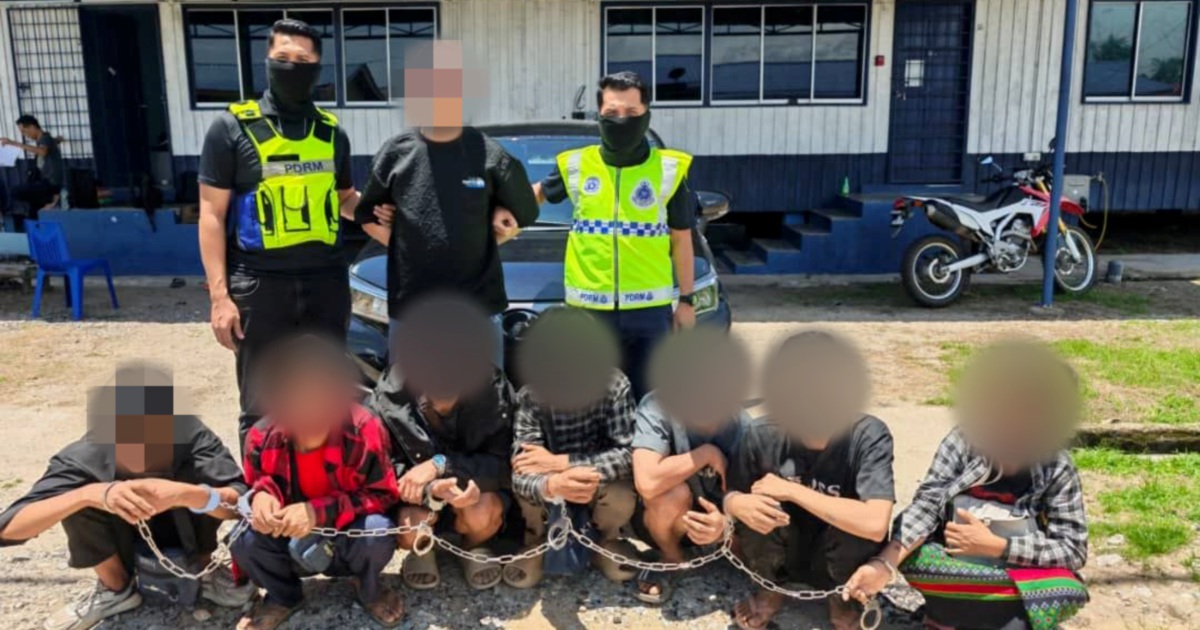
Law enforcement authorities in Kelantan have intensified their crackdown on human trafficking networks, with police making a significant arrest of eight people suspected of involvement in migrant smuggling operations. The operation, conducted in Kota Baru during the early hours of the morning, resulted in the apprehension of a Malaysian man believed to be the primary organiser of the transportation scheme, along with seven undocumented Myanmar nationals discovered travelling in his vehicle.
The detention marks another critical intervention in ongoing police efforts to combat the proliferation of human smuggling rings operating across Malaysia's northern states. The arrest highlights the persistent vulnerability of migrant workers from Myanmar and other neighbouring nations who remain susceptible to exploitation by trafficking syndicates offering false promises of employment and legitimate immigration status. Intelligence-led operations such as this underscore the determination of authorities to dismantle organised networks that profit from the desperation of vulnerable foreign nationals.
The vehicle stop in Kota Baru revealed a typical smuggling operation structure, wherein local coordinators work in tandem with transportation operatives to move undocumented migrants across state boundaries and towards their ultimate destinations. The presence of undocumented Myanmar nationals in the vehicle immediately triggered investigation protocols, leading to the rapid expansion of the inquiry from the driver to a broader criminal enterprise. Such discoveries often unravel larger network architectures operating across multiple locations and jurisdictions.
Kelantan's strategic geographical position along major transit routes makes the state particularly significant in the context of regional human trafficking patterns. The state's porous borders and relatively open checkpoint systems have historically attracted smuggling operations seeking less monitored pathways. Law enforcement agencies have responded with enhanced intelligence gathering and increased patrol operations at key vulnerability points, yet the steady flow of arrests suggests smugglers continue adapting their tactics and routes.
The treatment of undocumented migrants discovered during such operations remains a critical humanitarian and legal concern. While the individuals are typically processed through immigration procedures and face potential detention and deportation, questions persist regarding their access to legal protections and victim services. International labour organisations and human rights groups have consistently highlighted the need for victim-centred approaches that distinguish between smugglers and those trafficked into exploitative situations.
The Malaysian man's alleged role as the primary organiser suggests a level of sophistication in the smuggling apparatus. Local coordinators frequently possess relevant knowledge of border terrain, checkpoint procedures, timing patterns, and official corruption opportunities that make them invaluable to larger smuggling syndicates. Their arrest disrupts operational continuity and may yield intelligence about higher-level organisers and financial networks sustaining these activities.
Myanmar nationals constitute a particularly vulnerable migrant population given ongoing political instability and economic hardship in their home country. Many undertake dangerous journeys seeking employment opportunities in Malaysia and Thailand, often incurring substantial debts to traffickers and smugglers. These debt arrangements create ongoing vulnerability even after arrival, as workers become trapped in exploitative labour situations designed to generate repayment obligations.
Coordination between Malaysian police and regional law enforcement partners has gradually improved, yet significant gaps remain in information sharing and joint operation capabilities. The ASEAN Coordinating Centre on Migrant Workers and similar regional bodies facilitate dialogue, but enforcement capacity disparities and diplomatic sensitivities continue hindering comprehensive transnational responses. Kelantan authorities' success in this operation demonstrates the value of sustained local efforts even within broader structural constraints.
The financial dimensions of migrant smuggling networks extend far beyond the immediate transport operation. Laundering proceeds through legitimate businesses, recruiting agents, document forgers, and corrupted officials all constitute essential infrastructure components. Disrupting these networks requires sustained investigation capacity and financial intelligence capabilities that remain underdeveloped across many Southeast Asian jurisdictions.
Successful prosecutions of smuggling operations depend substantially on evidence quality and witness cooperation. The arrested individuals face potential charges under human smuggling and people trafficking legislation, though achieving convictions requires meticulous documentation of each individual's precise role within the broader scheme. Testimony from migrant victims, while essential, often proves challenging to secure given trauma, language barriers, and deportation fears.
This Kelantan operation reflects broader migration pressures reshaping Southeast Asia's security landscape. Economic disparities, climate-related displacement, and political instability combine to generate sustained outward migration flows that trafficking networks exploit systematically. Malaysian authorities' continued vigilance addresses immediate public order concerns while highlighting the necessity for comprehensive regional approaches addressing root causes of forced migration.
Police investigations into the arrested individuals' connections and operational history are expected to continue, potentially revealing broader network structures and additional suspects. Such follow-up work typically involves extensive documentation review, surveillance data analysis, and witness interviews conducted across multiple jurisdictions. The eight arrests represent not merely an isolated incident but rather a window into ongoing criminal networks operating with persistence despite enforcement efforts.

