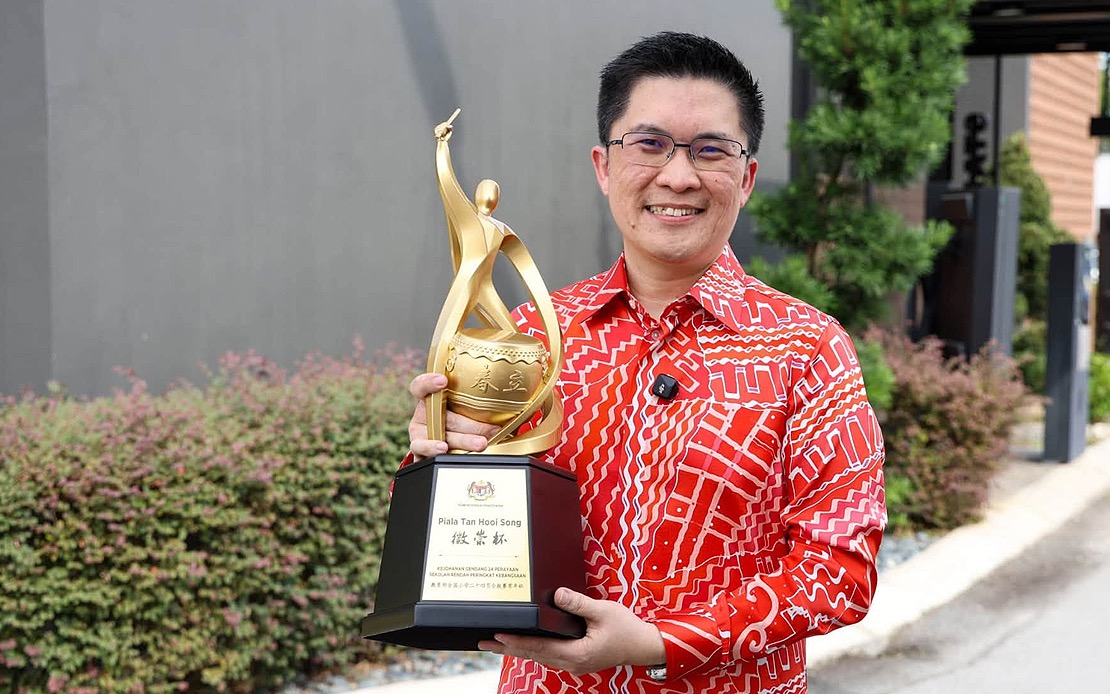
The Ministry of Education has committed to pursuing international recognition for Gendang 24 Perayaan through a formal application to UNESCO, positioning the traditional Malaysian percussion art form as a candidate for global cultural heritage status. Deputy Education Minister Wong Kah Woh announced the initiative at the closing ceremony of the National Primary Schools Gendang 24 Finals Competition held in Ipoh, signalling the government's determination to elevate a uniquely Malaysian cultural expression onto the world stage.
The UNESCO application represents a strategic priority within the ministry's broader framework for safeguarding traditional arts. Wong outlined that detailed discussions between ministry officials and community stakeholders have already commenced to chart the pathway toward international recognition. The groundwork accelerated this year, with his team having convened in May to examine concrete measures and structural improvements needed to strengthen Gendang 24 Perayaan's candidacy for the prestigious designation.
Central to the ministry's preservation strategy is the Train the Trainers programme, an educational initiative designed to equip school instructors with the knowledge and skills necessary to introduce Gendang 24 Perayaan to their students. By building institutional capacity within schools, the ministry hopes to create sustainable channels through which the art form can flourish across the country's education system. This grassroots approach recognises that cultural transmission depends on embedding traditional practices within formal learning environments where students encounter them as legitimate academic and creative subjects.
The cultural significance of Gendang 24 Perayaan extends back more than three decades. Two pioneering cultural figures, the late Tan Hooi Song and Tan Chai Puan, established the art form in Malaysia in 1988, creating a distinctive percussion ensemble that has since become intrinsically linked with Malaysian identity. The Malaysian government formally recognised Gendang 24 Perayaan as Intangible National Heritage in 2009, an acknowledgement that preceded but paved the way for the current international recognition efforts.
The trajectory of Gendang 24 Perayaan's growth illustrates how traditional arts can achieve contemporary relevance when properly supported. What began as a relatively niche cultural practice confined to a handful of school teams has expanded into a nationwide movement, with hundreds of schools now actively nurturing the art form among their students. This organic expansion demonstrates genuine grassroots enthusiasm among younger Malaysians, contradicting the narrative that traditional heritage necessarily competes with or loses ground to modern entertainment.
The recent National Primary Schools Gendang 24 Finals Competition provided tangible evidence of this momentum. Sixteen elite primary school teams, collectively representing 417 students drawn from schools across the nation, converged in Ipoh to showcase their mastery of the percussion ensemble. The scale of participation reflects not merely administrative support but authentic student interest in preserving and advancing a cultural practice rooted in Malaysian soil. The competition, jointly organised by the Ministry of Education's Sports, Co-curricular and Arts Division and the Malaysia Gendang 24 Perayaan Association, secured sponsorship from Yayasan Sime Darby, indicating private sector recognition of the initiative's merit.
For Malaysian policymakers, the UNESCO recognition strategy serves multiple objectives beyond cultural preservation. International designation would enhance Malaysia's soft power profile, positioning the nation as a guardian of distinctive Southeast Asian heritage at a time when cultural globalisation threatens the survival of regional traditions. UNESCO Intangible Cultural Heritage status provides both validation and protection, creating international frameworks that discourage cultural appropriation and encourage respectful documentation and transmission.
The timing of this initiative reflects broader regional developments. Across Southeast Asia, governments increasingly recognise that cultural heritage constitutes a form of non-renewable national asset deserving investment and protection equivalent to environmental conservation. Countries like Indonesia, Thailand, and the Philippines have successfully secured UNESCO recognition for various cultural practices, establishing a competitive but ultimately cooperative regional ecosystem around intangible heritage.
Implementing the UNESCO strategy requires sustained coordination across multiple stakeholders. The ministry must maintain momentum on the Train the Trainers programme while simultaneously assembling comprehensive documentation of Gendang 24 Perayaan's cultural significance, transmission methods, and community practitioner networks—precisely the type of detailed evidence that UNESCO evaluation committees require. The Malaysia Gendang 24 Perayaan Association will likely shoulder considerable responsibility for providing historical records and demonstrating community commitment to ongoing practice and transmission.
For Malaysian students, engagement with Gendang 24 Perayaan through school programmes offers educational benefits extending beyond cultural exposure. Learning traditional percussion ensembles develops discipline, collaborative skills, and rhythmic sophistication while grounding young Malaysians in their own heritage. When framed within UNESCO's international recognition context, students understand themselves as participants in a valued global cultural conversation rather than merely executing obligatory school activities.
The path toward UNESCO recognition typically spans several years, requiring careful documentation and strategic advocacy. However, Wong's public commitment signals that Malaysia approaches this objective with seriousness and institutional backing. Success would establish Gendang 24 Perayaan among an elite category of globally recognised Malaysian cultural practices, providing an international platform that reinforces its value within domestic educational and cultural spheres.
Ultimately, the ministry's UNESCO initiative demonstrates how governments can mobilise resources to counteract cultural erosion. By elevating Gendang 24 Perayaan to international prominence, Malaysia invests in cultural continuity for future generations, ensuring that a distinctive Malaysian musical tradition remains vibrant and relevant in an increasingly interconnected world.

