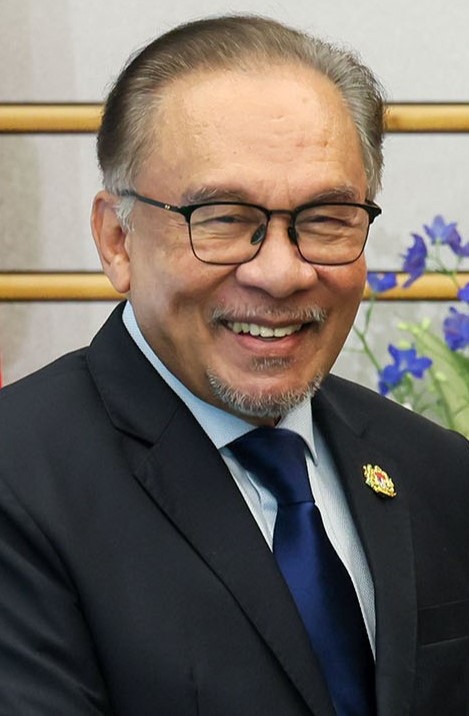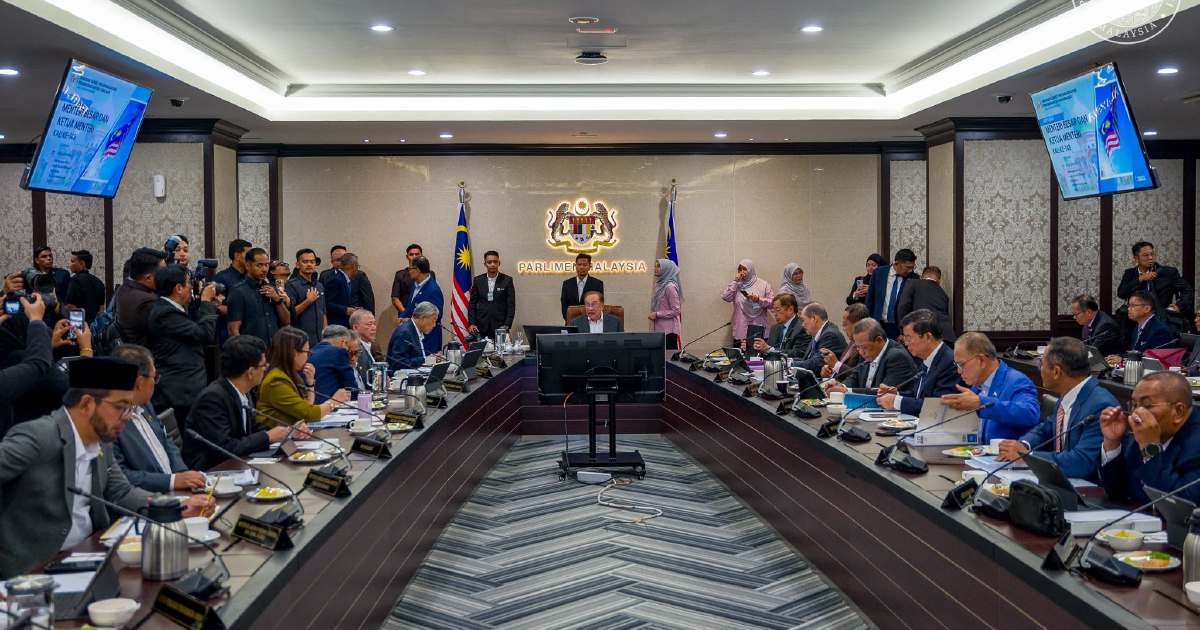
Prime Minister Datuk Seri Anwar Ibrahim convened the 149th Meeting of Menteris Besar and Chief Ministers at the Parliament building in Kuala Lumpur, positioning economic recovery and stability as the central agenda item. The gathering of state leaders reflected the federal government's push to coordinate a unified approach to revitalising Malaysia's economy in an increasingly turbulent global environment, bringing together the chief executive officers of all 13 Malaysian states to align on economic priorities.
The timing of this high-level assembly underscores growing concerns within the Malaysian leadership about the ripple effects of geopolitical instability on the nation's economic trajectory. Global markets have grown jittery following escalating tensions in the Middle East, which threatens to disrupt supply chains, elevate energy costs, and dampen investor confidence across Asia-Pacific economies. For Malaysia, a trading nation heavily dependent on regional commerce and international investment, such external shocks pose tangible threats to growth projections and employment levels across both peninsula and East Malaysian states.
The selection of economic revival as the meeting's focal point signals that the federal government recognises significant structural challenges within the domestic economy that require coordinated action across state administrations. Rather than viewing this as a top-down directive, the assembly format itself reflects constitutional realities and political pragmatism: states retain substantial autonomy over land, agriculture, and local economic development, meaning federal economic strategies require buy-in and collaborative implementation at the state level to gain traction.
This gathering represents an important mechanism for federal-state dialogue on economic matters, particularly given Malaysia's federal structure where both Kuala Lumpur and state capitals pursue concurrent economic agendas. The Menteris Besar from states like Selangor, Perak, and Johor, alongside Chief Ministers of Sabah and Sarawak, bring distinct economic profiles and regional perspectives to discussions. Selangor, as the nation's manufacturing and services hub, faces different challenges than agricultural-dependent Terengganu or resource-rich Sarawak, necessitating nuanced policy discussions that accommodate these variations.
Officials at such meetings typically discuss policy coordination on matters ranging from investment incentives and trade facilitation to workforce development and infrastructure improvements. State leaders would have opportunities to present regional economic concerns and propose tailored interventions suited to their local contexts, while the Prime Minister's office can articulate overarching national economic strategies and seek state cooperation in implementation. This two-way exchange proves critical for understanding ground-level obstacles to economic performance that macro-level policymakers might overlook.
The Middle East instability referenced in the meeting agenda carries particular significance for Malaysia's diverse economy. Oil-importing sectors benefit from lower energy prices if crude costs decline, but Malaysia's substantial petrochemical and petroleum export industries could suffer from price volatility. Tourism, a significant foreign exchange earner, risks disruption as regional instability may deter international visitors and complicate travel logistics. The manufacturing sector, integrated into regional supply chains, faces potential logistical complications and increased shipping costs if Middle Eastern disruptions persist or expand.
Economic revival represents more than growth statistics for a government in its second year of administration. It carries implications for employment creation, wage growth, and public revenues needed to fund development programmes and social services. State leaders convened at Parliament would logically have focused on identifying shared bottlenecks limiting growth—whether infrastructure deficiencies, skills gaps, regulatory impediments, or insufficient private investment—that coordinated federal-state action might address more effectively than siloed efforts.
The convening of all state executives also reflects confidence-building imperatives during uncertain times. When geopolitical shocks threaten economic stability, visible federal-state coordination signals to both domestic and international investors that Malaysia's leadership maintains grip on economic stewardship and possesses mechanisms for responsive policymaking. This messaging can prove as valuable as specific policy announcements in stabilising market sentiment and investor expectations during volatility.
For Southeast Asia more broadly, Malaysia's economic trajectory influences regional dynamics given its position as a major trade partner, financial centre, and policy influencer within ASEAN. Decisions made at such federal-state gatherings regarding investment strategies, regional cooperation, and economic priorities can subtly shift broader Southeast Asian economic patterns. If Malaysia successfully coordinates federal-state responses to global headwinds, it may set examples for regional peers managing similar federal systems or decentralised governance structures.
The 149th meeting also occurs within Malaysia's broader policy context of managing inflation expectations, currency stability, and fiscal constraints following various development expenditures and subsidy commitments. State leaders, managing their own fiscal situations and development agendas, would have interests in understanding federal support mechanisms and budget allocations that might enable their own economic initiatives. Coordinating these expectations prevents friction and ensures smoother policy implementation across the federation.