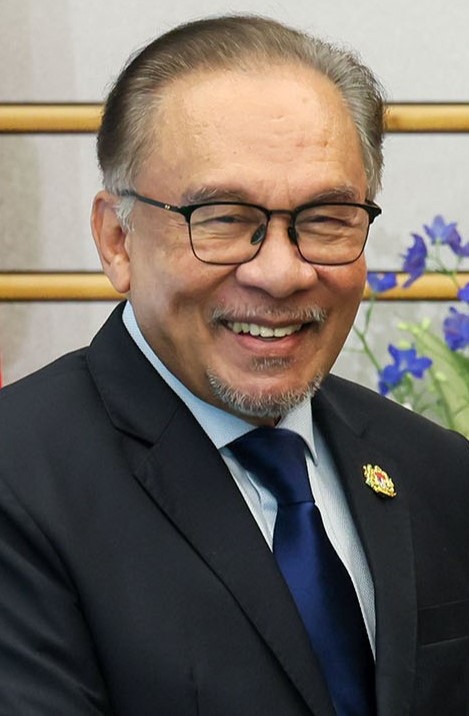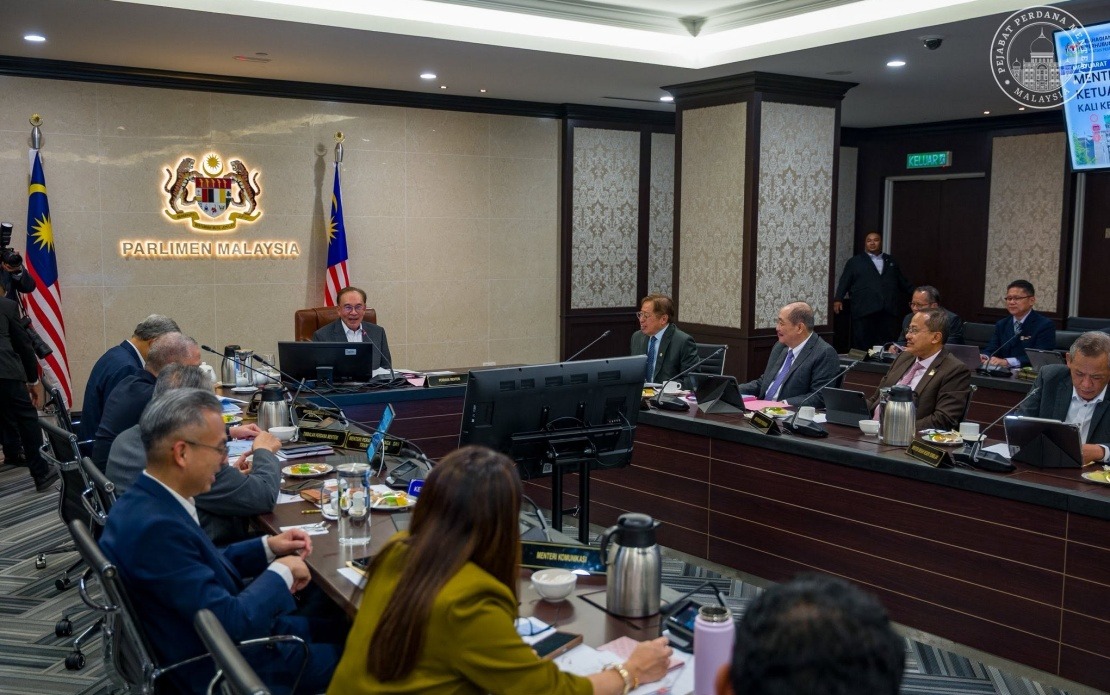
Prime Minister Datuk Seri Anwar Ibrahim brought together Malaysia's state leaders for the 149th Meeting of Menteris Besar and Chief Ministers at the Parliament Building in Kuala Lumpur on June 23, with economic revitalisation emerging as the central preoccupation amid turbulent global conditions. The gathering underscored the government's determination to address mounting challenges while pursuing a coordinated approach to policy implementation across federal and state administrations.
The geopolitical backdrop dominated much of the discussion, as conflicts in West Asia continue to reverberate through international markets and supply chains. These regional tensions have created palpable uncertainty for Malaysia's open economy, which remains vulnerable to fluctuations in global trade and investment flows. The meeting recognised that such external shocks demand a unified response, with both federal and state governments working in tandem to cushion their economies and populations against potential spillover effects. The emphasis on strengthening economic competitiveness during this window of instability reflects an understanding that Malaysia cannot afford complacency when international conditions remain unpredictable.
Beyond immediate economic concerns, the assembled leaders also grappled with an imminent environmental challenge: the anticipated El Niño phenomenon. The scientific consensus points to significant disruptions across multiple sectors vital to Malaysia's economy and food security. Water supply systems—already strained in certain regions during dry periods—face potential acute shortages that could affect both domestic consumption and industrial operations. The agricultural sector, which employs hundreds of thousands of rural Malaysians and contributes meaningfully to the nation's food self-sufficiency, stands particularly vulnerable to prolonged dry conditions and elevated temperatures.
Food security emerged as a critical nexus where economic, environmental, and social welfare concerns intersect. A severe El Niño could disrupt local production of staple crops and livestock, potentially forcing Malaysia into greater reliance on imports at a time when global food prices remain volatile. The implications extend beyond mere price inflation; they touch on the government's fundamental responsibility to ensure that all Malaysians have reliable access to affordable nutrition. This dimension elevates El Niño from a weather phenomenon into a matter of national resilience and social stability.
The risk of extreme heat and haze constituted another dimension of the environmental discussion. Southeast Asia has witnessed devastating transboundary haze episodes in recent years, triggered by forest fires in neighbouring jurisdictions. An El Niño-induced drought could intensify fire risk regionally, potentially overwhelming air quality and public health systems across Malaysia. The meeting's attention to this hazard demonstrates awareness that environmental governance cannot be neatly compartmentalised within state boundaries or even national borders—it requires sophisticated coordination and contingency planning.
Anwar's emphasis on policy integration and efficiency signals a subtle but important shift in governance philosophy. The directive that every initiative be implemented in a more integrated, efficient, and people-centric manner suggests that past approaches may have suffered from fragmentation or lack of coordination between government layers. By foregrounding integration, the Prime Minister acknowledges that economic revival cannot be achieved through isolated sectoral interventions or ad-hoc state-level measures. Instead, coherent national strategy, complemented by responsive state implementation, offers the most promising pathway forward.
The commitment to people-centric policymaking carries particular resonance in Malaysia's contemporary context. Following periods of economic turbulence and social concern over cost-of-living pressures, reassuring Malaysians that their well-being remains central to government calculations helps rebuild public confidence. This approach also recognises that sustainable economic growth depends not merely on aggregate GDP expansion but on tangible improvements in living standards across income groups and geographic regions.
Anwar's reference to attracting quality investments underscores a strategic preference for higher-value economic activity over purely quantitative capital inflows. Malaysia has long competed for foreign direct investment against rivals across Southeast Asia and beyond. Channelling capital toward sectors offering superior productivity, technological spillovers, and skilled employment opportunities positions the nation for long-term competitiveness. This aspiration requires not only marketing advantages but also institutional coherence—which circles back to the need for effective federal-state coordination.
The spirit of consensus and togetherness highlighted in the meeting's outcome carries weight in Malaysia's federalist system, where state governments exercise considerable autonomy in crucial domains including land, education, and local taxation. Federal-state harmony is never guaranteed; historical disagreements over resources, implementation authority, and fiscal distribution have sometimes strained relationships. A meeting that produces genuine consensus around economic strategy and environmental preparedness therefore represents a valuable achievement in creating conditions for unified national action.
The broader implications for Malaysian readers extend to employment prospects, cost of living, and quality of life in coming months. If the assembled leaders successfully translate their economic revitalisation commitments into concrete measures—whether through investment facilitation, skills development, or targeted support for vulnerable sectors—ordinary Malaysians may experience tangible benefits. Conversely, failure to execute coherently could leave the country exposed when global conditions inevitably shift or when El Niño impacts materialise. The next phase involves monitoring how state governments implement federal guidance and whether promised coordination translates into visible outcomes on the ground.