Novak Djokovic arrives at Flushing Meadows with a realistic opportunity to capture his 25th Grand Slam title and surpass Margaret Court's all-time record, buoyed by circumstances that have conspired in his favor heading into the year's final major. The Serbian champion has watched from the sidelines as younger rivals Jannik Sinner and Carlos Alcaraz have dominated the sport, combining to claim ten of the previous eleven Grand Slam crowns between them. Yet injuries and recovery timelines have now created an opening that Djokovic, at 37 years old and with limited preparation, believes he can exploit to finally break through a glass ceiling that has frustrated him for nearly two years.
Since claiming victory at the U.S. Open in 2023, Djokovic has remained a significant threat at the Grand Slams but has been unable to add to his tally as Alcaraz and Sinner have asserted their dominance. The pair's combined record against him across the last six major tournaments stands at five wins against one loss, a sobering statistic that underscores the generational challenge facing the veteran competitor. His most promising moment came in January when he reached the Australian Open final, only to succumb to Alcaraz in straight sets, a defeat that crystallized the obstacle he faces in his quest for an unprecedented 25th major.
Yet Djokovic enters New York armed with a mentality that has defined his career. In a recent documentary released ahead of the tournament, he invoked the Serbian concept of inat—a term encompassing determined stubbornness and defiance when facing widespread skepticism. This psychological framework, he suggested, reflects a broader cultural trait among Serbian athletes who thrive when doubted. The reference encapsulates his approach to a challenge that many observers consider beyond his realistic grasp at this stage of his career.
The draw has opened favorably for the Serb in ways that seemed improbable months earlier. Sinner's withdrawal due to a knee injury removes one of the tournament's favorites and clears a significant portion of the bracket. Alcaraz, the defending champion, returns after more than four months away nursing a wrist injury that raises legitimate questions about his physical readiness and competitive sharpness. The question of whether the Spaniard can immediately rediscover his peak form after such an extended absence remains unanswered, though his pedigree on the sport's grandest stages suggests he cannot be dismissed lightly.
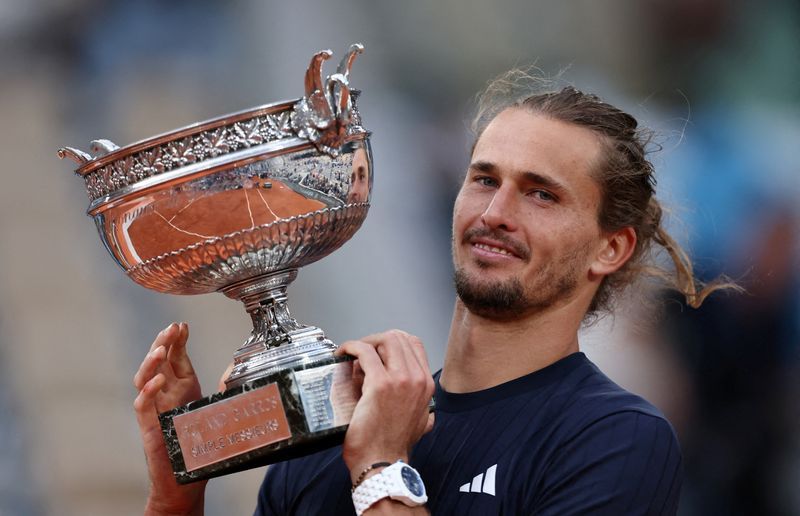
Alexander Zverev, however, represents perhaps the most formidable obstacle in Djokovic's path. The German secured his maiden Grand Slam title at Roland Garros earlier this year and subsequently reached the Wimbledon final, establishing himself as a genuine contender across multiple surfaces. Unlike the uncertain status of Alcaraz or the absence of Sinner, Zverev arrives in peak condition and with demonstrated tournament momentum. His emergence as a major champion has fundamentally reshaped the competitive landscape, giving him the confidence and experience that comes with a breakthrough victory on tennis's biggest stage.
Roger Federer, the Swiss tennis icon, has cautioned against writing off Djokovic's chances despite his age and the formidable opposition. Speaking to reporters in New York, Federer noted that Djokovic's track record of delivering performances across every major venue and circumstance demands respect. The legendary rival emphasized that as long as Djokovic remains in the draw, the possibility of victory cannot be dismissed, a sentiment that likely reflects genuine conviction rather than mere courtesy.
Beyond the established contenders vying for supremacy, American players have positioned themselves as serious challengers to reclaim the title for the United States. Ben Shelton, the Canadian Open champion, has captured attention following his victory in Montreal earlier this month after a disappointing first-round exit at Wimbledon. Frances Tiafoe, runner-up at Cincinnati, and Taylor Fritz, finalist at last year's U.S. Open, represent credible American challengers to end a 23-year drought in men's singles at Flushing Meadows.
Andy Roddick, the 2003 U.S. Open winner, has identified Shelton as worthy of genuine contention but cautioned that consistency across two weeks remains his critical test. The American has secured four titles on different surfaces this season, but his performance in major tournaments has been inconsistent, particularly when navigating early rounds. Roddick emphasized on his podcast that Shelton must navigate the first week successfully to genuinely challenge in the later stages, a standard the talented American has struggled to meet throughout 2024.
The tournament also features emerging talents such as Arthur Fils and Rafael Jodar eager to announce themselves on the grand stage. Felix Auger-Aliassime, who reached the semi-finals last year, seeks to build upon what remains his career-best Grand Slam performance. The depth of the field suggests that while Djokovic, Zverev, and Alcaraz command attention, multiple pathways to the title exist for hungry competitors seeking breakthrough moments.
Djokovic's pursuit of a fifth U.S. Open title carries profound significance not merely for the statistical achievement but for what it represents about longevity and mental fortitude at professional tennis's highest echelon. The convergence of rival injuries, his psychological framework grounded in inat, and his demonstrated ability to perform under pressure creates a narrative that transcends sport. For Malaysian and regional readers, Djokovic's challenge resonates as a meditation on perseverance against seemingly insurmountable odds, a theme that extends beyond tennis into broader considerations of longevity and competitive ambition in any field.

