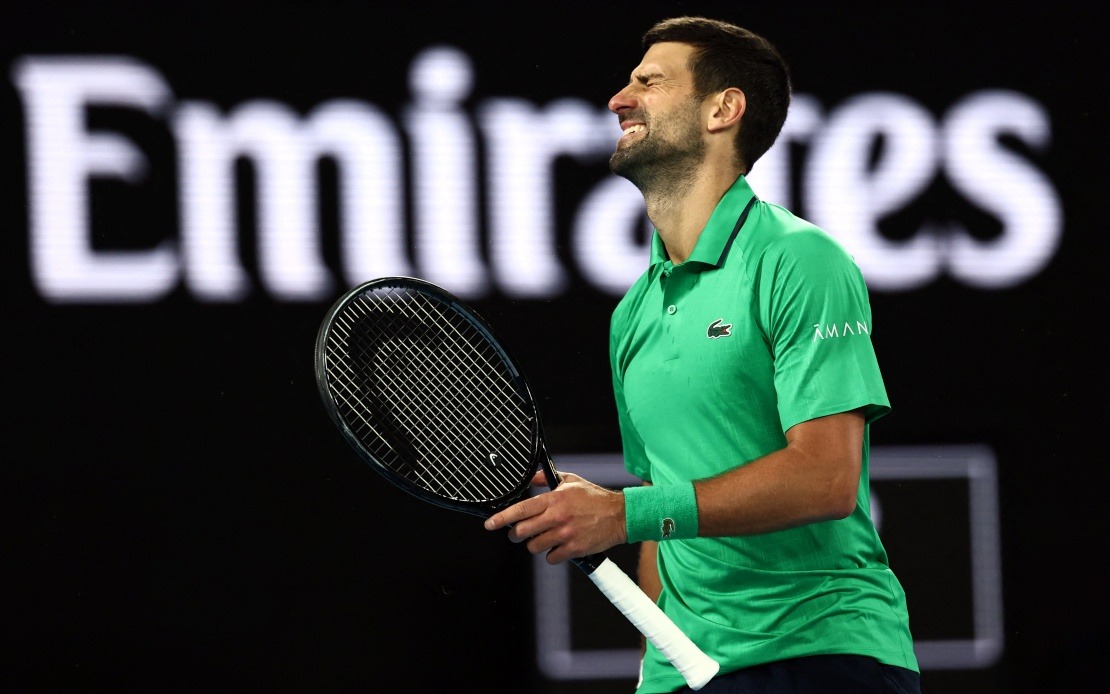
At the All England Club on Friday, Serbian tennis icon Novak Djokovic achieved a remarkable milestone by claiming his 105th Wimbledon singles victory, drawing level with the record previously held by Roger Federer. The achievement came as Djokovic dispatched France's Arthur Rinderknech in a gruelling four-set encounter that stretched across three hours on Centre Court, ultimately winning 7-5, 6-4, 1-6, 7-6 (7-4) to advance into the fourth round of the tournament.
At 39 years old, Djokovic has now secured his 18th appearance in the last 16 at Wimbledon, an extraordinary testament to his longevity and consistency at the sport's most prestigious grass-court championship. The seven-time Wimbledon champion, who also holds the distinction of being a record 24-time Grand Slam champion overall, has become synonymous with breakthrough performances across tennis's most celebrated tournaments. This latest victory underscores his continuing relevance at the highest level of professional tennis, even as younger players emerge to challenge his dominance.
When addressing the crowd after his victory, Djokovic displayed characteristic wit, proposing a playful solution to the logjam in the record books. "I propose a match between me and Roger for 106! Whoever wins it, gets it. Let's just stop this here and let's call him down," he quipped, eliciting warm reactions from spectators. Beyond the humour, however, Djokovic emphasised the genuine significance of the achievement, reflecting on what it means to inscribe one's name in tennis history at a venue that has held special meaning throughout his career. He described the honour as immense and acknowledged that Wimbledon has represented a childhood dream, though he stressed his focus remains on individual matches rather than personal records.
Djokovic's next challenge will see him confront Russian qualifier Roman Safiullin in a quarter-final encounter, presenting another opportunity to extend his remarkable tally. His continued progression through the tournament despite his age suggests that the question of whether he will ultimately surpass Federer's record remains very much open, keeping observers and fans engaged in one of tennis's most compelling ongoing narratives.
In parallel developments at Wimbledon, the men's defending champion Jannik Sinner continued his impressive form with a commanding performance against American Jenson Brooksby. The Italian world number one dispensed with Brooksby's challenge with consummate ease, winning 6-4, 6-3, 6-4 in a display that further consolidated his credentials as the tournament's most consistent performer. Notably, Sinner extended an extraordinary Open Era record by securing his 20th consecutive victory in third-round Grand Slam matches, demonstrating a level of dependability that separates elite players from the field.
Sinner acknowledged the emotional lift provided by crowd support during his match, suggesting that the energy from spectators played a tangible role in his performance. This connection between athlete and audience remains one of the enduring features of Wimbledon, where the atmosphere and tradition of the tournament can substantially influence outcomes and player psychology.
On the women's side of the draw, top seed Aryna Sabalenka of Belarus maintained her challenge for a maiden Wimbledon title by defeating former French Open champion Jelena Ostapenko in straight sets, 6-4, 6-4. The Belarusian player, who has established herself as one of contemporary tennis's most formidable forces, demonstrated the controlled aggression that characterises her game while managing Ostapenko's defensive resilience and occasional brilliance.
Sabalenka's next opponent will be Naomi Osaka, the four-time Grand Slam champion, creating a collision between two of the sport's most compelling personalities. Osaka engineered her own pathway to this encounter by dismantling Daria Kasatkina with remarkable efficiency, winning 6-1, 6-3 and reaching the Wimbledon fourth round for the first time in her career. This breakthrough suggests that Osaka, who has re-established herself on the circuit following personal challenges, is finding her stride at a tournament that had previously eluded her deeper runs.
When discussing the impending showdown, Sabalenka framed it as precisely the type of encounter she relishes, noting that Osaka represents another aggressive player capable of generating explosive power from both wings. The Belarusian insisted she remains prepared for whatever tactical demands the match presents, declaring her readiness to engage in a high-intensity battle. This matchup carries significant intrigue for regional audiences across Southeast Asia, where Osaka maintains substantial popularity, while Sabalenka continues to build her global profile through sustained excellence.
The fourth-round stage of Wimbledon typically produces some of the tournament's most memorable encounters, as the field narrows and remaining players represent the sport's elite. With Djokovic pursuing history, Sinner defending his title, and Sabalenka pursuing Osaka in what promises to be an entertaining women's clash, the championship enters a critical phase where momentum, form, and mental fortitude will determine outcomes. For Malaysian and Southeast Asian tennis followers, these developments offer compelling storylines spanning age, regeneration, and the sport's ongoing global evolution.

