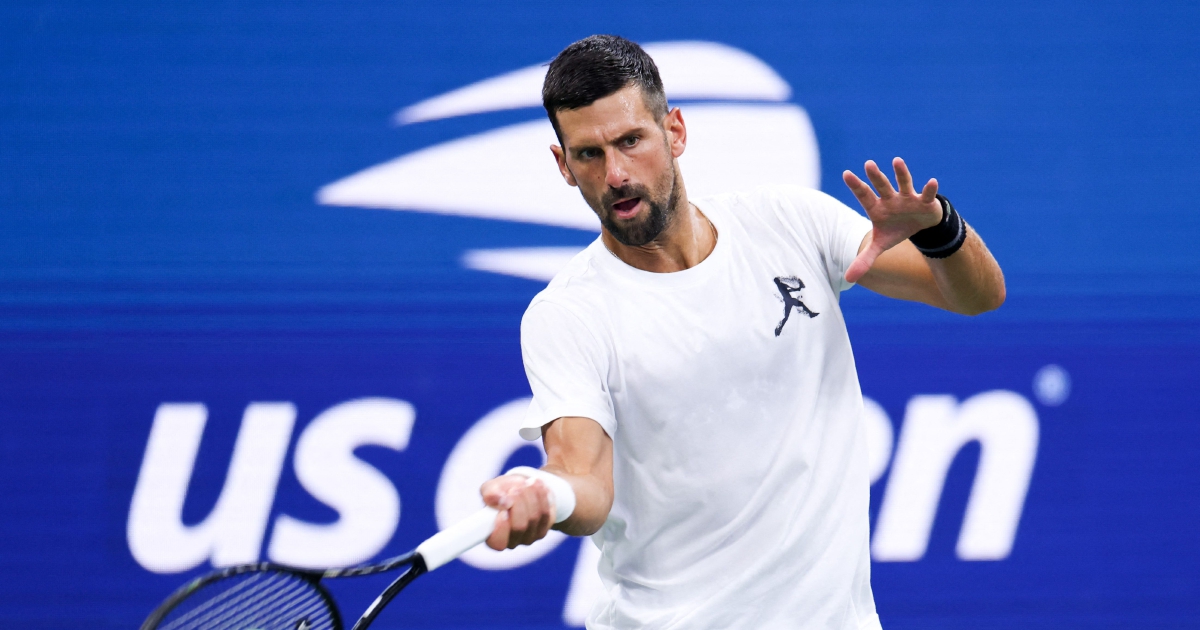
Novak Djokovic enters the US Open tournament with singular focus: achieving his 25th Grand Slam title and etching his name permanently atop tennis history. Since capturing the 2023 US Open championship, the Serbian champion has matched Margaret Court's benchmark of 24 major titles, a plateau that has only intensified his competitive drive to break through to uncharted territory.
The pursuit of record-breaking success represents far more than mere statistical achievement for the 37-year-old maestro. Djokovic's quest carries profound implications for how future generations will define greatness in professional tennis. His methodical approach to training, match preparation, and mental fortitude has become the template that contemporary players study and attempt to replicate. The margin between his level and the field remains substantial enough that his pursuit of a 25th title commands genuine consideration as a realistic objective rather than fantasy.
What distinguishes Djokovic's current campaign from earlier phases of his career is the accumulated wisdom earned through three decades of competing at elite levels. Unlike younger challengers who rely principally on raw athleticism and explosiveness, Djokovic has engineered a game built on sustainability and tactical adaptability. His return of serve remains formidable, his court positioning continues to frustrate opponents, and his ability to dictate rallies from the baseline provides structural advantages that persist regardless of age-related changes.
The competitive landscape surrounding this particular Grand Slam has shifted considerably since his 2023 triumph. Jannik Sinner emerged as a dominant force, claiming multiple major titles and establishing himself as the tour's leading player. Carlos Alcaraz, despite his youth, has demonstrated championship pedigree across multiple surfaces. Yet Djokovic's major tournament record over the past eighteen months suggests that the hunger driving his pursuit remains undiminished and his capacity for peak performance during the most consequential competitions remains intact.
For Malaysian and Southeast Asian tennis enthusiasts, Djokovic's narrative carries particular resonance. The region has produced emerging talent and growing participation in professional tennis, yet the pathway to Grand Slam achievement remains extraordinarily challenging. Observing how Djokovic navigates the pressures accompanying a historic pursuit offers instructive lessons about mental resilience, adaptation to changing circumstances, and the investments required to sustain elite performance over extended periods.
The US Open venue itself holds special significance within Djokovic's career architecture. Hard courts have consistently represented his most comfortable playing surface, and the tournament's demanding schedule and atmospheric conditions create an environment where his defensive acuity and baseline dominance prove particularly potent. The New York crowd, traditionally polarized regarding Djokovic, adds psychological complexity to his pursuit, though the player has historically channeled external pressure into performance catalysts rather than distractions.
Margaret Court's record has shadowed Grand Slam discussions for decades. The achievement represented an endpoint for generations of tennis professionals who approached it as an unreachable summit. Djokovic's proximity to surpassing this benchmark signals a fundamental shift in how longevity, consistency, and peak performance intersect within professional tennis. Should he achieve this milestone, it would represent not merely a numerical advantage but rather validation of a strategic career management philosophy that has sustained his competitive relevance across multiple generational waves of tennis talent.
The broader implications extend beyond individual glory. Djokovic's continued pursuit at an age when most professional athletes have transitioned away from competition challenges conventional assumptions about athletic decline and capacity maintenance. His preparation protocols, recovery methodologies, and mental conditioning regimens have become subject of intense scrutiny across professional sports. Success at this stage would reinforce the notion that tennis, perhaps uniquely among sports, rewards longevity and intelligent progression through career phases.
Physical considerations inevitably accompany discussions of aging athletes in demanding sports. Yet Djokovic has managed injuries and physical limitations with remarkable effectiveness throughout his career. His willingness to withdraw strategically from tournaments when necessary and his investment in preventative conditioning suggest a player who has internalized the mathematics of risk versus reward. This philosophical approach contrasts sharply with earlier eras when champions felt compelled to participate in every available competition regardless of physical status.
The 2024 US Open therefore represents not an isolated tournament but rather a culminating chapter in one of sports' most compelling narratives. Djokovic arrives prepared, motivated, and positioned as a legitimate contender despite the field's quality and depth. For tennis followers throughout Southeast Asia and beyond, his pursuit of historic achievement provides compelling drama that transcends statistical consideration and speaks to fundamental questions about excellence, determination, and the human capacity to sustain peak performance across decades.

