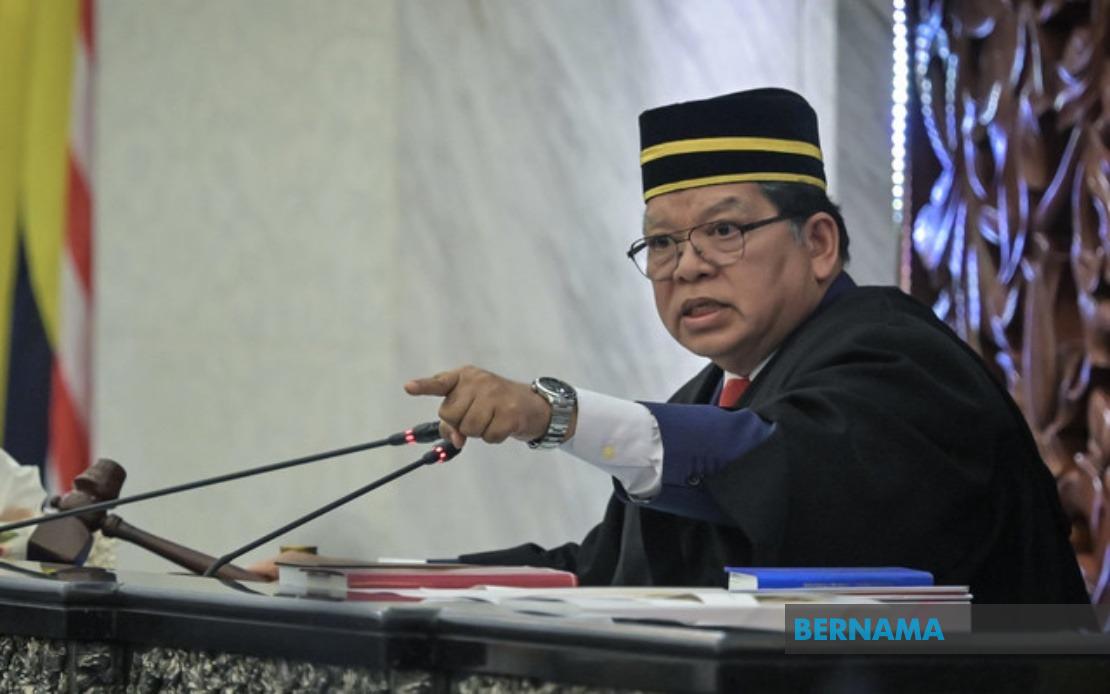
The Speaker of the Dewan Rakyat, Tan Sri Dr Johari Abdul, formally acknowledged on August 11 that he has received Wong Chen's resignation letter as the Member of Parliament for Subang, marking the end of the legislator's tenure representing the constituency. The resignation takes effect from August 10, following Wong's public announcement of his decision to step down from the position.
Wong Chen had made his departure known through a Facebook post, in which he voluntarily confirmed his relinquishment of the parliamentary seat. Accompanying his announcement was a copy of the formal notice he had submitted to the Speaker, dated August 5, providing advance notice of his intention to resign. This procedural approach ensured that both the Speaker and the public were informed simultaneously of his decision.
In his statement at the Special Dewan Rakyat Sitting, the Speaker detailed the constitutional steps being undertaken to manage the vacancy. Under Article 54(1) of the Federal Constitution, he explained that the Election Commission has been formally notified of the empty Subang parliamentary seat. This notification triggers the process for organising a by-election to fill the position, as required by Malaysian electoral law.
The resignation of Wong Chen represents a significant development in the Subang constituency, which has been a closely watched parliamentary seat in recent years. Subang, part of the Klang Valley metropolitan area, is an urban constituency with a diverse electorate comprising professional workers, traders, and residents across varying income levels. The by-election that will follow will likely draw considerable attention from both ruling and opposition coalitions seeking to gain or retain influence in this strategically important region.
Wong Chen had served as the Subang MP and was known for his activism on transparency and governance issues. His departure from Parliament comes at a juncture when the nation continues to navigate complex political dynamics following recent electoral cycles. The timing and circumstances of his resignation may carry implications for the broader political landscape, particularly regarding coalition stability and parliamentary composition.
The formal notification to the Election Commission initiates a statutory timeline for the by-election process. Malaysian electoral law stipulates specific periods within which nominations must be called, candidates registered, campaigning conducted, and polling held. The exact schedule will be determined by the Election Commission in accordance with the Constitution and the Elections Act 1958, with the by-election typically expected to occur within several months of the notification.
Subang's electoral history demonstrates it to be a competitive parliamentary seat where campaign dynamics can shift substantially between general elections and by-elections. The constituency's demographic composition and voter preferences have made it representative of broader trends in suburban Malaysian politics, where considerations of local governance, infrastructure development, and community services often dominate electoral discourse.
The by-election will present an opportunity for voters in Subang to reassess their parliamentary representation and choose a candidate of their preference. Both the ruling coalition and opposition parties are likely to field strong candidates, given the seat's significance within the Klang Valley region and its broader symbolic importance in the context of Malaysian politics. The campaign period will inevitably focus on local issues affecting the constituency as well as national policy matters.
From a procedural perspective, the Speaker's formal confirmation and the Election Commission's notification ensure that all constitutional requirements are met and that the vacancy is being addressed through proper legal channels. This adherence to established processes underscores the importance of institutional protocols in Malaysian parliamentary democracy, even when individual political circumstances change.
The resignation also raises questions about the political trajectory of Wong Chen himself, as stepping down from Parliament represents a significant career decision for any legislator. While his statement indicated a voluntary decision, observers and political analysts will undoubtedly scrutinise the motivations behind his departure and the potential implications for his future involvement in Malaysian politics, whether at the parliamentary level or through other avenues of civic engagement.
For the Subang constituency, the by-election process now begins in earnest, with the Election Commission managing the administrative mechanics while political parties mobilise their resources and grassroots networks. The outcome will be closely monitored as an indicator of current voter sentiment in one of Peninsular Malaysia's most consequential urban constituencies, potentially offering insights into shifting electoral preferences that could influence calculations for the next general election.

