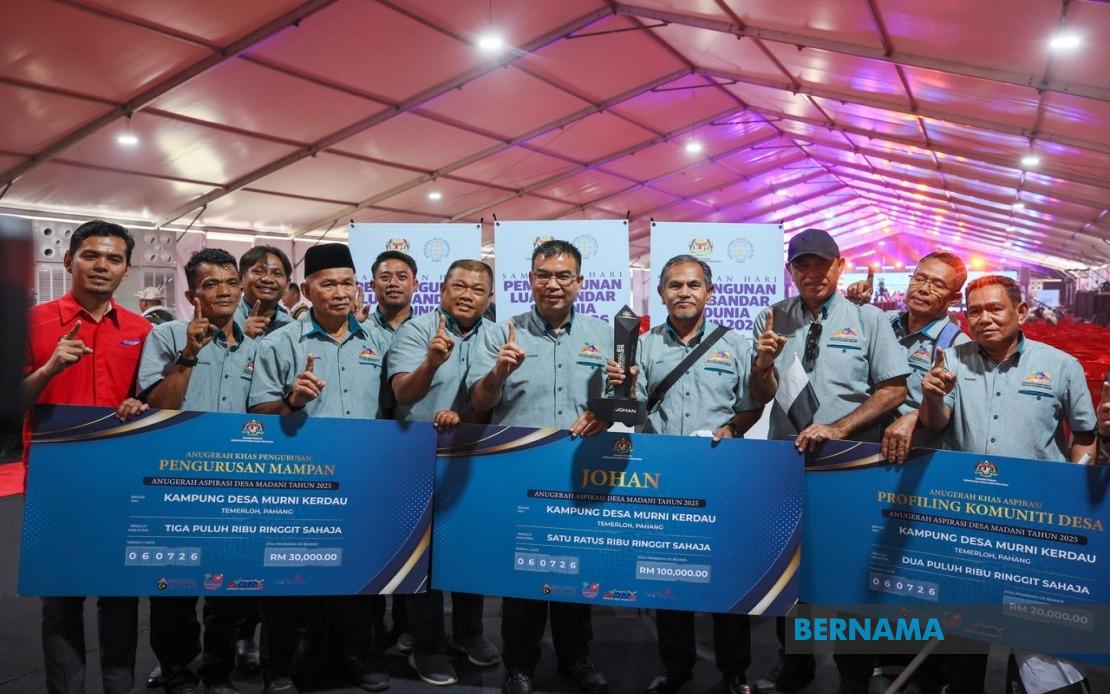
Desa Murni Kerdau, located in Temerloh in Pahang's Kerdau district, has emerged as a standout success story in Malaysian rural development, capturing three prestigious awards at the World Rural Development Day 2026 celebration held at Tun Abdul Razak Stadium in Jengka Sentral. The accolades underscore the village's transformation into a model community that balances traditional living with contemporary economic opportunities, demonstrating what structured grassroots leadership and community engagement can achieve in Malaysia's rural landscape.
The village was honoured with the 2025 MADANI Rural Aspiration Award Champion title, representing the highest recognition available at the event. Additionally, Desa Murni Kerdau received both the Rural Community Profiling Aspiration Special Award and the Sustainable Management Special Award, a rare triple achievement that reflects comprehensive excellence across multiple dimensions of rural development. Deputy Prime Minister Datuk Seri Dr Ahmad Zahid Hamidi presented the primary MADANI award, while Deputy Minister of Rural and Regional Development Datuk Rubiah Wang bestowed the two special recognitions, signalling the significance the federal government places on this community's accomplishments.
According to Mohamad Fazrul Ahmad, chairman of the Village Development and Security Committee (JPKK) for Desa Murni Kerdau, the recognition validates the village's sustained efforts in institutional governance, effective leadership structures, and comprehensive community advancement. Speaking to reporters immediately after the ceremony, he emphasized that the awards represent more than ceremonial honour—they acknowledge concrete achievements in organizing a traditional settlement according to modern development principles. The village has successfully maintained its cultural identity while implementing systematic development frameworks, a balance that many rural communities struggle to achieve amidst rapid urbanization pressures.
The economic vitality of Desa Murni Kerdau demonstrates that rural entrepreneurship can thrive with proper support and community coordination. The village has nurtured approximately twenty entrepreneurs operating across diverse sectors including small and medium-sized enterprises, agricultural production, and the automotive industry. This economic diversification reduces dependency on single income sources and creates multiple pathways for residents to generate sustainable livelihoods. The presence of such varied business activity within a single village suggests effective knowledge-sharing networks and possibly access to skills training or mentorship programs that neighbouring communities might benefit from studying.
The village has also gained recognition as a rural tourism destination through its "Kampung Stay" product, which represents an innovative approach to generating income while preserving rural authenticity. This agritourism and homestay model allows urban visitors to experience traditional village life, creating economic opportunities for residents through hospitality services while maintaining cultural heritage. Such ventures have become increasingly important as rural areas seek revenue sources beyond agriculture, particularly given climate vulnerabilities and market fluctuations affecting traditional farming communities throughout Southeast Asia.
Desa Murni Kerdau is organized as a compact settlement containing approximately two hundred residential units accommodating over six hundred residents. This moderate scale appears conducive to the kind of cohesive community management that the awards recognize. Unlike sprawling rural areas where coordination becomes logistically challenging, the village's size enables effective implementation of collective decisions and community-based projects. The structured organization evident in the establishment of formal committees like the JPKK suggests governance capacity that many Malaysian villages have yet to develop, making Desa Murni Kerdau a potential template for rural administration elsewhere in the nation.
The monetary prizes accompanying these awards will be strategically distributed among residents and reinvested into village improvement initiatives, according to Mohamad Fazrul. This approach ensures that recognition translates into tangible community benefits rather than remaining symbolic. Whether directed toward infrastructure upgrades, public facilities enhancement, or skill-development programs, such reinvestment perpetuates the developmental momentum that earned the awards in the first instance. The decision to distribute winnings among residents reflects participatory governance principles increasingly advocated by rural development agencies throughout the region.
The World Rural Development Day celebration at which Desa Murni Kerdau received these honours serves as a platform for federal recognition of grassroots achievements. By highlighting exemplary villages, such events establish benchmarks and encourage other communities to adopt similar governance and development strategies. The visibility provided by Deputy Prime Minister-level attendance also signals political commitment to rural development as a national priority, particularly relevant given Malaysia's development agenda emphasizing inclusive prosperity across urban and rural zones.
For Pahang and the broader Klang Valley region, Desa Murni Kerdau's achievements hold particular significance. The state has historically grappled with balancing rapid development in certain areas with sustainable progress in interior districts. Success stories from Temerloh and Kerdau demonstrate that systematic local administration combined with entrepreneurial initiative can generate competitive rural economies. The village's recognition may encourage state and federal investment in similar capacity-building initiatives, potentially replicating these success factors across other Pahang communities facing similar development challenges.
The implications of this recognition extend beyond ceremonial acknowledgement to policy relevance for rural development throughout Malaysia and Southeast Asia. As rural areas confront demographic challenges including youth migration to cities, agricultural income pressures, and infrastructure gaps, communities like Desa Murni Kerdau offer practical evidence that deliberate governance structures, economic diversification, and cultural preservation can collectively sustain rural vitality. The awards validate an integrated development approach rather than sectoral initiatives in isolation, suggesting that future rural policy might benefit from supporting holistic community strategies that address governance, entrepreneurship, and cultural sustainability simultaneously.

