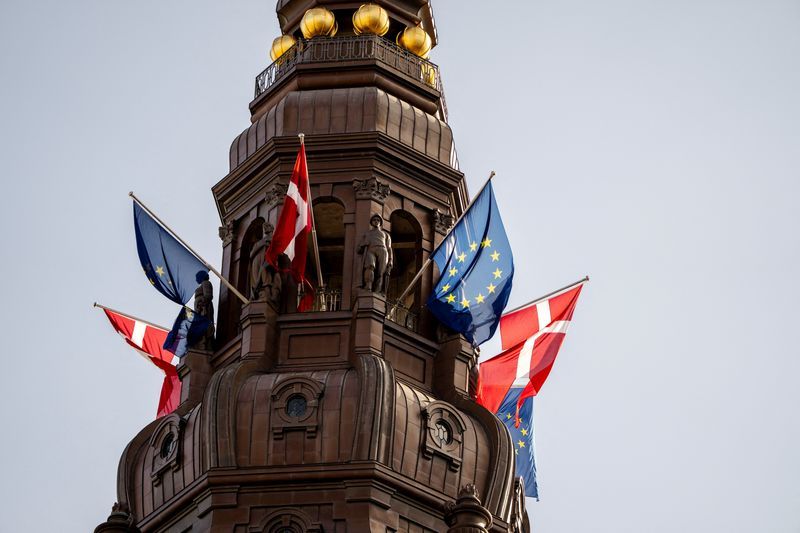
Denmark has entered the legal arena defending publishers' rights in a significant European Court of Justice dispute, filing an official intervention supporting Belgium's government position against major technology firms. The Danish Culture Ministry announced the government's decision to actively participate in the oral hearings scheduled for July 6-7, backing Belgium in its standoff with Streamz, Google, Meta, Spotify, and Sony. This intervention underscores growing concerns among European governments about the rights of news organisations in the digital age and the obligations tech platforms should bear when profiting from journalistic content.
The legal battle centres on Belgium's implementation of Article 15 of the Digital Single Market Directive, which grants publishers specific rights regarding their content when it appears on digital platforms. The five technology companies launched their lawsuit against the Belgian government in 2023, arguing that Belgium's interpretation and application of this EU-wide directive violates broader European law. Their challenge threatens to unravel protections that many European countries, including Denmark, have built into their domestic legislation to ensure media organisations receive compensation when their work is distributed through tech company platforms.
Denmark's decision to intervene reflects the country's conviction that the outcome of this case could substantially weaken press publishers' protections across the European Union. Rather than remaining a passive observer, the Danish government has determined that its own media landscape faces enough at stake to warrant active participation in the court proceedings. This move sends a clear signal that Nordic countries view the protection of publishers' economic rights as fundamental to maintaining a healthy media ecosystem and, by extension, democratic discourse.
At the heart of Denmark's position lies a straightforward principle: technology companies should not be permitted to freely republish or distribute journalistic content without compensating the creators and organisations behind that work. Culture Minister Zenia Stampe articulated this position forcefully, contending that when tech giants utilise media content without payment, the consequences ripple through Danish journalism and ultimately damage the democratic fabric of Danish society. This framing connects press publishers' financial viability directly to democratic health, a perspective increasingly shared across Europe as traditional media business models face pressure from digital distribution.
During the oral hearings, Denmark plans to push the European Court of Justice to provide explicit clarity on two interconnected issues. First, the court must definitively establish the scope and extent of press publishers' rights under the DSM Directive, eliminating ambiguity that tech companies might exploit. Second, the court must articulate the specific financial and legal responsibilities tech platforms bear when they display, distribute, or profit from publishers' content. Denmark's legal delegation views this clarity as essential, believing that vague rulings could allow companies to circumvent their obligations through creative interpretation.
The Belgian case represents only one front in Denmark's broader effort to protect its media industry in the digital era. The country has simultaneously engaged with another landmark European copyright lawsuit examining the legality of Google's use of press releases and journalistic content to train artificial intelligence systems. This parallel involvement demonstrates that Denmark's concerns extend beyond traditional content distribution to encompass emerging technologies that process and learn from published material without explicit publisher consent.
The implications for the broader European media landscape are substantial. Should the technology companies prevail in their challenge, publishers across the continent could lose leverage in negotiating payments for their content. Conversely, a ruling supporting Belgium would reinforce the principle that digital platforms operating in Europe must recognise publishers' property rights in their creations and compensate accordingly. For Southeast Asian nations beginning to grapple with similar issues, Denmark's intervention exemplifies how smaller countries can punch above their weight in European proceedings by aligning with their interests.
Denmark's active participation also reflects a strategic understanding that defending the European Union's press publisher protections requires sustained political engagement at the highest levels. Rather than delegating this matter entirely to legal teams, the Culture Ministry has chosen to position itself prominently within the Danish procedural delegation. This approach ensures that Denmark's democratic concerns and media policy objectives receive consideration alongside purely legal arguments about regulatory interpretation.
The deeper context reveals a fundamental tension in digital regulation. Technology companies argue that overly restrictive interpretations of publishers' rights create operational challenges and potentially violate EU competition law. Publishers counter that without enforceable compensation mechanisms, the economics of journalism become unsustainable, particularly for smaller outlets lacking international reach. Denmark's intervention suggests that at least one European government believes the latter argument merits judicial endorsement, even if it constrains how tech platforms operate within EU borders.

