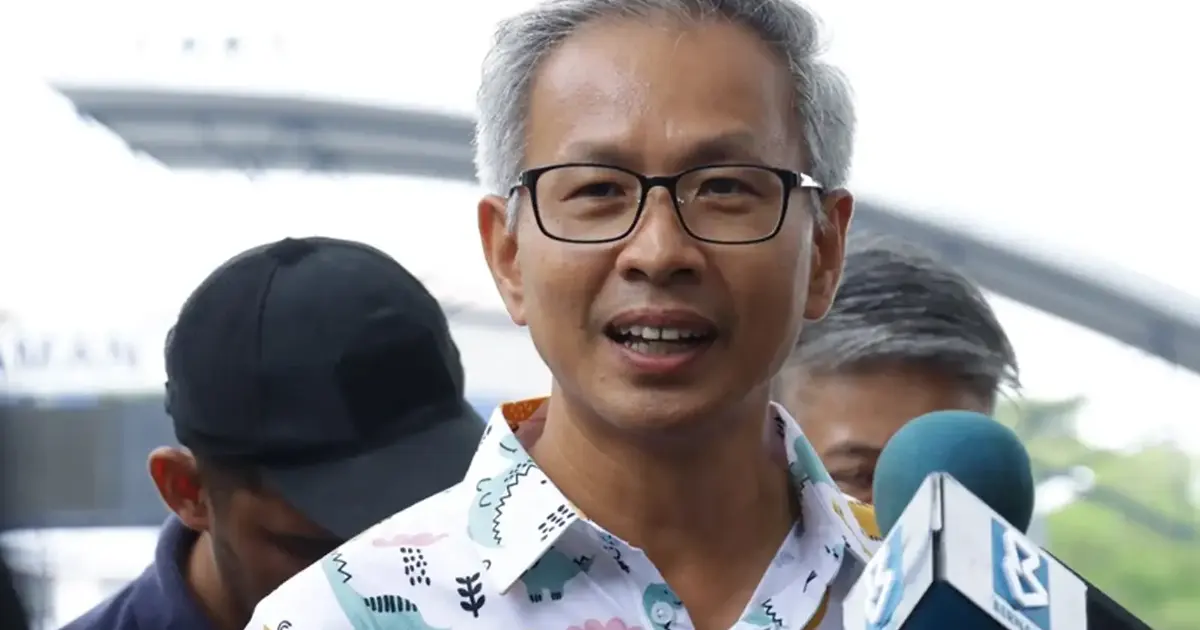
The Malaysian police investigation into Democratic Action Party politician Tony Pua continues despite the passage of time since the original incident, the Home Minister revealed recently. The ongoing probe centres on social media content that the DAP leader shared publicly, which attracted substantial public concern and prompted a significant number of formal complaints to authorities nationwide.
Accumulated complaints totalling 140 police reports have been filed against Pua in connection with the Facebook post in question. This volume of complaints underscores the sensitivity surrounding the matter and the extent of public reaction that the online content generated among various segments of Malaysian society. The sheer number of formal reports suggests the matter has transcended typical partisan disagreement to provoke genuine institutional concern about the nature of the statements made.
The specific content of Pua's Facebook post touched upon two fundamentally important aspects of Malaysia's political and social fabric: the constitutional monarchy system and the Rukun Negara, the national consensus framework that underpins Malaysia's multireligious and multiethnic coexistence. These subjects carry considerable constitutional and symbolic weight within the Malaysian context, making any public commentary about them inherently sensitive and likely to attract official scrutiny under existing legal provisions.
The constitutional monarchy represents a cornerstone of Malaysia's Westminster-derived democratic system and carries deep symbolic significance within the nation's constitutional architecture. Any perceived questioning or criticism of this institution or its role within the governmental structure inevitably triggers formal responses from state authorities concerned with maintaining constitutional stability. Similarly, the Rukun Negara—comprising the five principles of belief in God, loyalty to king and country, upholding the Constitution, rule of law, and institutional morality—forms a unifying creed that all Malaysians are expected to respect and promote actively.
The investigation demonstrates how digital communication by high-profile political figures receives heightened institutional attention in Malaysia. Social media has transformed political discourse dramatically over the past decade, yet the intersection of online speech with constitutional matters remains a contested space where free expression principles encounter state security and stability concerns. For a politician like Pua, whose public profile extends well beyond party circles into business and civil society commentary, the impact of Facebook posts carries particular weight and consequence.
This case exemplifies a broader pattern of investigative attention directed towards opposition politicians in Malaysia. The DAP, as the largest component of the opposition coalition, frequently finds itself subject to police investigations and legal challenges. Critics argue these investigations sometimes reflect legitimate security concerns but other times constitute pressure on dissenting political voices. Supporters of the investigations contend they represent appropriate governmental responses to statements that potentially undermine constitutional principles or national unity frameworks.
The investigation's continuation reflects the seriousness with which Malaysian authorities treat commentary on protected institutions. Articles within Malaysia's constitution explicitly enshrine the special position and privileges of the Yang di-Pertuan Agong and the institution of constitutional monarchy. Separate provisions also protect the status of Islam as the federation's religion. These constitutional protections create a distinct legal and political environment where criticism requires careful calibration to avoid crossing into territory authorities deem problematic or subversive.
For Southeast Asian observers, this case illuminates how different nations within the region navigate the balance between democratic freedoms and institutional protection. Malaysia's approach—emphasising stability through constitutional sanctity—contrasts with other regional democracies that permit broader latitude for constitutional criticism. This reflects Malaysia's particular historical experience with multiple communal tensions and the perceived necessity of rigid constitutional foundations for peaceful coexistence among diverse populations.
The political implications extend beyond Pua himself to broader questions about DAP's space for manoeuvre in Malaysian politics. The party has worked systematically to moderate its image and demonstrate mainstream credentials, particularly following its participation in the Pakatan Harapan government. However, investigations such as this remind the party that certain topics remain effectively off-limits for substantive public debate, regardless of a politician's standing or electoral success.
The ongoing investigation also reflects the evolution of Malaysian law enforcement priorities. While economic crimes and serious offences continue to occupy police resources, high-profile cases involving political figures and constitutional matters receive notable attention. This allocation of investigative effort sends implicit signals about which political boundaries remain non-negotiable within Malaysia's democratic framework, even as the nation experiences electoral competition and transfers of governmental power.
For ordinary Malaysians, particularly those engaged in online political discourse, the Pua investigation serves as a cautionary example about the potential consequences of public commentary on sensitive subjects. Social media literacy in Malaysia increasingly must account for these legal and political realities, shaping how citizens approach contentious constitutional topics in their digital interactions.
The investigation's trajectory will likely continue drawing attention from both opposition supporters and institutional watchdogs. The Home Minister's confirmation that the probe remains active suggests authorities are treating the matter seriously and have not concluded their examination of the Facebook post or its implications. The ultimate resolution—whether through formal charges, administrative closure, or other outcomes—will carry significance beyond the individual case to shape perceptions about the boundaries of permissible political speech in contemporary Malaysia.

