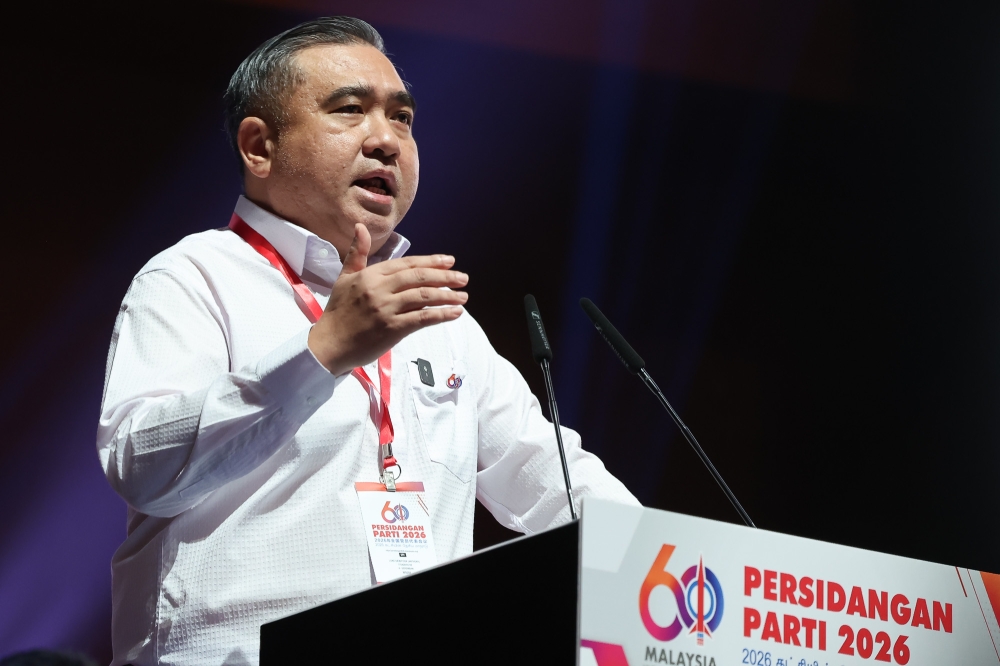
The Democratic Action Party confirmed its unequivocal support for Prime Minister Datuk Seri Anwar Ibrahim's initiative to scrap the Universities and University Colleges Act (AUKU), one of Malaysia's most contentious pieces of legislation governing student activism and institutional governance. The backing underscores consensus among key coalition partners on tackling what has long been viewed as an impediment to academic freedom and democratic expression on campus.
Transport Minister Anthony Loke, speaking as a senior DAP voice, articulated the party's position while simultaneously broadening the scope of the conversation. His statement signals that the AUKU abolition, while significant, represents merely one component of a more comprehensive reform agenda that Loke and his colleagues believe must permeate multiple sectors of governance and administration. This dual-track messaging—applauding the immediate action while pushing for systemic change—reflects DAP's strategy of maintaining momentum on liberalisation while avoiding complacency within the coalition.
The AUKU, enacted decades ago, has remained a lightning rod for civil liberties advocates and student organisations who argue it unnecessarily restricts lawful assembly and political participation among university students. Successive governments have maintained the statute as a mechanism for preserving campus stability, yet this rationale has consistently drawn criticism from observers who contend the law represents bureaucratic overreach. Anwar's administration has positioned the abolition as a flagship reform demonstrating the government's commitment to dismantling legacy restrictions on freedoms.
DAP's unqualified endorsement carries particular weight given the party's historical positioning as a champion of civil liberties and democratic expansion. The party's influence within the current coalition provides it leverage to shape broader reform trajectories, and Loke's comments suggest DAP intends to leverage this moment to advocate for parallel reforms elsewhere. By framing AUKU abolition as insufficient on its own, DAP is effectively signalling to its base and coalition partners that much deeper work remains.
Loke's insistence that reforms must extend beyond AUKU implies critique of what he may view as selective liberalisation. Whether he is alluding to other restrictive statutes, administrative procedures, or regulatory frameworks remains implicit, but the message is unmistakable: a single legislative repeal, however symbolically important, does not constitute comprehensive democratic modernisation. This positioning allows DAP to claim credit for supporting the government while simultaneously establishing itself as the coalition's conscience on progressive governance.
For Malaysian business and civil society, the AUKU abolition carries practical implications. Universities have operated under strict constraints regarding student political activity, potentially stifling campus discourse and reducing the talent pipeline for political engagement and advocacy roles. Removing these restrictions could reshape how future cohorts of graduates approach public participation, with downstream effects on corporate governance, non-governmental organisations, and political engagement patterns across demographics. Regional observers watching Malaysia's trajectory on democratic norms will likely interpret AUKU abolition as a meaningful, if incremental, step forward.
The timing of DAP's announcement—paired with Loke's broader call for reform—reflects the coalition's internal dynamic. With periodic speculation about government stability and policy direction, visible unity on progressive causes serves multiple purposes: it reassures coalition allies that the government remains committed to change, it provides opposition parties with limited attack surface on the specific issue, and it energises the base supporters who backed the coalition expecting transformative reform. DAP's emphatic backing prevents any narrative suggesting hesitation or ambivalence among senior partners.
However, Loke's suggestion that additional reforms are necessary also hints at underlying tensions within the coalition regarding pace and scope of change. Different partners may harbour divergent views on how rapidly statutes should be dismantled or how comprehensively governance structures should be overhauled. By publicly articulating the need for further measures, Loke may be attempting to establish expectations and lock in commitments before political capital dissipates or coalition pressures shift priorities elsewhere.
Regionally, Malaysia's approach to student activism and campus governance carries symbolic weight. Several Southeast Asian nations maintain comparable restrictions on university students, viewing such limitations as stability mechanisms. Malaysia's movement toward liberalisation, should AUKU abolition proceed, could influence regional conversations about balancing institutional autonomy with national governance concerns, potentially inspiring similar calls for reform across comparable democracies in the region.
For universities themselves, the abolition creates institutional uncertainty that will require careful navigation. Campus administrators accustomed to AUKU's regulatory framework will need to develop new policies balancing institutional autonomy, student welfare, and national security considerations in an environment with diminished statutory guardrails. This transition period will likely test institutional leadership and may reveal differing interpretations of appropriate campus governance between leadership and student populations.
Loke's additional emphasis on broader reforms suggests DAP leadership remains conscious that legislative change alone cannot deliver the transformation many civil liberties advocates envision. Effective reform requires complementary changes in administrative culture, enforcement patterns, and institutional practices—dimensions that statutes alone cannot address. By flagging this gap publicly, Loke is positioning DAP as oriented toward comprehensive modernisation rather than symbolic gestures.

