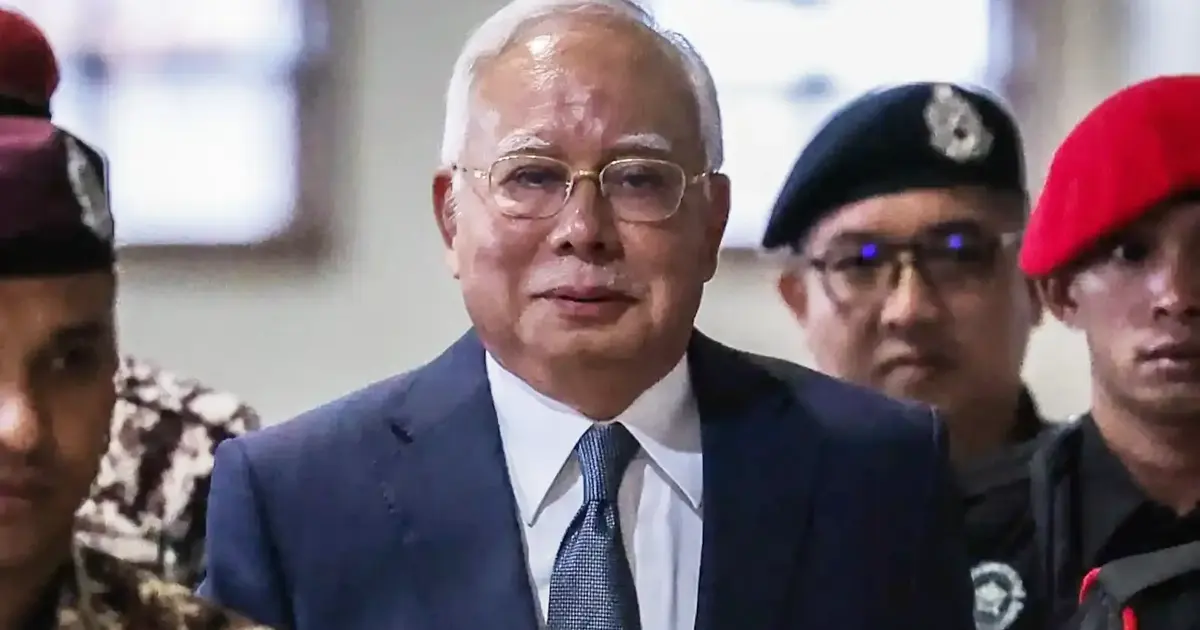
The political pressure surrounding former Prime Minister Najib Razak's imprisonment has intensified scrutiny on coalition partners in Malaysia's federal government, with a Democratic Action Party figure publicly questioning where the Malaysian Chinese Association stands on the matter. Ong Hui Xue has called on the MCA to issue a definitive public statement clarifying whether it aligns itself with Umno's sustained push for a complete pardon for the controversial ex-leader who remains convicted in connection with the 1Malaysia Development Berhad scandal.
The question cuts to the heart of an evolving fault line within the ruling coalition structure. While Umno leaders have grown increasingly vocal in their advocacy for Najib's clemency, the MCA has maintained relative silence on the issue, a stance that has drawn criticism from opposition figures who argue the coalition partner should transparently declare its position rather than allowing ambiguity to persist. This silence could be interpreted either as tacit endorsement or deliberate distancing, depending on one's political perspective.
Umno's campaign for Najib's pardon represents a significant political manoeuvre within Malaysia's Malay-Muslim-dominated ruling party, which has experienced considerable internal division since his removal from office in 2018. Various senior Umno figures have publicly advocated for clemency options, citing arguments about proportionality, past contributions to the party, and broader questions about rehabilitation and second chances. These calls have carried considerable weight within party structures and have gained momentum across conservative political circles.
The MCA, as the primary Chinese-based component of the Barisan Nasional coalition and a crucial partner in maintaining Umno-led government stability, typically seeks to maintain pragmatic relationships while protecting its own electoral interests among Malaysian Chinese voters. Many Chinese community leaders and voters harbour significant reservations about Najib's tenure, citing governance concerns and the handling of major development funds. The party finds itself navigating between coalition loyalty and community sentiment—a delicate balancing act that public ambiguity has allowed it to maintain temporarily.
The pardon question itself carries substantial constitutional and political implications for Malaysia's governance framework. While the Yang di-Pertuan Agong possesses prerogative powers regarding clemency decisions, such extraordinary measures typically involve consultations with various parties and carry immense symbolic weight regarding rule of law and accountability standards. Public pressure campaigns, particularly from significant political players, inevitably influence the broader discourse surrounding such potential decisions.
Najib's conviction and subsequent sentence in 2023 marked a watershed moment for Malaysia's anti-corruption narrative, as it represented one of the first instances in which a sitting prime minister faced meaningful legal accountability for financial impropriety. Subsequent developments, including appeals and ongoing legal processes, have kept the matter prominently in public consciousness. Any significant shift toward clemency would represent a dramatic reversal of this accountability trajectory and would carry profound messaging about how Malaysia's political establishment treats charges of corruption and misappropriation.
The MCA's historical positioning as a moderate, business-oriented party that values stability and institutional respect creates particular tension in its handling of the Najib question. The party's voter base includes substantial numbers of professionals, entrepreneurs, and educated urbanites who may view pardon campaigns as undermining institutional credibility and judicial independence. Conversely, the party's coalition dependence on Umno creates domestic political pressures that make outright opposition to Umno initiatives diplomatically fraught.
Demanding public clarification serves multiple strategic purposes for the DAP. It creates political space to distinguish opposition parties as defenders of accountability while simultaneously exposing potential fissures within the ruling coalition. Should the MCA decline to clarify, it faces accusations of cowardice or complicity. Should it formally oppose Umno's position, internal coalition tensions could surface. This political pincer movement reflects broader opposition strategy in attempting to destabilise government cohesion.
Regional observers have noted that Malaysia's pardon debate occurs within a wider Southeast Asian context where questions of political accountability and corruption enforcement remain contentious. Thailand, Indonesia, and the Philippines have each grappled with their own versions of these tensions between political rehabilitation and institutional accountability. How Malaysia navigates the Najib situation carries implications for regional perceptions of whether the country's institutions can maintain integrity under political pressure.
The timing of these questions also matters significantly, as Malaysia faces various electoral considerations and coalition management challenges. The next general election, whenever it occurs, will likely feature the Najib pardon question as a substantive issue, particularly given the demographic divisions in how different communities regard both the conviction and potential clemency. The MCA's position on the matter could become a decisive factor in certain constituencies, particularly those with mixed demographic composition where Chinese voters hold meaningful influence over electoral outcomes.
Moving forward, the pressure on the MCA to declare its hand appears unlikely to diminish. Whether through DAP questioning, media scrutiny, or internal coalition discussions, the party will struggle to maintain indefinite silence on a matter that carries such significant ramifications for governance norms and political accountability standards. The manner in which it eventually responds will reveal much about the relative balance of power within Malaysia's governing structures and the extent to which coalition partners maintain genuine policy independence or function primarily as subordinate entities within a Umno-dominated framework.

