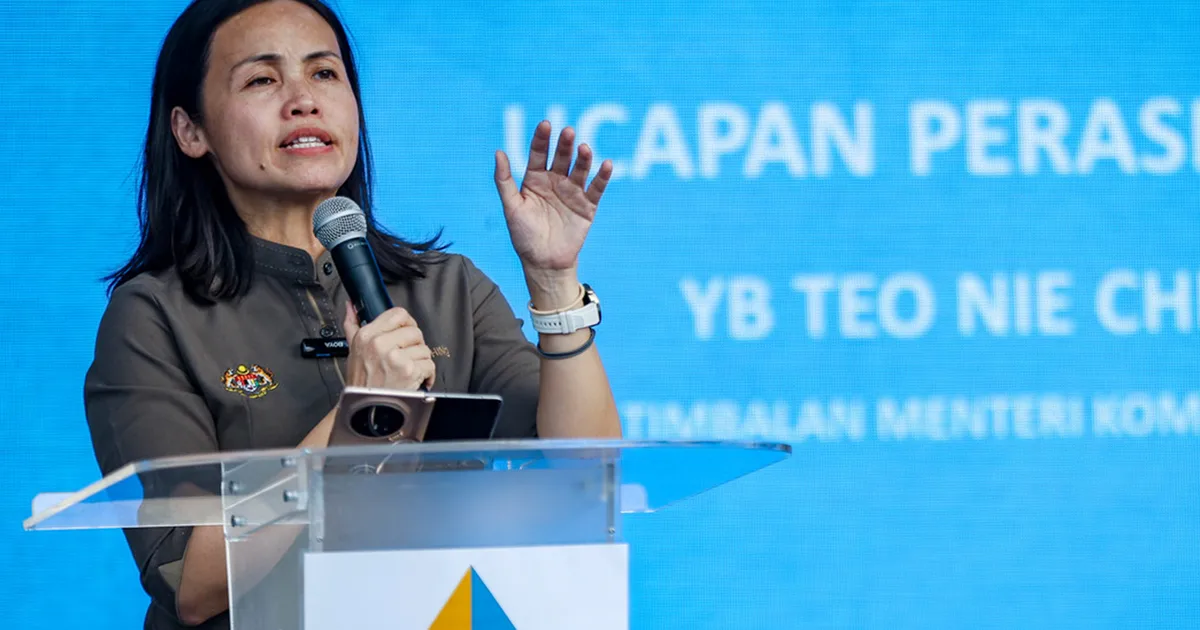
A senior Democratic Action Party politician has accused unidentified actors of orchestrating a targeted online campaign against her, claiming that accounts launched on social media platforms were expressly designed to circulate baseless allegations connecting her to organised crime. The deputy minister's assertion points to a troubling pattern of coordinated digital harassment that appears to have escalated beyond isolated critical commentary into what she characterises as a deliberate, organised assault on her reputation.
The allegations surfacing on these newly created platforms have no factual foundation, according to the DAP figure. By establishing fresh accounts rather than relying on existing ones, those behind the campaign appear to have sought to create multiple vectors for spreading false information while potentially evading accountability and verification mechanisms that established accounts might face. This tactic represents a departure from conventional social media criticism and suggests a level of planning and coordination that distinguishes it from organic grassroots commentary.
The incident reflects broader concerns about digital manipulation and coordinated inauthentic behaviour targeting political figures in Malaysia. Social media platforms have increasingly become arenas where reputational attacks are staged, often employing throwaway accounts and networks of coordinated postings to amplify messages and create an illusion of widespread concern or consensus. The technique relies on platform algorithms that may amplify content without verification of its accuracy, meaning false allegations can achieve significant reach before fact-checking mechanisms catch up.
For Malaysian readers, this incident underscores the vulnerability of political leaders—particularly women in senior positions—to organised online harassment campaigns. The DAP deputy minister's experience mirrors similar cases globally where political opponents or ideological adversaries weaponise social media to undermine credibility and distract from substantive policy debates. The gang-related allegations are particularly pernicious as they carry potential legal and safety implications beyond mere reputational damage.
The phenomenon also highlights the asymmetry inherent in social media discourse. Spreading false information requires minimal resources and carries limited consequences for perpetrators, particularly when anonymous accounts are involved. Conversely, addressing such allegations demands substantial effort, visibility, and institutional response from the targeted individual. By going public with her allegations, the deputy minister has opted for transparency, essentially forcing the issue into mainstream discourse where it can be examined and debunked with greater authority.
Investigating the source and coordination mechanisms behind such campaigns presents significant challenges for both law enforcement and platform authorities. Social media companies have made commitments to combat inauthentic behaviour, yet the sheer volume of content and the technical sophistication available to those seeking to evade detection means that coordinated harassment often proceeds relatively unimpeded. In Malaysia's context, where political tensions frequently manifest online, such incidents are becoming routine rather than exceptional.
The timing and targeting of these allegations warrant scrutiny. Deputy ministers occupy influential positions that can attract both legitimate criticism and malicious opposition. The choice to focus on gang-related accusations—rather than policy disagreements or professional conduct—suggests an intent to delegitimise rather than debate. This represents a degradation of political discourse from substantive disagreement to personal attack grounded in fabrication.
The DAP politician's willingness to publicly acknowledge and name the campaign may serve multiple purposes: it alerts supporters and the public to the inauthentic nature of the allegations, it creates a record of the harassment that might assist platform moderators and authorities, and it frames the narrative on her terms rather than allowing false accusations to circulate unchecked. Whether such transparency proves effective in countering the campaign remains to be seen, as dedicated disinformation efforts often persist despite public rebuttals.
This incident also raises questions about political accountability in the digital age. If organised parties are indeed orchestrating such campaigns, identifying them and holding them accountable becomes a matter of democratic importance. Coordination between multiple accounts, systematic timing of posts, and targeting of specific false narratives all suggest intentional strategy rather than spontaneous criticism. Establishing culpability, however, remains difficult without cooperation from social media platforms and investigative authorities.
For observers across Southeast Asia, the case serves as a reminder that election cycles and periods of political uncertainty can trigger intensified campaigns of online manipulation. As Malaysia continues navigating its post-election political landscape, such incidents may proliferate unless platforms and authorities develop more robust responses. The challenge lies in balancing free expression rights with preventing coordinated harassment and disinformation campaigns that undermine democratic discourse.
The deputy minister's response signals that political figures are becoming more aware of and willing to challenge coordinated online attacks. Her public statement transforms a potentially damaging narrative into a teachable moment about digital manipulation and platform accountability. Going forward, similar allegations by other political figures will likely prompt closer scrutiny of social media dynamics and may eventually drive platform policy adjustments in the Malaysian market.

