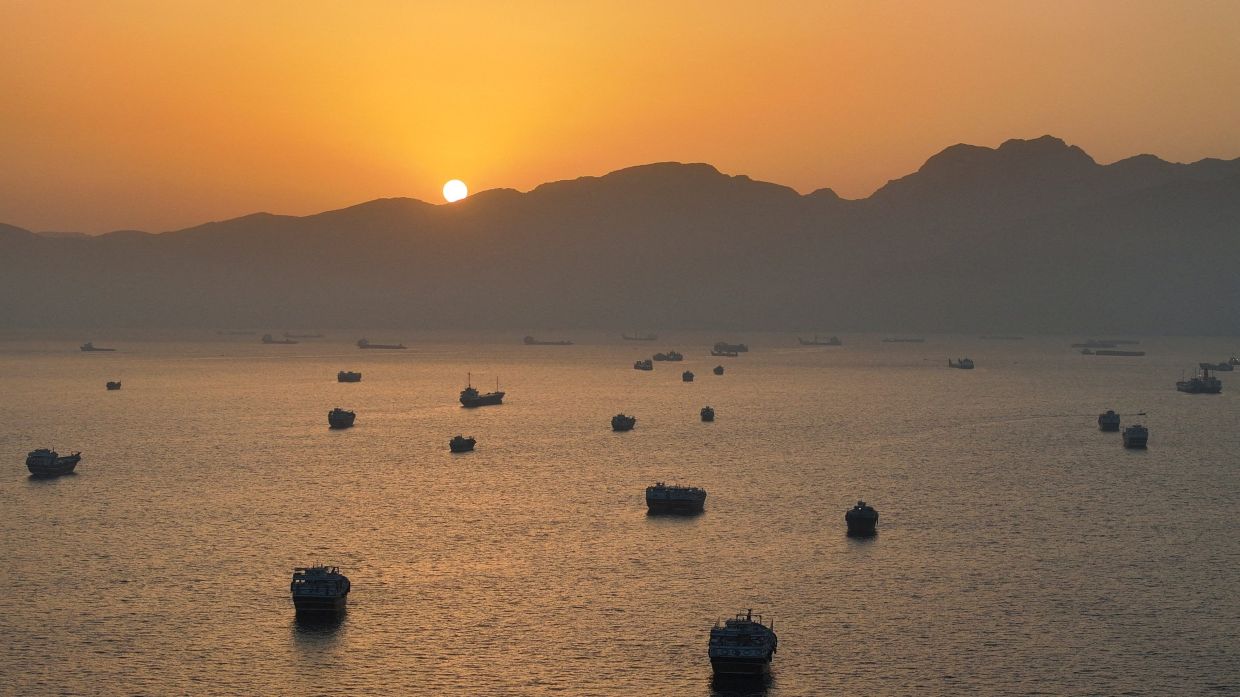
A gradual unlock of petroleum supplies is underway in the Persian Gulf as diplomatic progress between Iran and the United States begins to relieve one of the world's most critical shipping chokepoints. On Wednesday, three heavily-laden crude carriers passed through the Strait of Hormuz, marking a resumption of flows that have been impeded since regional tensions escalated at the start of the Middle East conflict. The movement of approximately 5 million barrels represents meaningful progress in clearing a backlog that analysts estimate has frozen nearly 90 million barrels within Gulf waters, a constraint that has weighed on global energy markets.
The South Korean-flagged VL Breeze, operating as a Very Large Crude Carrier with a capacity of 2 million barrels, departed the strait bound for the South Korean refining hub of Daesan carrying a mix of Qatari condensate and Abu Dhabi crude. The vessel, chartered by Hyundai Oilbank, represents a return to normal supply patterns for one of Asia's largest petroleum importers. Simultaneously, the Indian Oil Corporation's chartered tanker Plata Carrier navigated out of the strait with 2 million barrels of Saudi crude, while the smaller Suezmax vessel Prudent Warrior began its journey toward Sohar in Oman with 1 million barrels of Iraqi Basrah crude. These movements, tracked through shipping data provided by LSEG and Kpler analytics firms, demonstrate that the interim accord has begun creating practical conditions for resuming commerce through this vital waterway.
For Malaysian policymakers and energy sector participants, the significance of this development extends beyond immediate price movements. As a major energy importer and regional trading hub, Malaysia faces direct consequences from supply disruptions in the Gulf, which accounts for roughly one-third of world seaborne petroleum trade. The restoration of normal tanker flows through Hormuz carries implications for domestic fuel costs, refinery operations, and the competitive positioning of regional petrochemical industries. Beyond immediate energy economics, the clearance of stranded vessels signals that diplomatic mechanisms are functioning to de-escalate a situation that threatened to fracture global supply chains more severely.
South Korea's maritime authorities confirmed that four vessels under South Korean registry have now transited the strait, with one returning directly to domestic ports and others proceeding to third-party destinations. However, the scale of the challenge remains substantial: eighteen of the twenty-six vessels immobilised since conflict commenced remain anchored within the Gulf. This persistent backlog underscores the fragility of the current arrangement and suggests that while progress is evident, comprehensive normalisation remains some distance away. The distinction between the ships beginning to exit and those still stranded reflects the uneven pace at which confidence is returning to maritime operators in one of the world's most strategically vital shipping routes.
The emergence of temporary maritime corridors established by Oman in coordination with the International Maritime Organisation represents a noteworthy institutional response to the crisis. These designated northern and southern shipping lanes, running parallel to the conventional Hormuz passage, offer vessel operators designated pathways intended to minimise collision risks and enhance predictability in an environment where security concerns remain elevated. Oman's explicit commitment to maintain open passage without imposing additional tolls addresses concerns that regional actors might monetise the crisis by implementing unofficial fees or restrictions. This approach reflects Omani pragmatism regarding its geographic position and economic interests as a trading nation dependent on maritime commerce.
The restoration of liquefied natural gas flows offers an additional dimension to the gradual reopening of Gulf supply chains. Nine empty LNG carriers have now been documented west of the Hormuz Strait, either loaded or positioning to load Qatari cargoes—the highest number observed since hostilities commenced. Qatar's Prime Minister Sheikh Mohammed bin Abdulrahman al-Thani indicated to international media that the emirate expects to resume normal LNG production levels within several weeks, signalling confidence that the diplomatic breakthrough will hold and that security conditions will stabilise sufficiently for full operational capacity. For Asian LNG importers including Japan, South Korea, China, and Australia, this prospect carries substantial weight, as Qatar remains a critical supplier for regional demand during winter heating seasons and industrial production peaks.
The price implications of this gradual supply restoration are becoming apparent in international markets, where the prospect of increased petroleum availability has exerted downward pressure on crude values. While headline Brent and West Texas Intermediate prices remain elevated by historical standards, the trajectory has shifted from the sharp spikes witnessed when supply fears reached their peak. For Malaysian consumers and businesses, this moderation offers relief from the inflationary pressures that sustained energy price shocks generate across the broader economy. Petrol stations, transportation costs, and electricity tariffs all reflect movements in underlying crude benchmarks, making the supply picture a matter of direct household concern alongside its macroeconomic significance.
The interim nature of the Iran-US arrangement introduces ongoing uncertainty into these calculations. Market participants and policymakers recognise that the current opening of the Hormuz passage, while operationally significant, remains conditional on diplomatic progress holding steady. Any deterioration in negotiations or fresh incidents involving regional actors could rapidly reverse the modest improvements evident in recent shipping data. This fragility explains why tanker operators and energy companies remain cautious in committing vessels and capital to expanded Middle East operations despite the temporary easing of tensions. For Southeast Asian energy security planners, the situation underscores the continuing importance of diversified supply sources and strategic petroleum reserves as buffers against supply volatility concentrated in politically sensitive regions.
The broader context reveals how thoroughly energy markets have become integrated with geopolitical risk assessment. The movement of three tankers might ordinarily merit only technical shipping industry attention, yet the confluence of Middle East tensions, global inflation dynamics, and competing great-power interests has transformed maritime logistics into a matter of international economic significance. Malaysia's position as a regional economic anchor and energy consumer means that developments in the Gulf reverberate through Southeast Asian supply chains, manufacturing competitiveness, and consumer welfare. The tentative flow of crude and gas through Hormuz therefore carries consequences that extend well beyond the immediate geography, touching economic activity across the broader region and reinforcing how thoroughly twenty-first-century commerce depends on maintaining stability in critical international chokepoints.