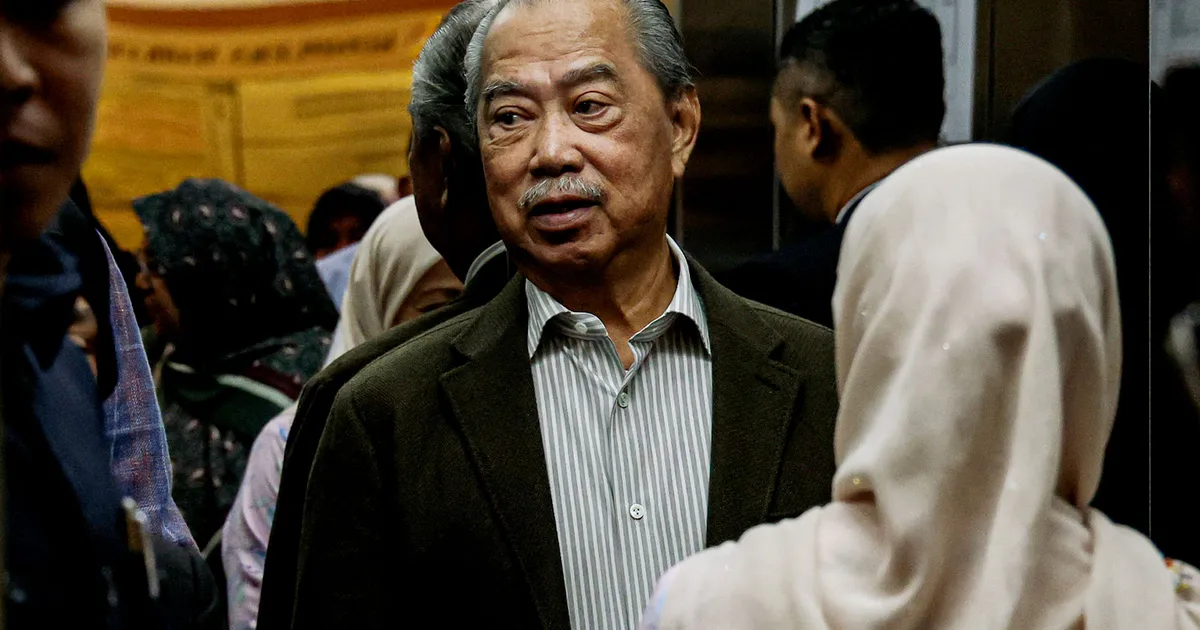
A Malaysian court has heard evidence suggesting that contractors seeking projects under the Jana Wibawa stimulus initiative were encouraged to contribute financially to Bersatu, the political party led by former Prime Minister Muhyiddin Yassin. The testimony has emerged as part of ongoing legal proceedings examining potential links between government procurement and party donations, adding fresh scrutiny to a programme that was ostensibly designed to support Bumiputera businesses during the acute economic disruption of the pandemic.
Business operator Azman Yusoff told the court that he felt a sense of obligation towards Muhyiddin Yassin, citing assistance the former premier had provided to Bumiputera contractors during the severe contraction of economic activity in 2020 and 2021. His remarks suggest a pattern wherein contractors receiving government support may have felt compelled to reciprocate through party contributions, potentially creating a transactional relationship between state resource allocation and political fundraising.
Jana Wibawa, launched as part of the government's pandemic economic response, distributed substantial sums to contractors deemed eligible under Bumiputera criteria. The programme formed a significant component of Malaysia's fiscal stimulus during the height of Covid-19 restrictions, channelling resources to small and medium-sized enterprises and construction firms. However, the judicial examination now raises questions about whether the distribution mechanism adhered strictly to merit-based criteria or whether political considerations influenced contractor selection and subsequent interactions.
The notion that recipients of government assistance experienced pressure—whether direct or implicit—to support a particular political party strikes at fundamental principles of procurement integrity and equitable resource distribution. Such arrangements, if substantiated, would represent a troubling commingling of state patronage with partisan fundraising, undermining the legitimacy of public spending and public trust in government processes. The implications extend beyond the Jana Wibawa programme itself, potentially signalling deeper governance challenges within Malaysia's political system.
Muhyiddin Yassin served as Prime Minister from March 2020 to August 2021, a period encompassing the genesis and expansion of Jana Wibawa. His tenure was defined by navigating unprecedented economic and health crises, decisions that necessarily involved substantial discretionary spending and contractor selection. The court proceedings thus examine whether policies implemented during that emergency phase crossed ethical or legal boundaries regarding the nexus between government contracts and political contributions.
For Malaysian businesses, particularly Bumiputera contractors dependent on government programmes for viability, the prospect of implicit expectations to support particular parties introduces distortions into the competitive environment. Contractors who prove unwilling or unable to make political donations might face disadvantages in future tender processes, creating a hidden cost of doing business that operates outside formal procurement frameworks. This dynamic discourages merit-based competition and imposes an additional burden on struggling enterprises seeking to stabilise operations.
The testimony also reflects broader concerns within Malaysia regarding political financing transparency and the relationship between corporate patronage and electoral outcomes. Unlike several regional peers, Malaysia has historically lacked comprehensive restrictions on corporate and business donations to political parties, permitting opaque financial flows that obscure the true sources of political funding. Jana Wibawa, intended as emergency economic relief, potentially became a mechanism through which substantial public funds flowed indirectly into party coffers via the donation expectations placed upon beneficiary contractors.
Regulatory bodies responsible for procurement oversight now face pressure to establish clearer frameworks preventing the recurrence of such arrangements. The Suruhanjaya Integriti dan Pencegahan Rasuah (MACC) and relevant enforcement agencies must clarify protocols ensuring that contractor selection and resource distribution remain insulated from partisan political considerations. Without robust safeguards, subsequent pandemic-era or crisis-response programmes risk replicating the same patterns of potential abuse.
The legal process unfolding in Malaysia's courts will likely produce findings influencing how future government spending programmes are administered and monitored. If the court determines that systematic pressure was applied to contractors, remedial measures may encompass revised procurement regulations, enhanced transparency requirements, and stricter limitations on donation solicitation from businesses receiving state benefits. Such changes would represent attempts to restore separation between government resource allocation and political fundraising.
From a Southeast Asian perspective, Malaysia's experience with Jana Wibawa serves as cautionary evidence regarding the governance risks accompanying large-scale emergency spending. Regional governments managing substantial stimulus programmes during crises require robust institutional checks preventing the transformation of public resources into party campaign finance. The Malaysian case demonstrates how well-intentioned economic interventions can become compromised by political opportunism if adequate oversight mechanisms remain absent.
The court testimony also highlights the asymmetric relationships between state and business in Malaysia, where government favour represents a disproportionately valuable asset for contractors. This dependency creates vulnerability to extraction of political support, whether explicit or implied. Reducing such vulnerability requires broadening the contractor base, strengthening private-sector independence, and ensuring government support reaches recipients based solely on objective criteria rather than political alignment or willingness to fund particular parties.

