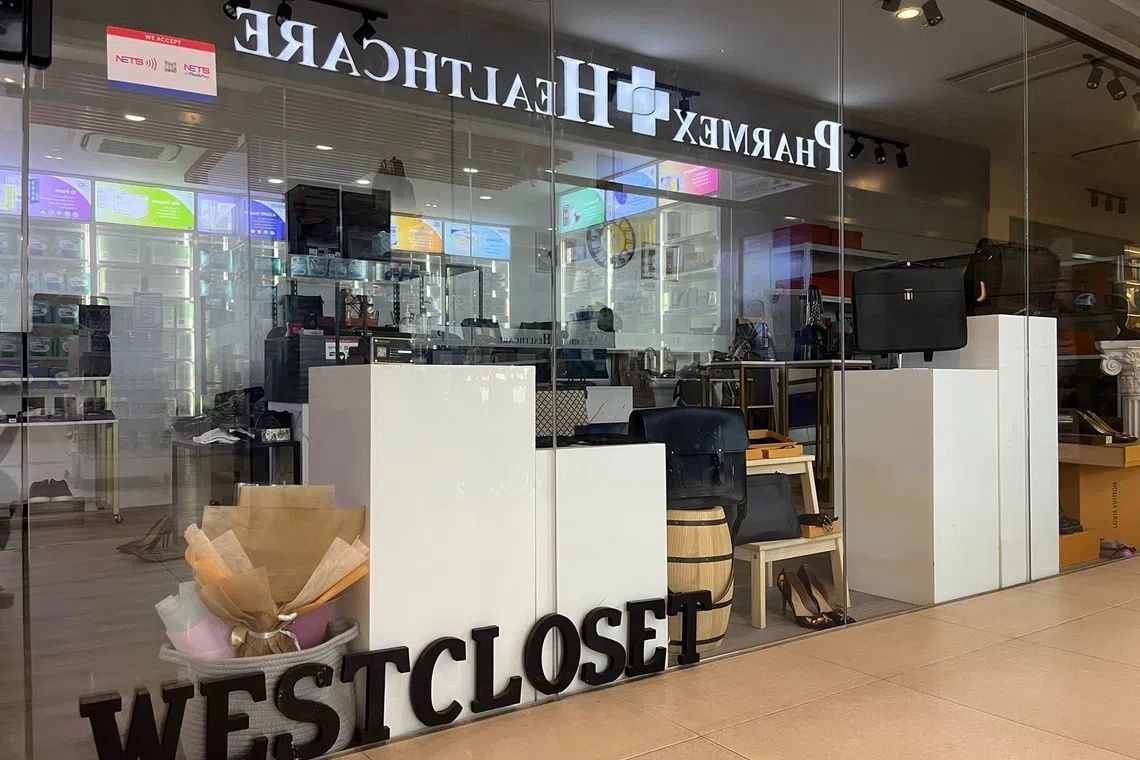
A 36-year-old Indonesian businesswoman has been sentenced to eight months imprisonment for systematically defrauding customers at her luxury goods consignment store in Singapore's Shenton Way district. Ringga Dwi Rizky Irianto operated West Closet, located within the OUE Downtown Gallery shopping mall, where she accepted high-end designer handbags from clients who trusted her to sell them and remit the proceeds. Instead of honouring her commitments, she misappropriated funds totalling nearly S$140,000 across five separate instances, a betrayal of the confidence placed in her business model.
The sentencing, handed down on August 13, was preceded by Ringga's guilty plea to three counts of criminal breach of trust involving S$108,000. Two additional charges related to the remaining victims were factored into the court's deliberations, though she did not contest those matters. Her culpability was clear: she had received payment guarantees from customers, collected funds from sales, and then diverted the money to purposes other than honouring those commitments. The severity of the offence reflects both the monetary loss and the calculated manner in which the deception was executed across multiple transactions over several months.
Ringga has already made partial restitution of S$41,000 to her victims, demonstrating some effort toward repayment. However, she remains liable for an additional S$91,950 in compensation, which the court ordered to be paid through an investigation officer overseeing the case. This structured repayment arrangement signals the court's intent to ensure victims receive recovery, though it also acknowledges the likelihood that full, immediate payment may not be forthcoming. Should Ringga fail to settle this outstanding amount, she faces an additional 24 days of incarceration, creating a financial incentive to comply with the court order.
The West Closet business model itself was ostensibly legitimate: the store advertised its consignment services through Carousell and Instagram, platforms popular with luxury goods enthusiasts across Southeast Asia. Customers were required to leave their bags with the store for a 60-day sales window or face a S$60 penalty fee—terms that established clear commercial expectations. Upon successful sale, West Closet would retain a commission ranging from S$200 to S$900, depending on the transaction value, with the balance remitted to the original owner. This arrangement is commonplace in the luxury resale market and, when operated with integrity, provides a convenient channel for sellers to monetize unused items without the hassle of private sales.
The first documented instance of misappropriation occurred on July 2, 2022, when a victim consigned three bags—two Hermès and one Chanel—to West Closet for sale on a guaranteed total return of S$51,000. The victim received a formal notice reiterating that payment would be credited to their bank account within seven days of the sale. Ringga did indeed sell all three bags and generated the full S$51,000 in revenue. However, rather than transferring this amount to the victim as contractually guaranteed, she redirected the funds to settle another customer's order, effectively using one client's money to finance obligations to another. This pattern of fund diversion is characteristic of Ponzi-like schemes where incoming payments mask outgoing obligations.
Two additional victims fell prey to identical schemes involving Hermès bags. A second victim lost S$33,500 when Ringga misappropriated the sale proceeds following a successful transaction. A third victim suffered a loss of S$23,500 under substantially the same circumstances. These repeat offences demonstrate that Ringga's initial breach of trust was not an isolated error in judgment but rather a deliberate strategy to access customer funds. The consistency of her methods—selling items, receiving payment, and then diverting it—suggests she may have known her cash flow would be insufficient to meet her obligations had she operated the business honestly.
The chronology of events reveals troubling delays in the justice system's response. Ringga was arrested in September 2022, approximately three months after the first documented fraud. However, she was not formally charged until 2024, nearly two years later. This substantial lag between arrest and prosecution raises questions about investigative and prosecutorial capacity in Singapore's criminal justice system, though it is not uncommon for complex fraud cases involving financial documentation to require extended investigation periods. Her bail was set at S$15,000 on August 13, and she is expected to commence her jail term in October, providing a brief window for her to arrange personal affairs or attempt to raise funds for restitution.
The broader implications of this case extend beyond Singapore's borders and are relevant to Malaysian consumers and entrepreneurs. Consignment and resale platforms have proliferated across Southeast Asia as sustainability concerns and affordability considerations drive demand for pre-owned luxury goods. This expansion has created new vulnerabilities: the model depends entirely on the trustworthiness of intermediaries who handle both goods and financial flows. For Malaysian customers using similar services—whether through local operators or cross-border arrangements with Singapore-based businesses—this case underscores the importance of verifying credentials, seeking formal agreements, and maintaining documentation of all transactions.
Criminal breach of trust, the charge Ringga faced, carries substantial penalties in Singapore law. An offender convicted under the relevant statute can face imprisonment of up to seven years, a fine, or both. Ringga's eight-month sentence, while significant, falls well below the maximum prescribed penalty, likely reflecting her guilty plea and partial restitution as mitigating factors. The court's imposition of additional jail time contingent on non-payment of compensation represents a hybrid approach: combining incarceration with financial accountability to incentivize victim recovery. For Malaysia's regulatory authorities and consumer protection bodies, the case provides a precedent for how financial crimes in the resale sector should be treated and prosecuted.
The vulnerability of consignment models to fraud also speaks to the need for regulatory oversight in emerging markets like Southeast Asia. Unlike traditional retail, which involves inventory ownership and clearer liability chains, consignment arrangements create information asymmetries where customers must trust operators to maintain accurate records and segregate funds appropriately. Neither Carousell nor Instagram, the platforms through which West Closet marketed its services, could have easily detected fraudulent intent before customers were harmed. This reality suggests that industry self-regulation, through standardized escrow arrangements, third-party audits, or blockchain-based verification, may become increasingly necessary as the sector scales.
For victims seeking redress, the court's decision offers both symbolic justice and practical compensation mechanisms. The investigation officer assigned to oversee restitution payments serves as an intermediary to ensure Ringga prioritizes victim recovery over other obligations. Whether this arrangement will prove effective depends on Ringga's financial circumstances and future earning capacity. Her status as a foreign national may also complicate enforcement, particularly if she seeks to leave Singapore or transfer assets abroad. These practical considerations highlight why deterrence through sentencing, combined with restitution orders, remains the courts' preferred approach to fraud cases where victim recovery is prioritized alongside punishment.

