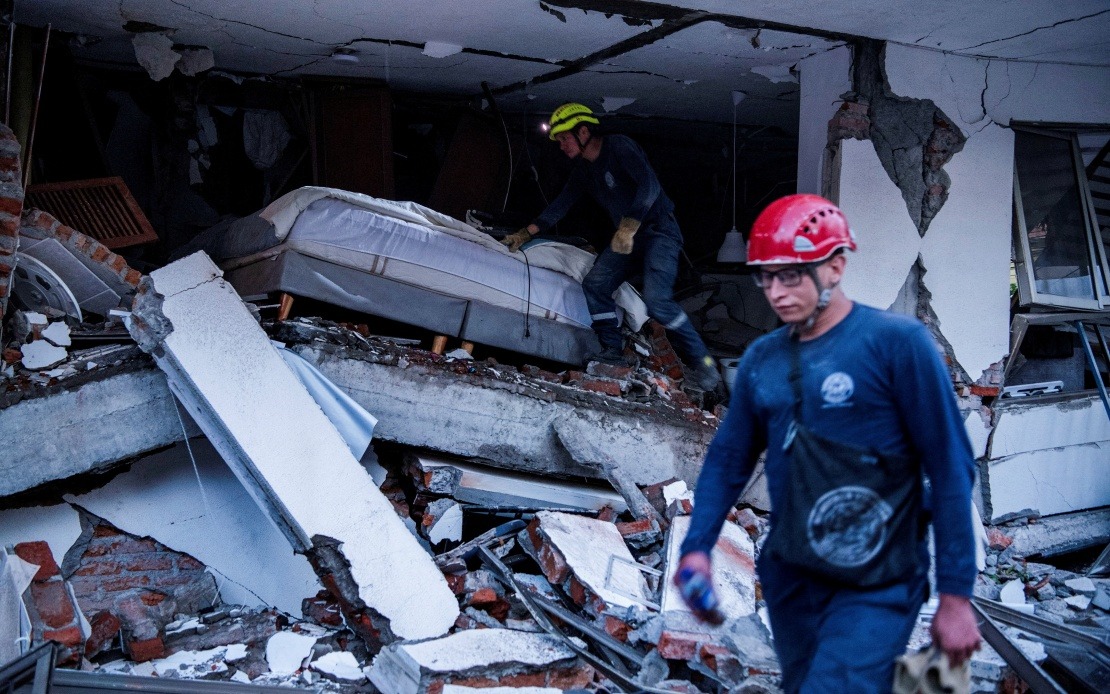
Western Colombia reeled from a powerful magnitude 7.4 earthquake on Monday, with the death toll climbing to 132 and injuries exceeding 570 people, according to the latest government assessment. The tremor, which struck at 7:34 am local time, has become one of the most devastating seismic events to strike the South American nation in recent years, prompting an immediate national emergency response and drawing international concern from neighbouring countries and diplomatic missions.
The epicentre was located near San Jose del Palmar in Choco Department at a depth of 96 kilometres, placing significant portions of western Colombia in the zone of maximum impact. Thirty-two cities across the nation have suffered serious damage from the initial quake and its numerous aftershocks, with five departmental capitals—Pereira, Cali, Quibdo, Manizales and Armenia—now operating under red alert conditions that signal the most severe level of emergency preparedness required.
Pereira emerged as the hardest hit municipality, accounting for 60 of the confirmed deaths. The impact cascades through smaller centres, with Cali reporting 15 fatalities, Quibdo eight deaths, and Manizales four. These figures underscore how the earthquake's destructive force varied across the affected region, with some population centres experiencing far greater devastation than others despite their proximity to the epicentre. The variation in casualty rates often reflects differences in building construction standards and population density, factors that seismologists and urban planners will likely examine as reconstruction efforts commence.
Structural damage across the region has been catastrophic by any measure. Colombian authorities have documented 86 buildings that have completely collapsed, a figure that typically represents only the most severe damage assessments and likely underestimates the total number of structures requiring demolition or major repairs. The collapsed buildings have complicated rescue and recovery operations, as emergency teams must navigate unstable rubble fields whilst searching for survivors and recovering bodies.
The earthquake's impact extended beyond residential areas into critical national infrastructure. Seven airports across Colombia have suspended operations due to quake-related damage, disrupting both domestic and international air travel. This transportation bottleneck creates significant challenges for delivering humanitarian aid and medical supplies to affected regions, whilst also limiting the ability of residents to evacuate from damaged areas. Airport authorities have begun assessing runway integrity and structural damage to terminal facilities, but full resumption of service remains uncertain.
President Abelardo de la Espriella moved swiftly to activate emergency protocols, declaring a state of national disaster shortly after the quake struck. This declaration unlocks government resources and enables rapid deployment of military personnel, medical teams, and rescue equipment to affected zones without the normal bureaucratic delays that might otherwise hamper initial response efforts. The disaster declaration also streamlines procurement procedures for emergency supplies and facilitates coordination between federal and local authorities.
The Chinese Embassy in Colombia activated its emergency response protocols immediately after receiving confirmation of the earthquake, initiating contact with Chinese nationals throughout the country to assess their safety and welfare. The embassy reported that no Chinese citizens had been killed or injured in the disaster as of the latest update, though the organization noted that verification efforts were still ongoing across the affected regions. This proactive diplomatic response reflects standard procedures among foreign missions during major natural disasters, ensuring that expatriate communities receive timely assistance and information.
For Malaysian readers and Southeast Asian observers, the Colombia earthquake serves as a sobering reminder of the seismic risks that affect multiple regions globally, including our own ring of fire location. The rapid escalation in death tolls and the challenge of coordinating emergency response across a large geographic area with damaged infrastructure mirror scenarios that disaster preparedness officials in Malaysia have studied and incorporated into contingency planning. The earthquake's severity—at magnitude 7.4—falls within the range of tremors that could plausibly strike the region, making Colombia's emergency response a valuable case study for understanding how nations mobilize resources and manage mass casualties.
The geological characteristics of the Colombian quake provide instructive contrast to Southeast Asian seismic patterns. The 96-kilometre depth places this event in the intermediate-depth category, which can cause substantial damage over a wider area than shallow earthquakes. Understanding how different depths of seismic activity affect building damage and rescue accessibility informs how construction codes and emergency planning in Malaysia evolve. Colombia's experience will likely feature in regional disaster preparedness seminars and training programmes across Southeast Asia in coming months.
Reconstruction and recovery from this disaster will challenge Colombian institutions for years. Beyond the immediate humanitarian crisis lies the longer-term challenge of rebuilding damaged communities whilst also improving disaster resilience through improved building codes and early warning systems. The international aid response, coordinated through diplomatic channels and humanitarian organizations, will shape how quickly affected populations regain basic services and begin economic recovery. For Colombia's government and people, the coming weeks will test institutional capacity even as the nation mourns significant loss of life.

