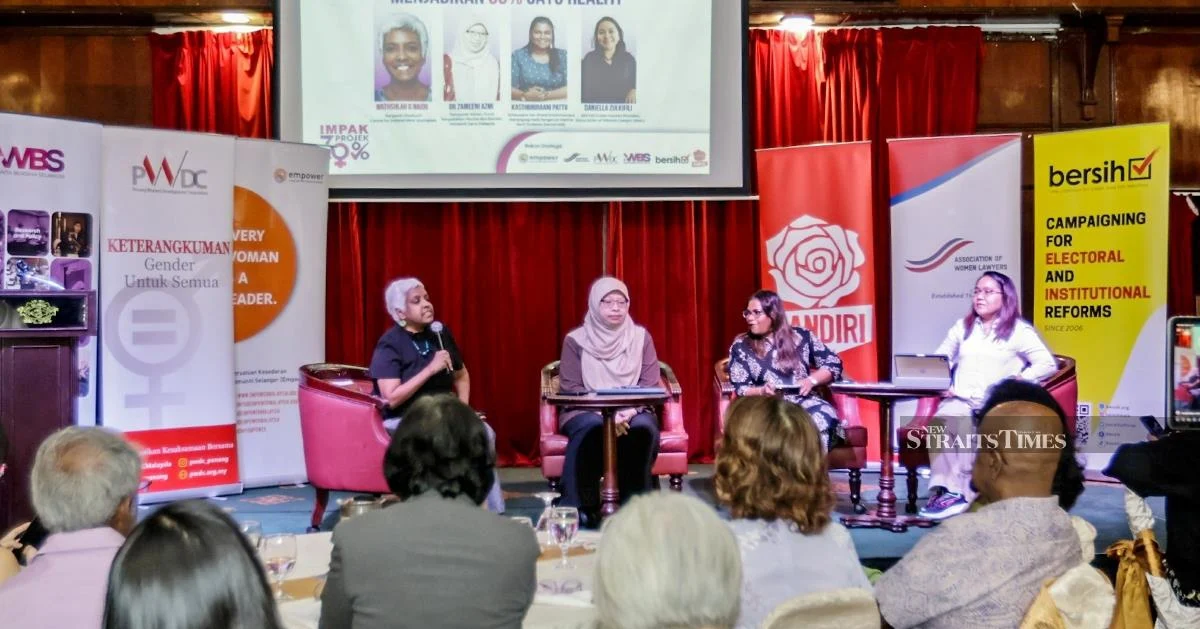
Malaysian civil society groups have escalated their push for greater female political representation by formally submitting a draft law to the government that would require all political parties to nominate a minimum of 30 per cent women candidates in the forthcoming general election. The memorandum and proposed legislation, presented by a coalition of activist organisations, represents a concrete attempt to translate long-standing demands for gender parity into binding legal requirements, moving beyond rhetoric to enforceable reform that would reshape Malaysia's electoral landscape.
The initiative arrives at a critical juncture for Malaysian politics, as questions of democratic inclusivity and representation continue to dominate national discourse. Women remain significantly underrepresented in parliamentary and state legislative seats across the country, a disparity that civil society argues undermines both democratic principles and practical policy outcomes. The 30 per cent threshold, while still falling short of full parity, represents a widely accepted interim target adopted by numerous democracies and international bodies as a stepping stone toward genuine gender balance in political decision-making.
Such legislative requirements are not without precedent in the region and globally. Several Southeast Asian nations, including the Philippines and Indonesia, have experimented with quota systems designed to accelerate female political participation. These approaches have yielded mixed but generally positive results, demonstrating that structural mechanisms can substantially increase women's access to electoral contests and legislative positions when cultural or institutional barriers might otherwise limit their advancement.
The Malaysian context presents particular relevance for this proposal, given the country's constitutional framework and existing provisions addressing representation and equality. Political parties operating within Malaysia's electoral system possess considerable autonomy in candidate selection, creating both an opportunity and a responsibility to champion inclusive practices. Implementing a statutory minimum would remove discretion and establish clear benchmarks against which party performance could be measured and held accountable.
Implementing such a requirement would necessitate adjustments across Malaysia's political ecosystem. Parties would need to revise internal nomination procedures, develop talent pipelines for female candidates, and ensure adequate financial and organisational support for women seeking office. While some larger, better-resourced parties might accommodate this transition relatively smoothly, smaller and emerging political movements could face considerable logistical challenges, potentially prompting broader structural reforms within the party system itself.
Critics have historically raised concerns about quota systems, suggesting that mandated representation might disadvantage merit-based selection or create resentment among established political networks. However, proponents counter that existing systems already reflect extensive informal quotas favouring male candidates and established political dynasties, and that explicit legal requirements would simply rebalance inherently political processes toward fairer outcomes. The substantive question, they argue, centres not on whether quotas exist but whose interests they serve.
From a policy perspective, increased female representation carries measurable implications for legislative priorities and governance approaches. Research across multiple democracies indicates that higher percentages of female parliamentarians correlate with increased attention to healthcare, education, childcare, and social protection issues, alongside shifts in legislative tone toward greater collaborative problem-solving. For Malaysia, where persistent gender disparities affect economic participation, educational opportunity, and family welfare, such reorientation could yield tangible benefits across multiple policy domains.
The submission of this draft legislation also reflects broader international trends and Malaysia's stated commitments. The country remains a signatory to various international conventions promoting gender equality and women's empowerment, commitments that sit uneasily with current underrepresentation in political institutions. Civil society groups have effectively leveraged these international frameworks to construct a principled argument grounded not merely in fairness but in Malaysia's existing treaty obligations and development aspirations.
Timing proves significant for this initiative, arriving as various political factions contemplate electoral strategies and coalition arrangements ahead of the next general election. Some parties have begun voluntarily increasing female nominations, creating competitive dynamics where legislative requirements might appear less disruptive than they would have seemed previously. Nevertheless, passage would require substantial political will from ruling coalitions and potentially contentious parliamentary debate, given entrenched interests within the party system.
The government's response to this submission will signal its genuine commitment to gender equality beyond ceremonial rhetoric. Civil society groups will likely intensify advocacy efforts through public campaigns, parliamentary engagement, and international pressure, framing the issue as fundamental to democratic legitimacy and good governance. Whether lawmakers prove receptive or resistant will substantially influence Malaysia's trajectory regarding inclusive representation and women's political participation for years to come.
Beyond immediate legislative outcomes, this initiative contributes to a broader normative shift within Malaysian political discourse, establishing clear benchmarks and creating expectation frameworks that may influence party behaviour even absent formal legal requirements. The conversation itself—regarding why women remain marginalised in electoral politics and what structural changes might remedy this—represents progress toward the accountability and intentionality that true political reform demands, regardless of whether this particular legislative proposal ultimately succeeds.