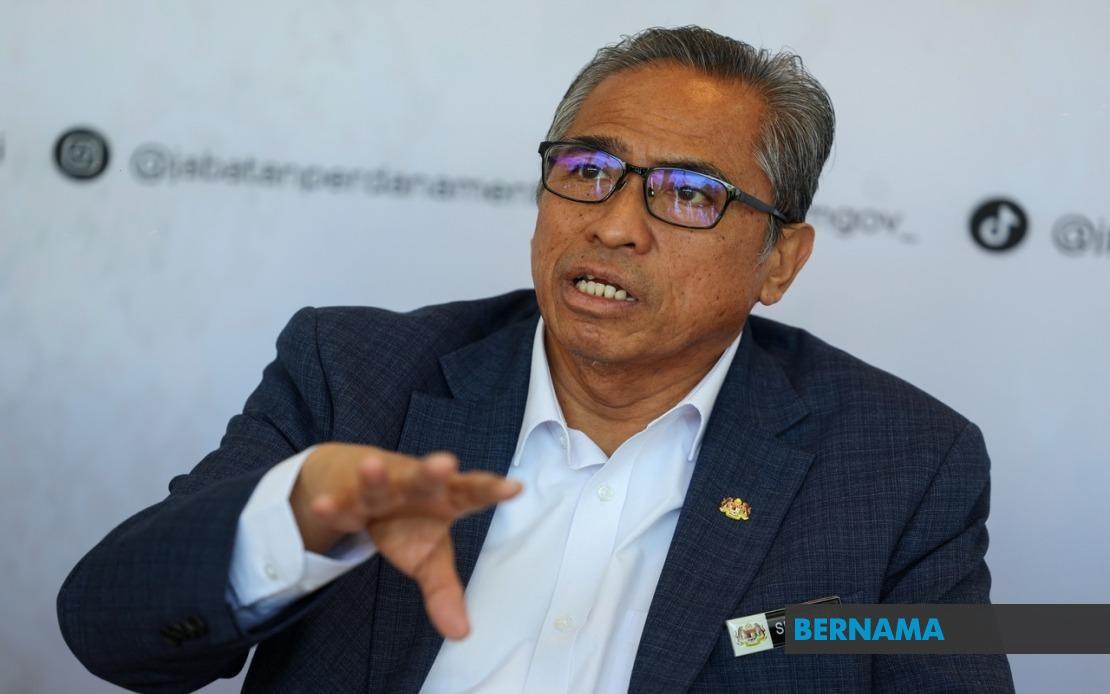
The machinery of Malaysia's public administration has been called upon to become the driving force behind translating the country's expanding diplomatic footprint into tangible economic gains. Speaking in Kuala Lumpur on June 24, Chief Secretary to the Government Tan Sri Shamsul Azri Abu Bakar underscored the critical role government officials must play in ensuring that high-level diplomatic initiatives result in immediate, measurable benefits for the nation's economy and people.
Tan Sri Shamsul Azri specifically highlighted Prime Minister Datuk Seri Anwar Ibrahim's recent working visits to Russia and Turkemenistan as examples of strategic positioning that opens new commercial corridors and deepens existing trade relationships. However, he stressed that diplomatic success alone is insufficient without corresponding action from the bureaucracy. The Chief Secretary framed the civil service as the backbone of the nation, tasked with converting foreign policy achievements into domestic prosperity. This framing reflects a broader concern that Malaysia's leadership has secured important international agreements and relationships that now require skilled execution at ground level to yield results.
The emphasis on efficiency within economic and trade ministries signals recognition that regulatory bodies and government agencies often determine whether foreign investments materialise or stall. Tan Sri Shamsul Azri called for these departments to operate with heightened preparedness and agility, acknowledging that the global economic landscape is shifting rapidly. Nations competing for investment capital must demonstrate not only attractive policies but also capable institutions that can process approvals, facilitate business operations, and remove bureaucratic obstacles swiftly. For Malaysia, which has positioned itself as a regional investment hub, this execution gap can determine whether announced partnerships translate into job creation and revenue growth.
The Chief Secretary's reference to MADANI Diplomacy represents the government's overarching framework for international engagement, emphasising balanced partnerships and people-centred outcomes. He urged public service personnel at all levels, particularly department heads and senior officials, to internalise these diplomatic values and apply them within the domestic governance context. This suggests a deliberate attempt to align the entire bureaucratic apparatus with foreign policy objectives, creating consistency across government operations. The 'Whole-of-Government' approach he mentioned indicates that responsibility cannot rest with the foreign ministry alone; trade bodies, investment agencies, customs authorities, and sectoral regulators must all coordinate to support the same strategic objectives.
Central to Tan Sri Shamsul Azri's message is the notion that public servants must cultivate a genuinely international mindset. This goes beyond technical competence in their specific domains; it requires understanding global economic trends, geopolitical shifts, and competitive dynamics in world markets. Malaysian officials must recognise how decisions taken in Kuala Lumpur affect the country's attractiveness to foreign investors and trading partners. The Chief Secretary positioned government workers as strategic partners for international businesses, a framing that elevates their role from administrators to facilitators of economic growth. This perspective is particularly relevant given Malaysia's need to attract high-value investments in technology, manufacturing, and services sectors where investor confidence in government effectiveness is paramount.
The initiative on Ease of Doing Business represents a concrete manifestation of these broader principles. By streamlining regulatory processes and removing unnecessary hurdles, Malaysia aims to distinguish itself in a crowded marketplace competing for foreign direct investment. However, bureaucratic inertia and fragmented processes across different agencies can undermine these efforts. The Chief Secretary's call for public servants to act as investment facilitators acknowledges that policy reforms on paper mean little without institutional commitment to implementation. Civil servants must understand that expediting a business licence application or resolving a regulatory query promptly contributes directly to Malaysia's international reputation and economic competitiveness.
Tan Sri Shamsul Azri connected this agenda to the Public Service Reform Agenda (ARPA), which includes an 'internationalisation' enabler aimed at building administrative capacity to support national development goals. This institutional framework provides the structure through which diplomatic ambitions can be operationalised. Rather than viewing reform as an abstract organisational exercise, he presented it as essential infrastructure for translating political vision into economic reality. For Malaysian readers and observers, this signals that the government is attempting to systematically reshape how the bureaucracy functions, not merely requesting improved performance through exhortation.
The Chief Secretary emphasised that creating high-income job opportunities for Malaysians and securing commodity supplies must follow from international agreements and investment inflows. This directly addresses public concerns about whether globalisation and foreign investment benefit ordinary citizens or merely enrich corporations and elites. By connecting diplomatic initiatives to domestic employment and economic security, Tan Sri Shamsul Azri articulated how international engagement serves national welfare. The reference to maintaining Malaysia's competitiveness as an investment destination also reflects awareness that the country faces intense regional competition from countries like Singapore, Thailand, and Vietnam, each seeking to attract similar capital flows and partnerships.
The timing of this appeal carries significance, coming as Malaysia seeks to diversify its economic relationships and reduce dependence on traditional partners. The visits to Russia and Turkmenistan represent attempts to engage nations outside conventional Western alliances, reflecting both geopolitical realignment and Malaysia's own multi-aligned foreign policy. However, such initiatives only bear fruit if domestic institutions can effectively manage the commercial and diplomatic relationships that result. Tan Sri Shamsul Azri's message was therefore partly a warning that Malaysia's diplomatic ambitions exceed its administrative capacity unless the civil service rises to the challenge.
For policymakers and business observers across Southeast Asia, the Chief Secretary's remarks illuminate a common challenge: translating high-level strategic vision into consistent, effective implementation across sprawling government systems. Malaysia's experience with this implementation gap likely resonates with other regional nations attempting to position themselves as attractive investment destinations while managing complex international relationships. Success requires not merely intelligent diplomacy but also disciplined bureaucratic execution, something that requires both structural reform and cultural change within government institutions.

