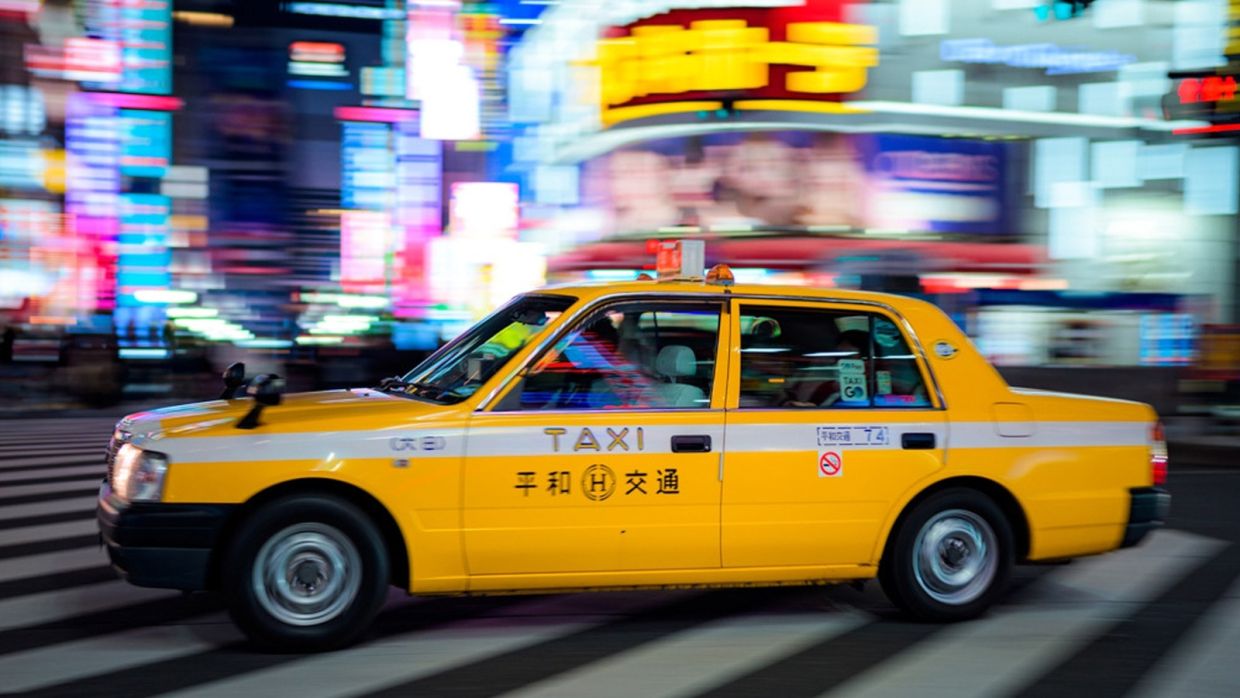
A 41-year-old Chinese national has been taken into custody in Tokyo on suspicion of orchestrating an extensive unlicensed taxi operation that exploited regulatory gaps in Japan's commercial vehicle system. Wang Xiaoyu stands accused of violating the Road Transportation Act by channelling vehicles through a chauffeur service company he controlled, systematically leasing them to non-employees who then operated as unlicensed cabs ferrying tourists throughout the capital between February and April this year. The scheme represents a sophisticated attempt to circumvent Japan's transportation licensing requirements while profiting substantially from the surge in inbound tourism to the city.
The operational mechanics of Wang's scheme hinged on exploiting a specific category of commercial vehicle introduced in 2014 called "urban hire" transport. This classification was designed to accommodate a particular market segment, requiring customers to pre-book services and commit to minimum two-hour charter agreements rather than the hail-and-ride model traditional taxis employ. By registering vehicles under this ostensibly legitimate category, Wang created a veneer of legality that obscured fundamentally unlicensed taxi operations. The vehicles bore Japan's green licence plates designated for commercial use, a classification that law enforcement has long acknowledged presents enforcement challenges due to the difficulty of distinguishing legitimate operations from illegal ones through visual inspection alone.
Wang allegedly operated the scheme through Phoenix Kokusai, a chauffeur service company he effectively managed despite not holding formal management credentials. Rather than employing drivers directly through legitimate channels, Wang devised an arrangement where external operators would pay fees for the privilege of using the company's name and vehicles. This structure allowed him to distance himself from direct employment relationships while maintaining tight control over operations. Police investigations suggest he generated approximately 38 million yen, equivalent to $233,000, in fees collected from eighteen different drivers across a six-month period spanning November 2024 through May 2026, an arrangement that generated substantial income with minimal overhead or legitimate employment obligations.
The investigation gained momentum following mounting complaints from licensed taxi operators who observed suspicious activity at Tokyo's Haneda Airport, one of Asia's busiest international hubs. Other taxi drivers reported that vehicles bearing urban hire designations were actively soliciting passengers at the airport in violation of regulations that explicitly require advance reservations and charter contracts. These complaints to authorities revealed a pattern of aggressive customer acquisition that bore all the hallmarks of illegal taxi operations rather than legitimate urban hire services. The apparent coordination between multiple vehicles and drivers suggested an organized network rather than isolated incidents of regulatory non-compliance.
Tokyo Metropolitan Police Department operations have extended beyond Wang's arrest to encompass three additional drivers, all Chinese nationals, who faced charges under the same Road Transportation Act violations. These drivers operated the vehicles that directly transported passengers, though evidence indicates they functioned under Wang's organizational structure and financial arrangements. The arrest of multiple participants suggests the authorities view this as a coordinated criminal enterprise rather than individual instances of regulatory breach. Wang has offered partial denials regarding specific allegations, though investigators maintain substantial evidence of his central coordinating role.
The emergence of this scheme illuminates vulnerabilities within Japan's vehicle-for-hire regulatory framework that have become increasingly apparent as tourism numbers have surged. The urban hire category itself, while created with legitimate purposes, has proven susceptible to exploitation by operators seeking to circumvent stricter regulations governing conventional taxis. The green licence plate system, despite its intention to facilitate legitimate commercial transport operations, has created opportunities for visual camouflage that makes enforcement challenging for authorities. Police departments nationwide have acknowledged that distinguishing between properly operated urban hire services and illegal taxi operations requires substantive investigation rather than routine roadside observation.
Statistical data from Japan's Ministry of Land, Infrastructure, Transport and Tourism underscores the dramatic expansion of urban hire vehicle registrations over the past decade, rising from 3,868 registered vehicles in fiscal year 2013 to 8,850 by fiscal year 2024. This ninefold increase directly correlates with Japan's aggressive tourism promotion strategy and the elimination of visa restrictions for numerous nationalities. The rapid growth in this vehicle category, while reflecting legitimate demand from tourists preferring pre-arranged transportation, has simultaneously created operational complexity that regulators struggle to manage effectively. The sheer volume of urban hire operations makes comprehensive monitoring impractical through conventional enforcement methods.
The case carries implications extending beyond Tokyo's immediate taxi industry, signalling how rapid tourism expansion can generate unintended regulatory arbitrage opportunities. Southeast Asian nations experiencing comparable tourism booms face analogous challenges as informal service providers adapt quickly to regulatory frameworks not yet equipped to handle international demand patterns. The sophistication of Wang's operation—using legitimate vehicle categories as cover while maintaining tight organizational control over drivers and pricing—represents a template that could be replicated across regional transportation networks. The involvement of multiple Chinese nationals in both management and operation suggests potential networks spanning the region rather than isolated Tokyo-based activity.
For Malaysian and other Southeast Asian readers, the case demonstrates how regulatory gaps in established democracies with sophisticated legal systems can still be exploited by organized operators. Japan's relatively transparent enforcement environment and advanced transportation infrastructure provide few genuine advantages in preventing coordinated schemes that establish apparent legitimacy through selective compliance. Regulatory evolution in tourism-dependent economies requires continuous adaptation as service providers develop increasingly sophisticated methods of operating within and around legal frameworks. The case also highlights how cross-border operations, particularly those involving Chinese nationals familiar with similar regulatory environments in their home country, may possess advantages in identifying and exploiting loopholes that domestic operators might overlook or avoid for reputational reasons.

