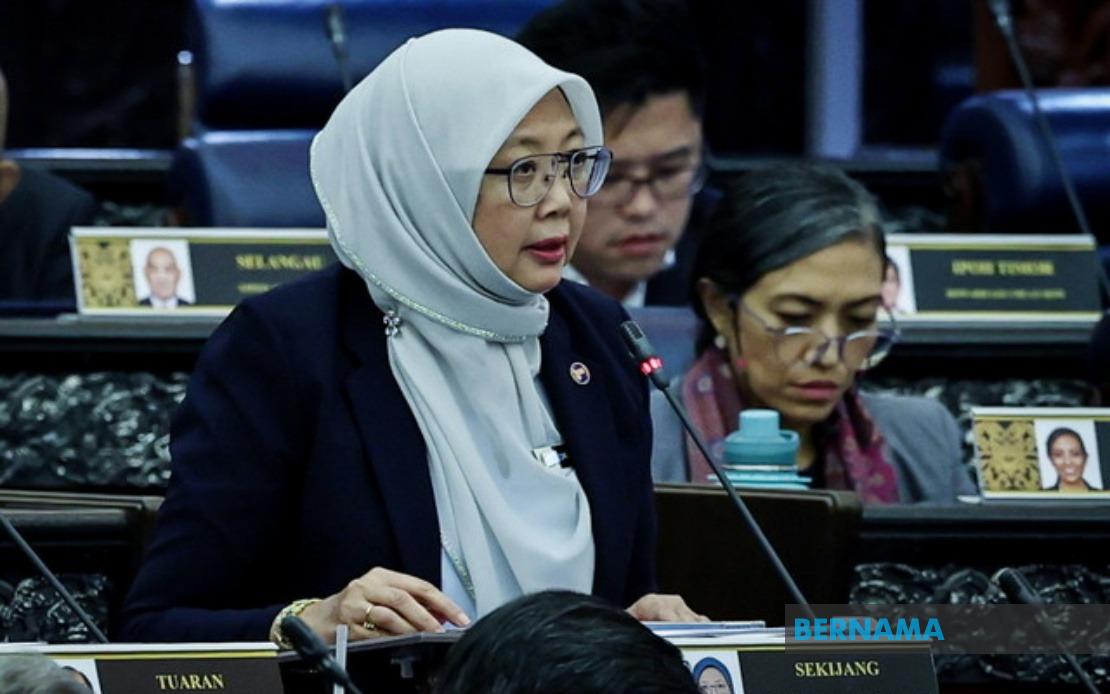
Datuk Seri Dr Zaliha Mustafa, chairman of the Government Backbenchers Club and Member of Parliament for Sekijang, has urged the government to publish a comprehensive report detailing the implementation of all 25 recommendations from the Royal Commission of Inquiry into Tabung Haji, along with full details of ongoing efforts to recover the institution's losses. Speaking during a parliamentary debate on the RCI findings, Dr Zaliha emphasised that transparency would be crucial to restoring the confidence of depositors who entrust their savings to the institution for their future hajj pilgrimages.
The call for disclosure comes at a significant moment for Tabung Haji, which serves millions of Malaysian Muslims saving specifically for their obligatory religious journey to Mecca. The institution's reputation has been substantially damaged by the financial crisis that precipitated the establishment of the RCI in 2021, and public trust remains a critical challenge for its recovery. Dr Zaliha's intervention reflects growing parliamentary pressure for the government to move beyond partial updates and instead present a detailed accounting that would satisfy both parliament and the Muslim community at large.
In her parliamentary remarks, Dr Zaliha stressed that the August House required a more comprehensive overview of the reform process. While she acknowledged progress in implementing the RCI recommendations, she argued that parliament and the public needed clarity on which of the 25 recommendations have been fully completed, which remain under implementation, and what timelines apply to those still pending. Such specificity, she suggested, would enable stakeholders to understand the institution's trajectory and hold leadership accountable for promised improvements.
The RCI report, which was presented to the Yang di-Pertuan Agong on 30 August 2022, remained undisclosed to the public until recently. The 211-page document examined management and operational deficiencies within Tabung Haji between 2014 and 2020, a period that encompasses the most severe aspects of the institution's financial deterioration. As of 30 July this year, Tabung Haji had achieved implementation of 75 per cent of the RCI's 25 recommendations, suggesting that significant work remains to complete the reform agenda.
Dr Zaliha's statement concentrated on three specific areas of concern: Tabung Haji's financial position and dividend distributions to depositors, the quality and governance of its investment decisions, and the accountability of senior management. Her focus on these domains reflects fundamental questions about how the institution can restore its financial health while maintaining the trust of millions of ordinary Muslims whose modest savings have been placed at risk.
A particularly significant element of her parliamentary contribution involved revisiting the RCI's analysis of the political circumstances surrounding Tabung Haji's crisis. The RCI identified that electoral pressures preceding a general election constituted a contributing factor to the financial mismanagement that resulted in substantial losses. Dr Zaliha's reference to this finding reflected a broader concern that institutional governance had been compromised by partisan political considerations, a matter that demands sustained scrutiny regardless of which political coalition holds power.
Central to Dr Zaliha's concerns was the role played by Datuk Seri Abdul Azeez Abdul Rahim, who served as non-executive chairman of Tabung Haji during the critical period under review. While technically designated as non-executive, the RCI findings and parliamentary discussion suggest that Abdul Azeez exercised substantial operational influence, particularly in negotiating major investments on behalf of the institution. Dr Zaliha called for clarification regarding the extent and nature of his involvement in investment decisions, and for confirmation or denial of allegations that accounts associated with him accumulated balances reaching RM170 million at one point.
The question of former leadership's personal financial interests intersecting with institutional decision-making carries profound implications for Tabung Haji's future governance. If senior figures used their positions to direct institutional resources toward investments they had personal stakes in, or allowed personal wealth accumulation to proceed alongside institutional losses, it would represent a fundamental breach of fiduciary responsibility. Transparency regarding these matters would enable regulators and parliament to implement safeguards preventing recurrence.
Dr Zaliha's advocacy for public disclosure also addressed the broader principle of institutional legitimacy. Tabung Haji functions as more than a conventional financial institution; it represents a sacred trust between the Malaysian Muslim community and their government. When an institution holding such significance experiences a major financial crisis, the restoration of public confidence cannot occur through incremental briefings or partial information. Rather, it requires that ordinary depositors understand exactly what went wrong, who bears responsibility, and what concrete measures have been implemented to prevent similar failures.
The request for a recovery status report similarly reflects recognition that depositors need visibility into whether and how their losses might be recouped. Without such transparency, rumours flourish and confidence erodes further. A detailed public account of recovery efforts, including litigation against responsible parties, clawback of misappropriated funds, and restitution from failed investments, would demonstrate institutional commitment to accountability.
For Malaysian policymakers, the Tabung Haji situation presents a broader cautionary tale about the intersection of politics and institutional governance. Institutions designed to serve specific communities or functions require governance structures insulated from short-term political calculation. The RCI's identification of electoral pressure as a contributing factor to mismanagement suggests that further institutional reforms must address not merely internal controls but the political environment within which those institutions operate.
Moving forward, the government faces a choice between continuing the incremental approach to disclosing information about Tabung Haji's reform and loss recovery, or embracing the fuller transparency that Dr Zaliha and likely growing numbers of parliamentarians and citizens are demanding. Given the significance of this institution to Malaysian Muslims and the substantial losses already incurred, the case for comprehensive public disclosure appears compelling. Such transparency would serve both the immediate goal of restoring depositor confidence and the broader institutional objective of preventing similar crises in future.

