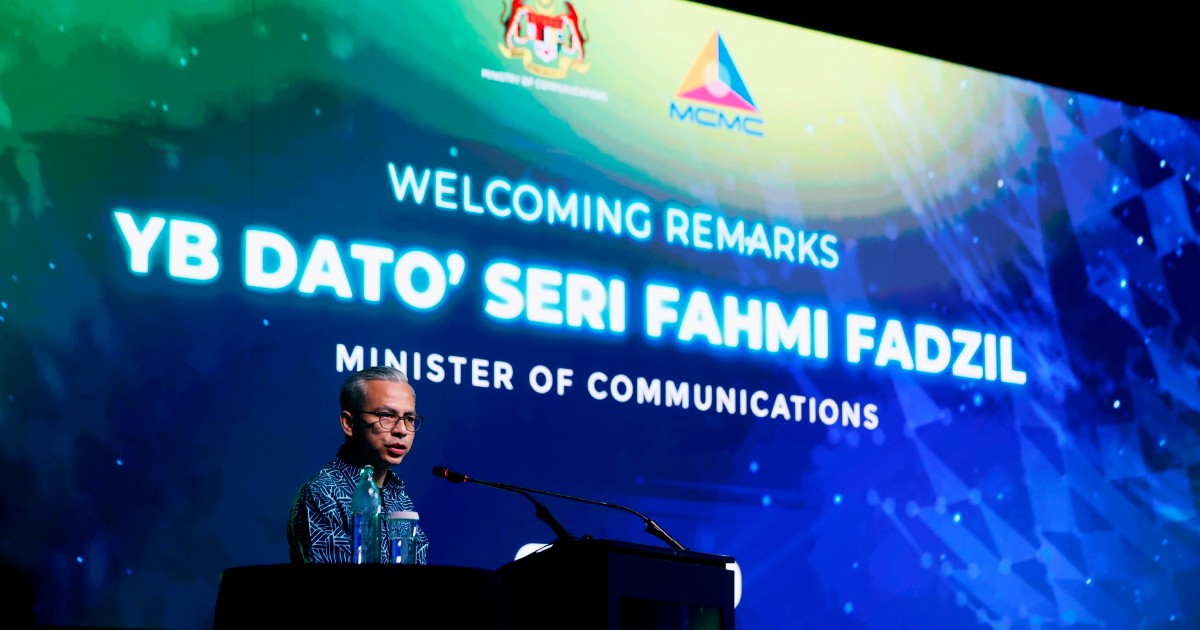
Malaysia's Communications Minister Datuk Seri Fahmi Fadzil has sought to dampen speculation about internal divisions within the Cabinet, describing recent tensions over ministerial conduct during the Negeri Sembilan state election campaign as isolated incidents rather than symptoms of institutional breakdown.
Fahmi's comments, made in Kuala Pilah, emerge against a backdrop of visible friction among senior government figures over how ministers should conduct themselves while supporting their parties' electoral efforts. The exchanges had prompted observers to question whether the administration's tight working relationships were beginning to fracture under the weight of campaigning pressures.
The reassurance from the Communications Minister reflects a wider pattern in Malaysian governance where public disagreements among Cabinet members occasionally surface but are typically reframed as healthy debate within a fundamentally cohesive leadership structure. Fahmi's approach—emphasising informal problem-solving and personal rapport—mirrors how governments across the region often manage potential crises of confidence before they metastasise into genuine political instability.
The Negeri Sembilan electoral contest appears to have prompted unusually candid exchanges about the boundaries between ministerial duty and partisan activity. Such debates carry particular weight in Malaysia's context, where the intersection of state apparatus and party machinery remains a sensitive issue. Previous administrations have faced criticism for perceived blurring of these lines, making clarity on the subject a recurring concern for governance observers.
By characterising the disagreements as minor enough to resolve over a casual lunch meeting, Fahmi employs a messaging strategy that prioritises continuity and normalcy. This approach aims to prevent manufactured narratives about Cabinet instability from gaining traction in media coverage and public discourse. In Southeast Asia's intensely competitive media environment, such rapid response to potential crisis narratives has become standard practice among ministers seeking to maintain government credibility.
The incident nonetheless illustrates persistent underlying tensions within Malaysia's coalition government structures. Managing diverse political parties and factions under a unified Cabinet framework requires constant calibration and informal negotiation between senior figures. The Negeri Sembilan campaign revealed that even in routine state-level contests, these equilibrium points can shift, forcing ministers to publicly clarify their positions and defend their colleagues' conduct.
The visibility of these disagreements may also reflect broader shifts in Malaysian political communication. Increased media scrutiny and the amplification of political messaging through social media platforms mean that tensions previously contained within backroom discussions now frequently erupt into public view. Ministers increasingly find themselves responding to controversies that might have remained invisible in earlier political eras.
Fahmi's intervention serves an important function within the government's internal communication ecosystem. As the minister responsible for overseeing the country's broader communications landscape, his explicit endorsement of Cabinet unity carries weight beyond mere reassurance. It signals that official structures for managing internal disagreements remain functional and that elected leaders continue to exercise sufficient control over the narrative surrounding their administration's conduct.
The Malaysian public has grown accustomed to periodic assertions of governmental unity, even when underlying frictions are visible. Fahmi's statement will likely satisfy those inclined to accept official explanations at face value, while remaining unconvincing to more sceptical observers who view such declarations as routine political theatre. The divergent interpretations themselves reflect Malaysia's polarised media environment and the challenge government communicators face in addressing fragmented audiences with different baseline assumptions about institutional trustworthiness.
Looking forward, the incident underscores the delicate balance required in managing coalition governments across Southeast Asia. As Malaysia approaches various electoral contests at state and federal levels, maintaining visible ministerial cohesion will remain strategically important. The apparent willingness of Fahmi and other senior figures to acknowledge and quickly address disagreements, rather than allowing them to fester, may ultimately strengthen perceptions of a government capable of managing internal disagreements maturely.
For regional observers monitoring Malaysian governance trends, the episode demonstrates that despite periodic tensions, the country's institutional mechanisms for resolving Cabinet disputes continue to function without requiring dramatic public confrontations. Whether this reflects genuine underlying unity or merely sophisticated surface management remains a question that competing political narratives will continue to contest.

