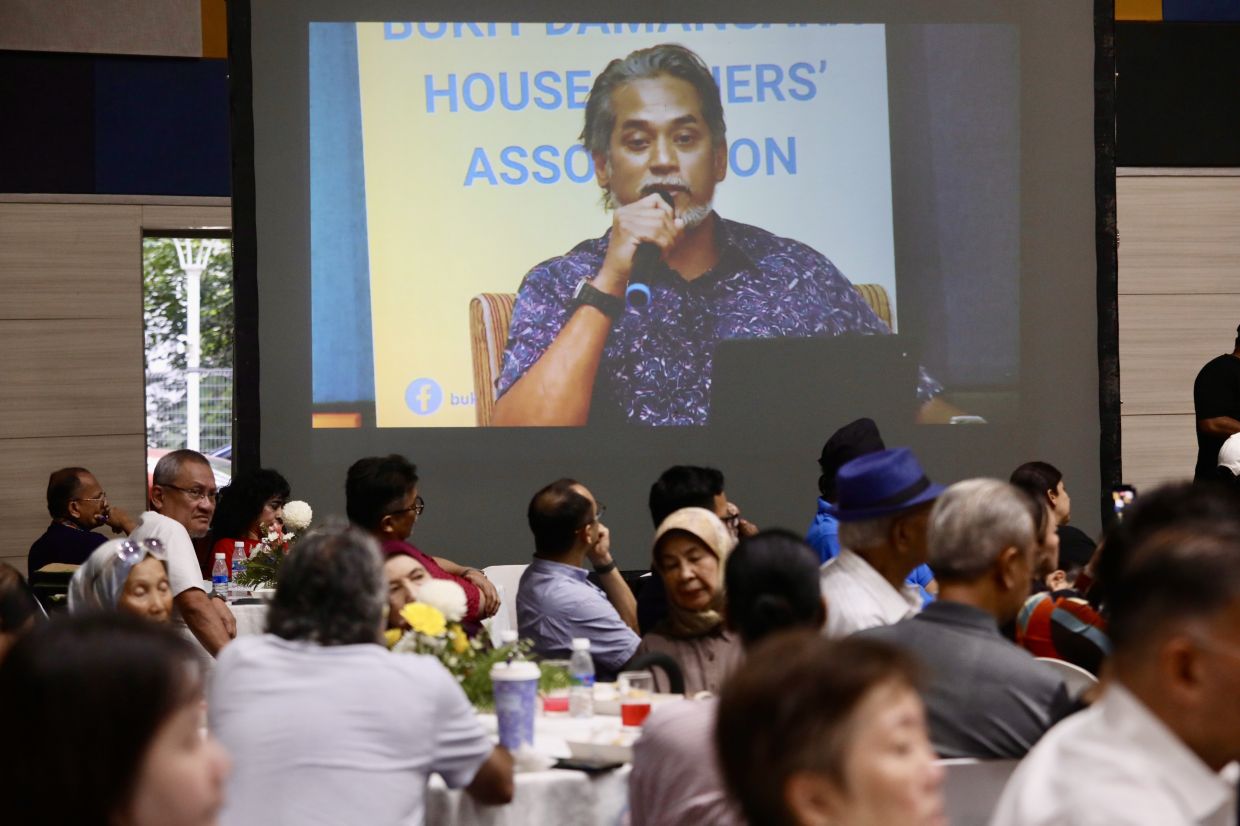
Approximately 400 residents of Bukit Damansara gathered at Pusat Komuniti Bukit Damansara for a community dialogue on Wednesday evening, during which they voiced strong opposition to a municipal construction permit for the vertical expansion of a neighbouring semi-detached property. The three-hour town hall, themed "Your Voice Matters", marked the first major engagement session under the Bukit Damansara Home Owners' Association's newly elected president, Khairy Jamaluddin, who assumed office in early August. The event underscored growing tensions within the residential enclave over City Hall's approval processes and the impact of ongoing construction work on the neighbourhood's character and structural integrity.
The central grievance centred on a permit issued by Kuala Lumpur City Hall in December 2025 authorising the owner of a semi-detached residence to construct an additional floor, converting the original double-storey structure into a three-storey building. Resident A. Zakki, speaking on behalf of concerned neighbours, explained that the project fundamentally contradicts the established architectural harmony of the residential row, where uniformity has long been a defining characteristic. A petition against the development had secured signatures from 19 immediate neighbours, demonstrating broad-based opposition within the affected vicinity. Zakki detailed the project's timeline, noting that after initial resident pushback, a stop-work order was issued in January 2026, only to be reversed two months later in June when City Hall granted fresh approval. Construction has since recommenced and currently stands at approximately 10 per cent completion, with structural pillars already in place adjacent to neighbouring properties.
Beyond aesthetic concerns, the renovation has triggered tangible structural damage to neighbouring houses. Zakki highlighted that cracks have appeared in adjacent properties as a direct consequence of the ongoing building works, raising questions about construction standards and the adequacy of damage prevention measures. The lack of prior consultation with affected residents amplified grievances, with community members arguing that a project of such scale warranted transparent engagement with the neighbourhood before approval was granted. This procedural gap has become a focal point for residents demanding that City Hall not only withdraw the current permit but establish stronger community consultation frameworks for future projects that materially affect residential character and safety.
Kuala Lumpur City Hall's Planning Department was represented at the dialogue by town planner executive director Rosli Nordin, who committed to documenting the residents' concerns arising from the renovation activities. His measured response acknowledged the issues without offering immediate reassurance regarding permit withdrawal, suggesting that City Hall intends to evaluate the complaints through formal channels rather than reverse its decision in response to public pressure. This cautious stance reflects the municipal authority's reluctance to undermine previously issued permits, though the scale of community opposition may yet prompt a policy reconsideration or stricter enforcement of construction protocols.
The town hall also surfaced secondary infrastructure challenges affecting the neighbourhood. Residents raised concerns about traffic congestion occurring during peak school hours, specifically between 7 am and 7:30 am and again from 2 pm to 4 pm in the vicinity of SK Bukit Damansara and Stella Maris International School Damansara. Brickfields deputy police chief Supt Ahmad Firdaus Mustafia Kamal indicated that these matters were under active management, though residents expressed frustration with inconsistent traffic enforcement. SK Bukit Damansara Parent-Teacher Association chairman Ameirul Azraie Mustadza acknowledged repeated appeals to parents against double-parking near the school entrance, noting that the association had explored enlisting Rela traffic volunteers but lacked sufficient funding. He appealed for more consistent police presence, requesting daily monitoring rather than sporadic enforcement.
Water infrastructure emerged as another pressing concern, with residents calling on Air Selangor to conduct comprehensive inspections of the pipeline network following multiple pipe burst incidents within Bukit Damansara. An Air Selangor representative acknowledged the company's awareness of these failures and outlined plans to progressively replace the aging pipeline infrastructure serving the neighbourhood. However, residents were not provided with a specific timeline for these replacements, leaving uncertainty regarding when essential water distribution systems will be upgraded to prevent further service disruptions.
Khairy, in his role moderating the dialogue, positioned the town hall as a mechanism for bridging the traditional gap between community members and municipal decision-makers. He characterised the forum as an open channel for residents to articulate neighbourhood concerns and propose practical remedies, committing himself to follow-up advocacy intended to accelerate problem resolution. This engagement strategy aligns with broader efforts by newly appointed homeowners' association leadership to establish more responsive governance and create accountability structures for local administrators.
The Bukit Damansara incident reflects broader tensions across Kuala Lumpur regarding balancing individual property rights with community consensus in residential planning. The semi-detached expansion represents a test case for how City Hall will navigate conflicts between homeowner autonomy and neighbourhood preservation in established residential enclaves. Malaysian urban neighbourhoods, particularly in affluent areas like Bukit Damansara, have historically prided themselves on cohesive architectural character, and deviations from established design norms frequently trigger community resistance. The question of whether consultation requirements should be strengthened before permits are issued, rather than addressed post-approval, will likely feature in future municipal policy discussions.
For residents across other Kuala Lumpur neighbourhoods, the Bukit Damansara precedent carries implications regarding permit issuance transparency and the weight afforded to community input. Should City Hall ultimately reverse its decision in response to organised resident pressure, it would signal greater responsiveness to grassroots opposition. Conversely, should the permit remain active and construction proceed to completion, it will underscore the current primacy of property owner rights within the municipal regulatory framework and the limited practical influence of homeowners' associations over approved development projects. The coming weeks and months will reveal whether this dialogue represents a turning point in municipal consultation practices or remains a largely symbolic exercise in community engagement.

