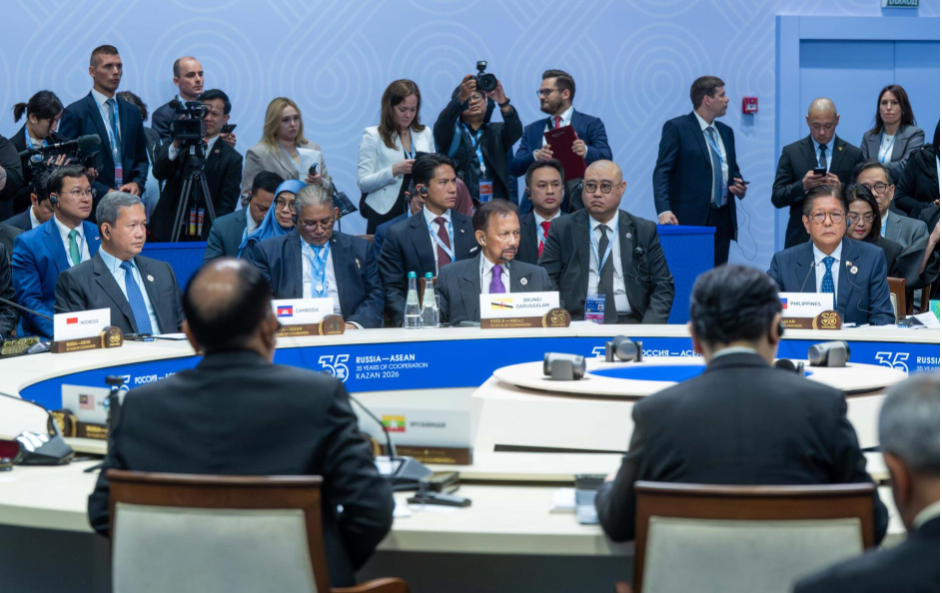
Sultan Hassanal Bolkiah has made a compelling case for deepening ties between Southeast Asia and Russia, speaking at a landmark commemorative summit in Kazan on June 18. The Brunei monarch's address to regional leaders and Russian officials at the Kazan Expo International Exhibition Centre underscored the strategic importance of sustained engagement between Asean and Moscow, particularly as both blocs navigate an increasingly complex geopolitical landscape. Accompanied by Brunei's Minister of Foreign Affairs Prince 'Abdul Mateen, the Sultan began by expressing gratitude to President Vladimir Putin and local authorities for hosting what represents a milestone moment in bilateral relations.
The significance of the gathering extends beyond diplomatic protocol. This year marks the 35th anniversary of the Asean-Russia Dialogue Partnership, a relationship that has weathered major international shifts and maintained momentum through changing circumstances. Sultan Hassanal Bolkiah framed this longevity as evidence of genuine resilience, arguing that the partnership has not merely survived but grown more relevant as global conditions have shifted. The monarch's characterisation of the relationship as increasingly important "amid global changes" carries particular weight given current tensions ranging from geopolitical rivalries to economic fragmentation affecting the entire Indo-Pacific region.
Central to the Sultan's intervention was the argument that Asean-Russia cooperation has delivered concrete results across multiple dimensions. He highlighted that collaboration now spans all three pillars of the Asean Community framework, suggesting a breadth of engagement that moves well beyond traditional diplomacy into economic, social and security spheres. The emphasis on "tangible benefits" and strengthened people-to-people connections reflects an understanding that sustainable partnerships rest on foundations deeper than governmental agreements alone. For Malaysian audiences, this framing carries particular relevance given the nation's own diverse engagement strategies across the region.
Looking forward, Sultan Hassanal Bolkiah positioned Asean-Russia cooperation as essential to realising Asean Vision 2045, the regional bloc's long-term development framework. He identified several domains where continued partnership proves indispensable: managing political tensions that periodically destabilise the region, countering economic fragmentation that threatens prosperity, addressing climate change through joint initiatives, and navigating technological disruption. This expansive agenda reflects the reality that contemporary security challenges transcend traditional military concerns, encompassing environmental, economic and technological dimensions that require sustained dialogue between major powers and regional organisations.
Energy and food security emerged as priority areas in the Sultan's remarks, reflecting pressing concerns across Southeast Asia. The region's economic viability depends heavily on stable energy supplies and agricultural output, both areas where Russia possesses significant resources and expertise. Climate action and disaster management similarly represent domains where collaborative research and capacity-building could yield substantial dividends for Asean nations repeatedly exposed to typhoons, floods and other environmental hazards. The Sultan's emphasis on these functional areas suggests a pragmatic approach to partnership that moves beyond rhetoric toward addressing the material needs of Southeast Asian populations.
Human capital development occupied a prominent place in the Sultan's vision for deepened engagement. He stressed that education exchanges and training programmes constitute essential infrastructure for strengthening the partnership across generations. This perspective acknowledges that durable international relationships depend on cultivating expertise and networks among younger cohorts who will inherit and shape future cooperation. For a region where brain drain remains a persistent challenge, initiatives facilitating knowledge transfer and professional networks carry particular significance.
The summit's formal outputs reflected this comprehensive vision. Four substantive documents were adopted during the first plenary session, establishing frameworks for strategic partnership through 2030 and creating dedicated mechanisms for energy and cultural cooperation. The Kazan Declaration 2026, which Sultan Hassanal Bolkiah welcomed, provides institutional scaffolding for ongoing engagement. These agreements move beyond aspirational statements, establishing specific commitments and implementation timelines that demand accountability from both Asean and Russian officials.
A second working session convened as a lunch meeting to examine integration processes across Eurasia, bringing together Asean's Secretary-General alongside leadership from the Shanghai Cooperation Organisation and the Eurasian Economic Commission. This architecture reveals awareness that regional developments increasingly interconnect with continental dynamics, particularly as infrastructure projects and economic corridors link Southeast Asia more tightly with Central Asian and Russian economies. The discussion acknowledged that Asean cannot remain detached from these broader integration trends.
The summit also provided occasion for the Asean-Russia Business Forum to showcase commercial opportunities, held as a side event on June 18. The inclusion of business leaders alongside government officials reflects recognition that economic ties provide durable foundations for political relationships. Trade, investment flows, and joint ventures create constituencies in both regions with vested interests in maintaining stable, productive engagement. For Malaysian companies seeking to expand into Russian markets or participate in energy and infrastructure projects, such forums offer valuable networking opportunities.
In his remarks, Sultan Hassanal Bolkiah also extended condolences to Thailand's Prime Minister Anutin Charnvirakul regarding the recent death of Princess Bajrakitiyabha, a gesture highlighting the personal dimensions of diplomatic engagement among Asean leaders. Such moments underscore the interconnected nature of the region's political ecosystems.
The Sultan's emphasis on cooperation amid contemporary challenges carries implicit acknowledgment that neither Asean nor Russia can navigate current uncertainties in isolation. Regional stability depends partly on maintaining functional dialogue channels with major powers, including Russia, despite disagreements on specific issues. The framing of cooperation as contributing to "peace, security and prosperity" reflects a vision wherein engagement serves all parties' interests rather than constituting zero-sum competition. For Malaysian policymakers, the Sultan's words suggest a model of strategic autonomy that remains open to partnerships across the geopolitical spectrum while maintaining core regional commitments.