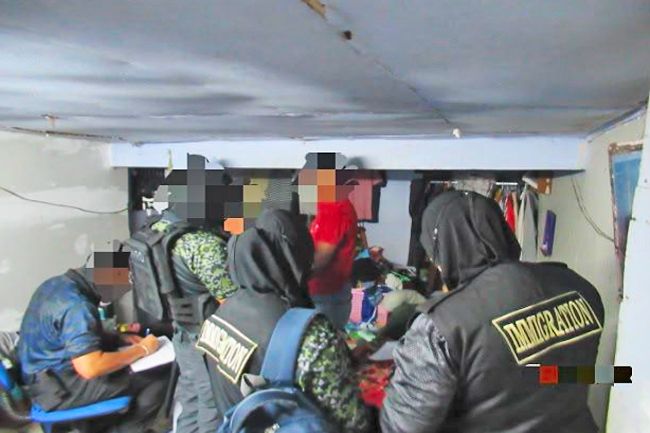
Brunei's Immigration and National Registration Department is intensifying its nationwide crackdown on immigration breaches, with a recent series of coordinated operations netting multiple violators and highlighting persistent compliance issues in the sultanate's foreign workforce management. The enforcement drive, branded Operasi Kakas 2026, represents an escalation in the ministry's efforts to maintain immigration integrity across Brunei's mukim jurisdictions, signalling heightened regulatory vigilance in an era of tightened border controls throughout Southeast Asia.
During the first significant sweep, designated Operasi Kakas 86/2026, immigration officers descended on a marketplace in Mukim Sengkurong, where routine document checks on 13 foreign nationals resulted in the detention of seven individuals. These suspects are believed to have breached Regulation 9(4) of the Immigration Regulations under Chapter 17, a provision specifically criminalising employment undertaken while holding temporary visitor status. The arrest of multiple offenders at a commercial location suggests that informal economic sectors—particularly retail and market-based enterprises—may represent vulnerability points in immigration enforcement, an observation relevant to Malaysian authorities managing similar cross-border labour dynamics along the lengthy Brunei-Malaysia boundary.
A second operation, Operasi Kakas 87/2026, shifted focus to residential areas, with enforcement teams inspecting rented accommodations in Mukim Berakas 'A'. The inspection of three foreign nationals yielded two detentions following preliminary investigation into suspected violations of the same work-pass regulation. The targeting of rental properties indicates that investigators are pursuing systematic intelligence about informal accommodation networks that may harbour unauthorised workers, a tactic increasingly adopted across the region to dismantle underground employment operations.
The most productive enforcement action came during Operasi Kakas 88/2026, conducted at a rented house in the same mukim district. Officers examined eight foreign nationals and detained six, discovering that none possessed original documentation—a compliance failure suggesting either deliberate concealment or systemic organisational failures among employers. Investigation revealed that five of these individuals faced dual violations: overstaying in Brunei after their immigration passes expired under Section 15(1) of the Immigration Act, and working for employers other than those listed on their original authorisation documents under Regulation 15(2) of the Immigration Regulations. This pattern of secondary employment constitutes a serious breach, as it removes workers from official regulatory oversight and creates conditions conducive to labour exploitation.
The overstaying component of these charges carries particular significance for regional migration policy. Extended unauthorised presence in a country often indicates exploitation or desperation among migrant workers, who may face coercion, wage theft, or unsafe working conditions that deter them from approaching authorities. The fact that five detainees had overstayed suggests either that they were trapped in exploitative situations reluctant to report their status, or that enforcement had previously failed to detect their presence. Either scenario underscores the importance of coordinated regional approaches to labour migration management—an issue Malaysia and Brunei have begun addressing through bilateral labour agreements, though enforcement gaps persist.
Conversely, Operasi Kakas 89/2026 demonstrated that the enforcement apparatus successfully functions when workers possess compliant documentation. This operation, conducted at a rented house in Mukim Berakas 'B', involved inspection of four foreign nationals who were found to possess valid documents and properly authorised immigration passes. All were released without further action, confirming that the immigration department distinguishes between violations and legitimate temporary residence. This procedural clarity is important for maintaining public confidence in the fairness of enforcement and encouraging honest compliance among the broader foreign worker population.
The concentration of violations in Mukim Berakas locations warrants analytical attention. That two of the four operations targeted this single administrative area may reflect either genuine geographic clustering of violations, concentrated employment of migrant workers in particular industries or residential zones, or simply the trajectory of an ongoing intelligence-led investigation. Malaysian state authorities managing equivalent seasonal worker patterns should note that geographic concentration of violations often indicates sectoral or employer-based networks worthy of deeper investigation rather than isolated individual breaches.
The documentation failures uncovered during Operasi Kakas 88/2026—specifically the inability of detainees to produce original paperwork—signal potential employer negligence or deliberate non-compliance. Brunei's employers are legally obligated to maintain original documentation for all foreign workers, a requirement designed to prevent document trafficking and ensure ready verification of an employee's legal status. When employers fail this basic obligation, it typically indicates either inadequate compliance infrastructure or intentional evasion. Regional labour-sending countries, including the Philippines and Indonesia, have increasingly held employers accountable for such documentary failures, sometimes imposing economic sanctions or restricting future worker recruitment privileges.
The Operasi Kakas enforcement series illustrates Brunei's determination to enforce its immigration framework comprehensively across different geographic zones and occupational settings. By conducting operations simultaneously across multiple mukims and adapting tactics—from marketplace checks to residential inspections—the INRD demonstrates intelligent resource deployment. However, the ongoing discovery of violations suggests that compliance rates remain imperfect despite existing regulations, pointing to either insufficient deterrence, weak employer education, or limited resources for comprehensive monitoring.
For Malaysia, these enforcement trends carry relevance. Both countries share similar challenges managing cross-border labour flows, and Brunei's operational model—combining workplace and residential inspections with robust document verification protocols—offers insights into effective immigration enforcement. The detention of 15 individuals across four operations within a single enforcement phase suggests that Brunei's underground economy may harbour a significant undocumented or non-compliant worker population, a proportion that Malaysian authorities should monitor closely in their own jurisdictions. The apparent sophistication of the Operasi Kakas programme, with numbered sequential operations suggesting systematic ongoing activity, indicates that Brunei's immigration department views enforcement not as episodic crisis response but as continuous regulatory maintenance—a posture increasingly necessary throughout Southeast Asia as labour migration intensifies.

