An avalanche that struck Broad Peak in Pakistan's northern regions on Thursday has triggered an urgent search and rescue operation for ten climbers, among them the internationally acclaimed mountaineer Nirmal Purja of Nepal and Pakistan's accomplished high-altitude climber Sohail Sakhi. The incident unfolded around midday when the avalanche swept through the area where multiple expedition teams were in the midst of their coordinated summit attempt, highlighting the ever-present dangers that climbers face on some of the world's most challenging peaks.
According to the Alpine Club of Pakistan, the missing group comprises six Nepalese climbers, one Pakistani, one Omani, one American, and one Chinese mountaineer. Beyond Purja and Sakhi, the Nepali contingent includes Pur Bahadur Gurung, Kili Pemba Sherpa, Nima Sherpa, Nawang Thindu Sherpa, and Gyalu Sherpa. The international composition of the group underscores how Broad Peak, the twelfth highest mountain in the world at 8,051 metres, continues to attract elite mountaineers from across the globe seeking to test themselves against its formidable challenges. The remaining missing climbers have been identified as Nadhira Ahmed Abdullah Al Harthy from Oman, Wang Zhong from China, and Mallory Geis from the United States.
Rescue authorities received a critical piece of information when GPS signals from some of the stranded climbers revealed that the avalanche had carried the group approximately 1,000 metres downslope, leaving them trapped in a difficult-to-reach location. This data proved invaluable in directing rescue efforts, though the considerable altitude and treacherous terrain present enormous logistical challenges for any recovery operation. The Alpine Club of Pakistan General Secretary Ayaz Shigri noted that initial rescue operations were expected to commence by helicopter on Friday morning, though he cautioned that weather conditions and operational constraints might determine the success and timing of such efforts. Adding to the complexity, there were indications that several local high-altitude porters who typically assist expeditions on the mountain may have also been caught in the avalanche.
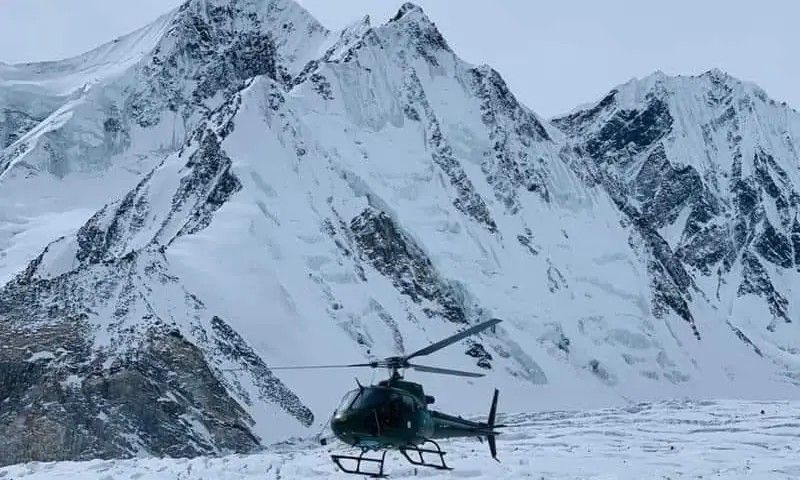
In response to the emergency, Pakistan dispatched two Army Aviation rescue helicopters equipped with specialized personnel and equipment to support the operation. The Alpine Club mobilized its leadership, with Major General Irfan Arshad and senior officials maintaining constant coordination with government bodies and relevant agencies to facilitate the rescue. The club emphasized that all available resources were being marshalled to mount a comprehensive recovery mission, contingent upon the challenging weather and operational conditions that characterize high-altitude mountaineering regions in the Hindu Kush range.
Gilgit-Baltistan's chief minister, Amjad Hussain Advocate, declared high alert across all relevant departments and directed the district administration to employ every available resource to ensure the climbers' safe recovery. His instructions emphasized maintaining aerial and ground rescue teams in readiness so that assistance could be delivered the moment weather windows permitted helicopter operations. The chief minister's intervention reflected the gravity with which Pakistani authorities regard such incidents, particularly when foreign nationals and renowned figures are involved.
Nirmal Purja, aged 43, has emerged as one of the most accomplished mountaineers of the current generation. His military background, having served with Britain's Brigade of Gurkhas and subsequently with the Special Boat Service of the Royal Marines, equipped him with the discipline and technical expertise required for extreme altitude mountaineering. Purja gained worldwide recognition when he became the first climber to summit all fourteen peaks exceeding 8,000 metres within a compressed timeframe of just six months and six days, accomplishing this remarkable feat between April and October 2019. This record stood as a testament to his exceptional physiological capacity and mountaineering acumen. Further cementing his legacy, Purja led the first winter ascent of K2 in 2021 alongside nine other Nepali climbers, an achievement that demonstrated his ability to push boundaries on the world's most demanding mountains.
Sohail Sakhi represents the pinnacle of Pakistani high-altitude mountaineering capability. Hailing from the mountainous Hunza region, Sakhi had recently achieved a significant milestone by successfully summiting Kanchenjunga, the world's third-highest peak at 8,586 metres, during an expedition to Nepal in May of this year. His climbing résumé extends to multiple formidable mountains including K2, Nanga Parbat, Gasherbrum I, and Gasherbrum II, and notably, Sakhi has accomplished these ascents without supplemental oxygen—a distinction that places him among Pakistan's most capable high-altitude mountaineers. His experience and technical proficiency made his presence on Broad Peak part of a professionally ambitious expedition, which makes his disappearance all the more sobering for Pakistan's mountaineering community.
Broad Peak, while less famous than Everest or K2, occupies a significant position in the mountaineering world as one of the most technically demanding high-altitude peaks. Located in the Karakoram range straddling the Pakistan-China border, it attracts experienced climbers who view its ascent as a major accomplishment. The mountain's reputation for sudden weather changes and avalanche risk is well-established, yet these hazards have not deterred determined mountaineers seeking to add it to their summit records. The incident on Broad Peak serves as a stark reminder of the unpredictable and lethal forces that operate at extreme altitudes, where even the most experienced and well-prepared teams remain vulnerable to natural disasters.
The response from Pakistan's governmental and institutional structures demonstrates the protocols established for such emergencies in regions where high-altitude mountaineering is a regular occurrence. The coordination between the Alpine Club of Pakistan, military aviation assets, civilian authorities, and international rescue frameworks reflects years of experience managing mountaineering operations in one of the world's most challenging geographic zones. However, the success of these rescue efforts ultimately depends on weather cooperation and the physical possibility of reaching trapped climbers at such dangerous elevations.
For the mountaineering community across South Asia and globally, this incident carries profound implications. Nepal, Pakistan, and the broader region have built reputations as sources of world-class high-altitude mountaineers and guides, yet such tragedies underscore the real human costs associated with pursuing climbing at the extreme edge of human endurance. The missing climbers' families, sponsors, and support teams face an agonizing waiting period as rescue teams work against the clock and the mountain's unforgiving conditions. The international character of the expedition—with participants from Nepal, Pakistan, Oman, China, and the United States—reflects how modern mountaineering transcends national boundaries, creating a global community bound by shared passion and shared peril.

