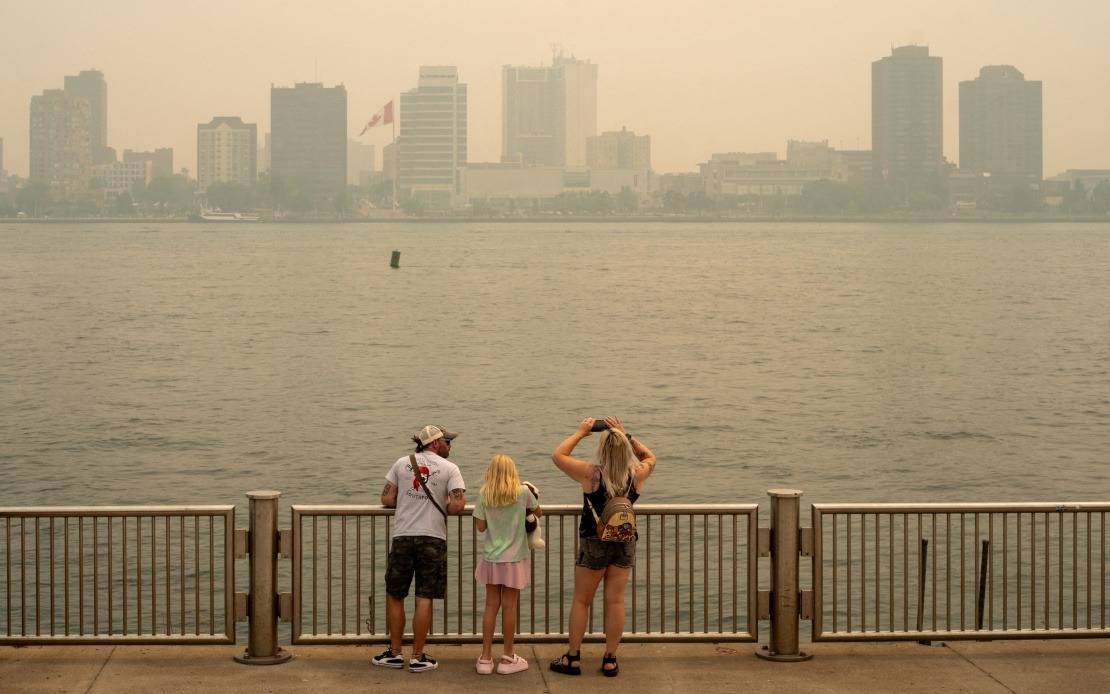
A sprawling wildfire continues to devastate British Columbia despite efforts to contain its destructive path, with authorities reporting on Sunday that while the blaze remains uncontrolled, its rate of expansion has begun to decelerate. The fire has already scorched more than 100 square kilometres of the province, prompting one of the largest evacuation operations in recent Canadian history as emergency officials ordered over 20,000 people to abandon their homes and communities.
The destructive advance has now reached Okanagan Lake, a development that officials view as a potential turning point in the firefighting campaign. The arrival of the fire at this natural water barrier suggests the flame's momentum may be weakening, though crews remain vigilant against any resurgence. The geographical constraint offers a temporary advantage to ground and aerial firefighting teams who have been working continuously against challenging conditions.
Emergency responders have concentrated their protective efforts on Summerland, a town of approximately 12,000 residents situated in the path of the advancing flames. Crews are establishing defensive perimeters around homes on the town's outer edges while simultaneously managing broader evacuation operations across the surrounding region. The situation underscores the strain placed on emergency services when facing fires of this magnitude, requiring coordination across multiple jurisdictions and agencies.
The human toll has proven significant, with rescue teams conducting helicopter operations to extract more than 50 people who became trapped by rapidly advancing flames. These aerial rescues highlight both the severity of the fire's spread and the critical importance of well-coordinated emergency response systems. Authorities are also investigating reports of at least one potential fatality, though confirmation remains pending as investigations continue into the fire's impact on affected communities.
Around 10,000 properties throughout the region remain directly threatened or within evacuation zones, affecting thousands of families who have lost access to their homes and possessions. The evacuation orders remain in effect as firefighting operations continue, with no clear timeline for residents to safely return. This prolonged displacement creates cascading challenges for social services, temporary housing arrangements, and the psychological wellbeing of evacuated populations.
The Canadian federal government has responded by mobilising substantial resources to support affected residents, with Minister of Emergency Preparedness Eleanor Olszewski confirming that British Columbia's formal aid request has been approved. The federal commitment includes provisions for temporary accommodation and additional support services, recognizing that evacuation operations create immediate housing crises for displaced families. This coordinated approach between provincial and federal authorities reflects the scale of response required for disasters of this magnitude.
Weather conditions continue to present significant obstacles to containment efforts, as persistent heat and aridity provide ideal conditions for fire propagation while dense smoke impairs visibility for aerial operations. Firefighting teams face a dual challenge of combating the flames themselves whilst navigating environmental factors that actively work against their containment strategies. These meteorological circumstances are not unusual for August in British Columbia, but their combination with the fire's already substantial size creates a particularly difficult operational environment.
Recognising the severity of the crisis, British Columbia's provincial government declared a state of emergency on Saturday, a designation that enables rapid mobilisation of resources and suspension of normal administrative procedures. This formal declaration signals not only the current danger but also the potential for the situation to deteriorate further should weather conditions change unfavourably. The emergency status authorises extraordinary measures to protect life and property across the province.
International cooperation has reinforced Canadian firefighting capacity, with personnel and resources arriving from Mexico, Australia, and New Zealand. These foreign teams bring specialised wildfire expertise and equipment calibrated for large-scale operations, supplementing Canadian crews who are stretched thin across multiple major fires. Such international assistance demonstrates the global nature of wildfire response protocols and the willingness of allied nations to support disaster relief efforts.
The broader context reveals that British Columbia faces a wildfire crisis extending well beyond the single major fire dominating headlines. Recent reporting indicates more than 100 separate wildfires have ignited across the province, with approximately half remaining beyond the control of firefighting operations. This distributed crisis multiplies the demand on emergency resources, personnel, and equipment, fragmenting response capacity across vast geographical areas.
Canada's eastern provinces are experiencing comparable challenges, with Ontario and Quebec both contending with major wildfire outbreaks this season. The simultaneous eruption of multiple large-scale fires across the nation suggests broader climatic and environmental factors contributing to heightened fire risk. These developments carry implications for Southeast Asian readers given increasing recognition of transboundary air quality impacts and the international nature of climate-driven disasters, phenomena that have affected the region directly in previous years.
The British Columbia situation exemplifies how modern wildfires, amplified by climate conditions, overwhelm traditional response capacity and require coordination across governmental levels, international borders, and specialised emergency services. As communities await containment and residents seek temporary shelter, the incident serves as a reminder of the vulnerabilities facing populated regions adjacent to forested terrain in warming climates, a concern increasingly relevant to fire-prone areas throughout the Asia-Pacific region.

