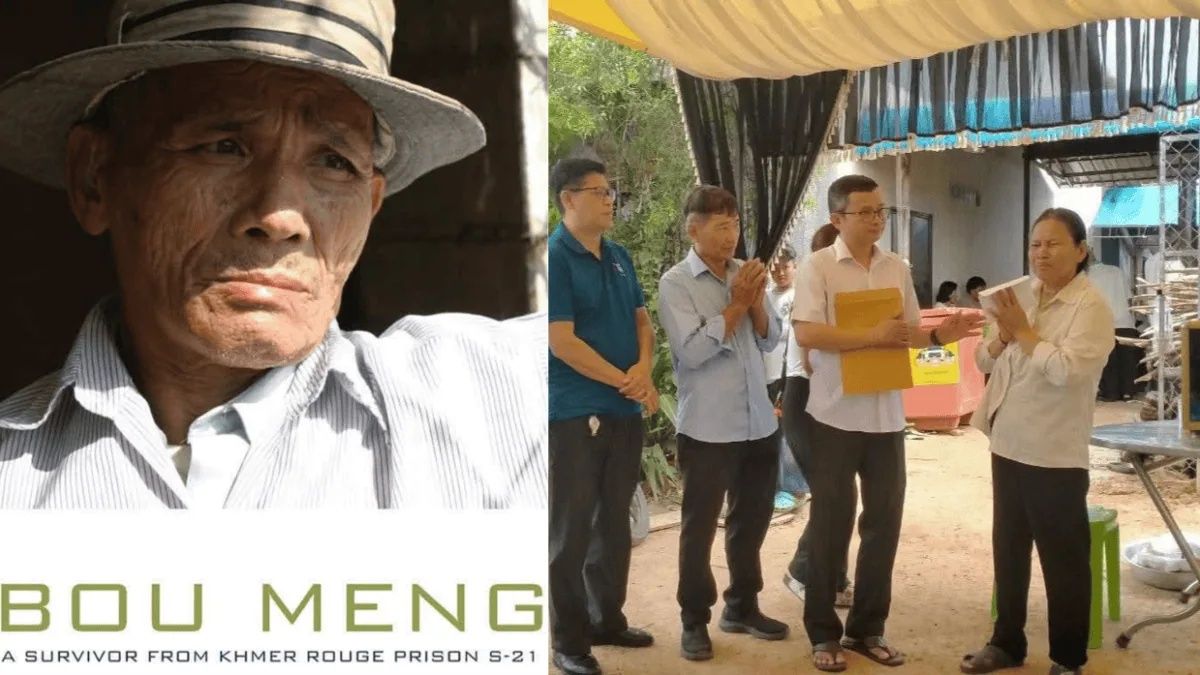
Bou Meng, a sole survivor of the Khmer Rouge's dreaded Tuol Sleng detention centre and a crucial witness to some of the regime's darkest crimes, has died at the age of 85. The Tuol Sleng Museum announced his passing on Friday, August 14, 2026, at 11pm. His death removes from the world one of only seven documented survivors of a prison where over 17,000 people perished between 1975 and 1979, making his loss particularly significant as living memories of the genocide continue to fade.
The Tuol Sleng Museum, which operates from the former S-21 detention centre in Phnom Penh, released a statement emphasizing the historical gravity of Meng's passing. In their formal announcement, museum leadership described him as a vital custodian of testimony regarding the atrocities committed by the Pol Pot regime, particularly the systematic killing machinery that operated within those prison walls. His absence will be felt acutely by those committed to documenting and preserving the historical record of one of the 20th century's most brutal genocides, during which an estimated two million Cambodians lost their lives.
Meng's story embodied the arbitrary cruelty of the Khmer Rouge system. In 1977, both he and his wife were arrested and sent to S-21, where they were subjected to the prison's infamous torture protocols. Their children were separated from them and placed in a labour camp. The bonds of family, already under assault by the regime's ideology of collective purification, were severed entirely. Meng would never reunite with his wife or children, joining the millions of Cambodians whose personal tragedies formed the broader tapestry of national catastrophe.
What allowed Meng to survive where so many others perished was a skill that inadvertently became his lifeline: he was a painter. The regime, despite its obsession with eliminating intellectuals and perceived enemies, occasionally preserved certain individuals whose technical abilities served propaganda or administrative purposes. Meng's artistic talents made him valuable enough to keep alive, sparing him from the extrajudicial execution squads that processed thousands of prisoners through S-21. Yet survival came at an immense cost, as torture was systematic and psychological scars accompanied any hope of continued existence.
Decades after the regime's collapse in 1979, Meng emerged as a key figure in transitional justice efforts. He provided crucial testimony at the trial of Kaing Guek Eav, known as Comrade Duch, who commanded S-21 during its worst years. The Extraordinary Chambers in the Courts of Cambodia (ECCC), established to prosecute senior Khmer Rouge leaders, relied heavily on survivor testimony to build cases against aging former officials. Meng's willingness to confront his tormentors in a court of law represented an extraordinary act of courage, transforming personal trauma into a tool for accountability and historical documentation.
In his final years, Meng became an educator, regularly sharing his experiences with visitors to the Tuol Sleng Museum. The museum itself, preserved as a memorial and archive, functions as one of the world's most haunting historical sites, with photographs of victims lining the walls and interrogation records meticulously maintained. Meng walked those corridors regularly, recounting the realities of imprisonment to visitors from around the world. His role transcended that of mere docent; he served as a living bridge between the past's horrors and present-day consciousness, embodying the possibility that survival and subsequent testimony could generate meaning from unimaginable suffering.
Meng's advocacy for remembrance reflected a broader Cambodian commitment to ensuring that the genocide would not be forgotten or minimized. For survivors, education became a form of resistance against historical erasure. By spending his remaining decades in service to memory, Meng ensured that future generations, including young Cambodians and international observers, would encounter not abstract statistics but the lived reality of arbitrary imprisonment, torture, and loss. His personal narrative—a man stripped of his family, subjected to torture, yet emerging to demand justice—encapsulates the resilience and resilience required to rebuild society after genocide.
The passing of Meng represents an accelerating loss of living memory. As the decades separate the present from 1979, the number of survivors capable of testifying diminishes steadily. Each death removes unique perspectives and details that no secondary source can entirely capture. Historians, documentarians, and justice advocates worldwide recognize that opportunities to record survivor testimony are rapidly closing. Meng's death underscores the urgency of preserving the historical record while those who experienced the regime remain alive to provide direct accounts.
For Cambodia, particularly, Meng's passing arrives as the nation grapples with ongoing questions about historical accountability and national healing. The ECCC continues its work, though at a slower pace, pursuing remaining suspects. Survivor testimony has been fundamental to establishing the factual and legal records upon which prosecutions rest. Yet beyond courtrooms, survivors like Meng have shaped Cambodia's cultural memory and national identity. His contributions to education and remembrance have influenced how Cambodians and the world understand the genocide's human dimensions.
Meng's legacy will endure through the testimonies he provided, the museum visitors he educated, and the historical record he helped establish. While his physical presence is now gone, his documented words and experiences will continue informing scholarship, legal proceedings, and public understanding of the Khmer Rouge period. For Malaysia and Southeast Asia more broadly, his life and death carry lessons about the fragility of democratic institutions, the consequences of ideological extremism, and the importance of preserving historical memory against the pressures of time and forgetting. In regional contexts where authoritarian governance has periodically emerged, the documented horrors of S-21 and the testimony of survivors like Meng serve as powerful reminders of what unchecked state power can inflict.

