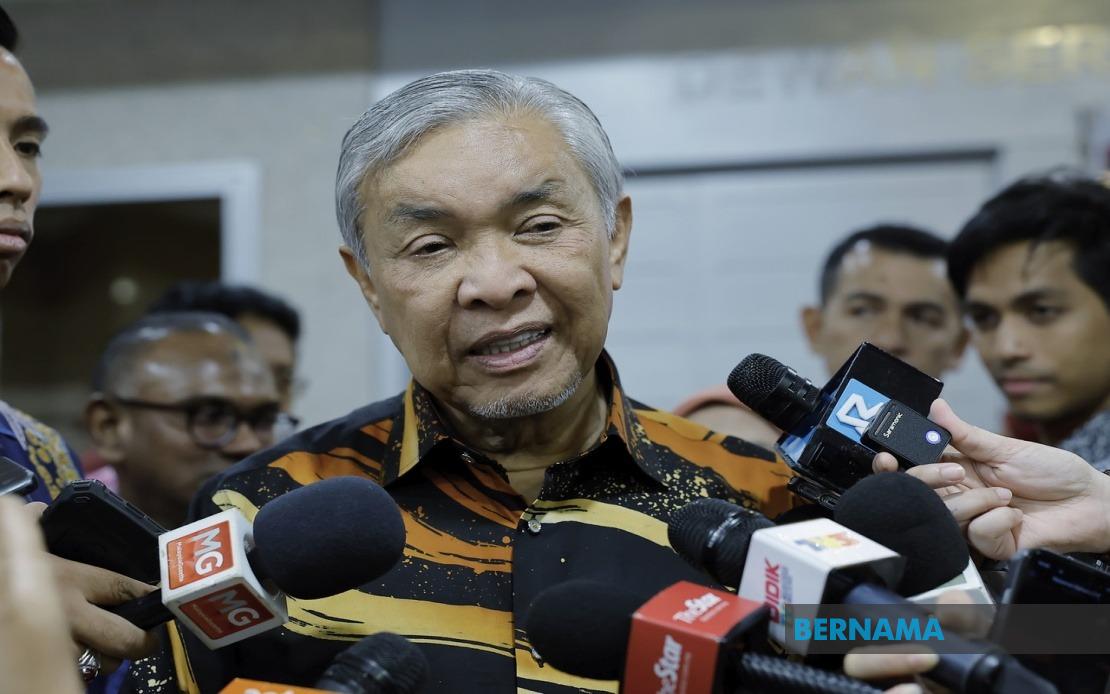
Barisan Nasional and UMNO will adopt a hardline approach toward any breach of trust or mismanagement uncovered at Lembaga Tabung Haji (TH), Deputy Prime Minister Datuk Seri Dr Ahmad Zahid Hamidi declared on Tuesday. Speaking after the Rural and Regional Development Ministry's monthly gathering in Putrajaya, the BN chairman underscored that his coalition and party remain resolute in holding wrongdoers accountable, signalling no willingness to overlook governance failures at the pilgrimage fund management body.
Ahmad Zahid's firm statement carries particular weight given the mounting pressure surrounding Tabung Haji's management, which has faced intense scrutiny following a damaging independent inquiry. His insistence that individuals found complicit in mismanagement or breaches of fiduciary duty within government agencies and statutory bodies must face consequences sets a clear marker for how the coalition intends to handle fallout from the institution's recent troubles. The Deputy Prime Minister made plain that compromise would be untenable when dealing with such matters.
The timing of Ahmad Zahid's remarks comes as Parliament prepares for a special sitting on August 11 dedicated entirely to debating the findings of the Royal Commission of Inquiry (RCI) that investigated Tabung Haji's operations and governance. This parliamentary session will provide the government with a formal platform to address recommendations stemming from the independent inquiry and to outline corrective measures. The setting underscores the seriousness with which the government is treating the matter, elevating it beyond routine parliamentary business to warrant a dedicated debate session.
The RCI report, unveiled on July 29, paints a troubling picture of the fund's management during the 2014-2020 period under investigation. The inquiry uncovered evidence of suspicious transactions interspersed with deliberate concealment of information—findings that point to systemic governance failures rather than isolated incidents. Most significantly, the RCI determined that poor investment decisions during this window substantially eroded Tabung Haji's asset base, potentially affecting the institution's long-term financial health and its capacity to serve Malaysian pilgrims effectively.
Among the RCI's key recommendations is a forensic audit of previous investment decisions that precipitated the marked decline in Tabung Haji's asset value. This forensic approach signals recognition that deeper investigation is required to establish not merely what happened, but how decisions were made, who made them, and whether they departed from prudent investment practices. Such an audit could potentially uncover evidence of negligence, misconduct, or even criminal liability that would form the basis for further action against individuals responsible.
For Malaysian depositors and pilgrims reliant on Tabung Haji's services, the RCI findings represent a significant breach of confidence in an institution charged with safeguarding their savings and facilitating their religious obligations. Tabung Haji's dual role as both a savings vehicle and pilgrimage facilitator means that mismanagement carries implications beyond simple financial loss—it undermines trust in a culturally significant national institution. The scope of the RCI investigation, focusing on a seven-year period when governance oversight may have been compromised, raises questions about whether problems extended beyond the formal investigation window.
The political dimension of Ahmad Zahid's statement warrants careful consideration for Malaysian observers. By emphasizing BN and UMNO's intolerance for misconduct, the Deputy Prime Minister is publicly positioning his coalition as committed to institutional accountability and good governance. This messaging becomes significant given Malaysia's recent political history, marked by high-profile governance scandals that have tested public confidence in state institutions. Ahmad Zahid's rhetoric thus serves dual purposes: it reassures the public that wrongdoing will be addressed while simultaneously rehabilitating his coalition's governance credentials.
The decision to conduct a special parliamentary sitting rather than routing findings through normal budget debate channels suggests that government leadership views the Tabung Haji matter as sufficiently grave to warrant elevated parliamentary attention. This decision also creates an opportunity for opposition lawmakers to scrutinize government responses and press for detailed explanations regarding what systemic failures permitted the RCI's findings to emerge. The parliamentary forum will thus likely become a venue for broader debate about governance standards across Malaysian statutory bodies and government agencies.
The investigation's seven-year scope raises important questions about accountability for officials who served during the 2014-2020 period. While some implicated officials may have since moved to other positions, the RCI's findings could potentially form the basis for disciplinary action, recovery of losses, or criminal prosecution depending on the severity of misconduct uncovered. The forensic audit recommendation suggests that investigators believe deeper examination is necessary to establish the full extent of wrongdoing and to trace decision-making chains that led to the asset deterioration.
Moving forward, the August 11 parliamentary debate will represent a critical juncture in determining how seriously the government intends to pursue accountability measures. The session will offer opposition MPs an opportunity to press for specifics on implementation timelines for the RCI's recommendations, while government representatives must articulate concrete plans for conducting the forensic audit and establishing accountability mechanisms. Public confidence in Tabung Haji's recovery will likely depend less on rhetorical commitments than on visible, decisive action.
The broader implications for Malaysian governance extend beyond a single institution. Tabung Haji's management failures highlight structural vulnerabilities that may exist across other statutory bodies and government agencies managing public funds or serving essential national functions. The RCI's investigation therefore serves as a diagnostic tool for identifying systemic governance weaknesses that require attention. Ahmad Zahid's strong language regarding accountability suggests that the government recognizes this diagnostic value and may be preparing to implement broader governance reforms.
For the financial sector and investment management community, the Tabung Haji findings underscore the importance of robust oversight mechanisms, transparent reporting standards, and clear accountability frameworks. As Malaysia continues efforts to strengthen its position as a financial centre and to attract investment, maintaining institutional integrity becomes paramount. The government's response to the RCI recommendations will signal its commitment to maintaining standards expected of major financial institutions.

