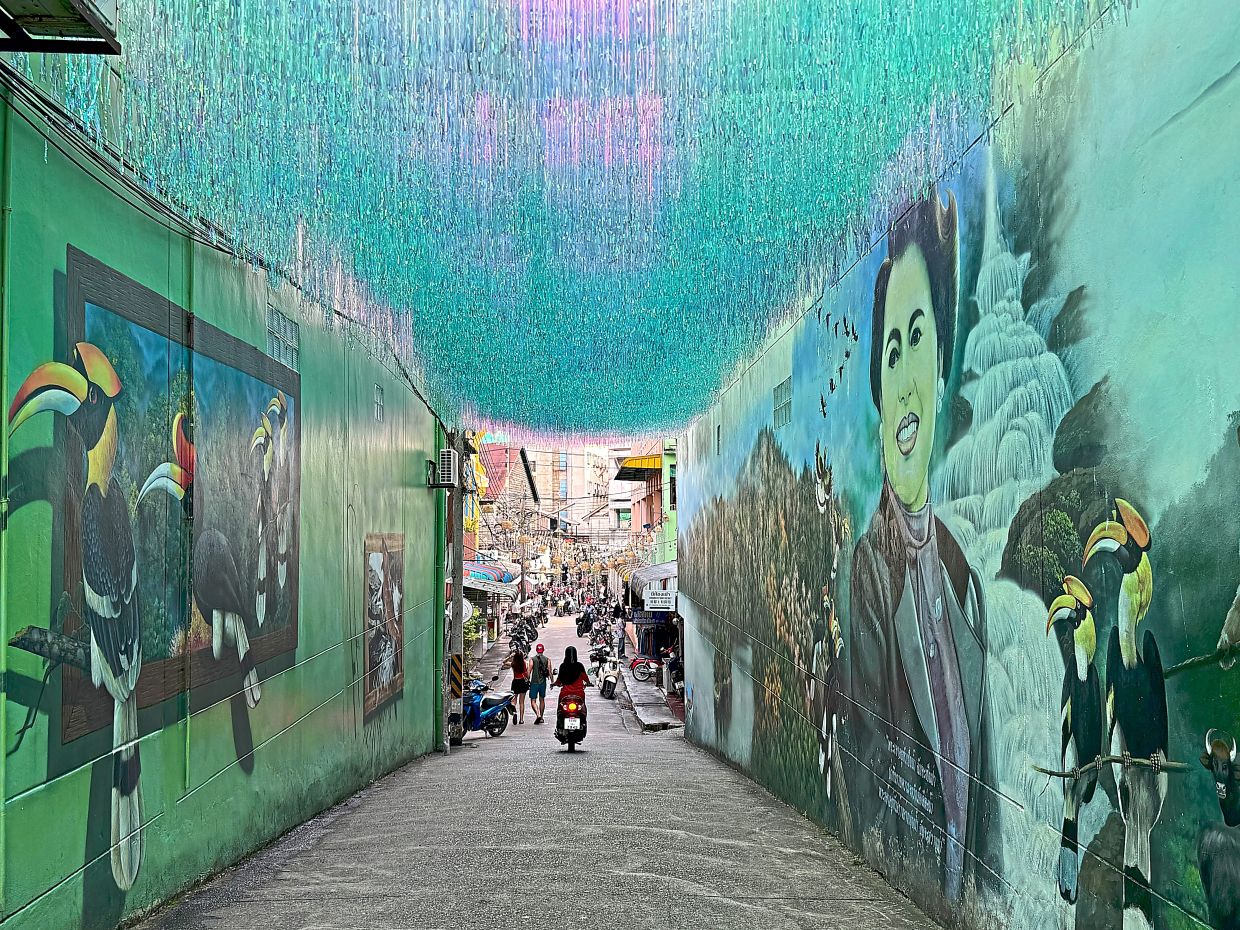
Betong, a modest town straddling Thailand's southern border with Malaysia, defies expectations as a destination brimming with historical intrigue and whimsical attractions. Located approximately 380 kilometres from Kuala Lumpur—roughly a five-hour drive—this locality has quietly established itself as a worthwhile stopover for Malaysian roadtrippers exploring beyond familiar routes. What initially appears as an unassuming settlement gradually reveals itself as a place where distinct cultural landmarks, quirky monuments, and regional heritage converge in unexpected ways.
The town's most prominent symbol is the Betong chicken, a locally prized breed that has become so integral to local identity that giant statues commemorate it throughout the town. These imposing sculptures, strategically positioned near lamp posts and public spaces, signal far more than whimsical decoration. They announce that Betong takes its poultry heritage seriously, a fact immediately confirmed by the proliferation of chicken-centric dining establishments. Whether ordering crispy pork rice at a local eatery or seeking chicken porridge from street vendors, visitors encounter cuisine that celebrates this single ingredient with remarkable variety and skill. The chicken obsession extends beyond restaurants into the town's visual landscape, creating a cohesive identity that transforms culinary preference into cultural marker.
Among Betong's most striking infrastructure projects is the Mongkollit Tunnel, Thailand's inaugural mountain tunnel completed in 2001. During daylight hours, the structure appears utilitarian and unremarkable—simply a functional passage through difficult terrain. However, as evening descends, the installation transforms dramatically. Brilliant blue illumination bathes the tunnel's interior and exterior in ethereal light, drawing pedestrian crowds to both sides of the passage. Visitors gather with cameras and phones, documenting the atmospheric spectacle that turns engineering pragmatism into inadvertent public art. This nightly metamorphosis exemplifies how Betong repurposes infrastructure into tourist experience, creating photogenic moments from functionality.
The Piyamit Tunnel presents far deeper historical resonance, anchoring Betong within Southeast Asia's mid-twentieth-century political upheavals. Located approximately 15 kilometres from town and accessed via a 15-minute walk along covered pathways, this 1-kilometre underground complex originated during the late 1970s as a Communist Party of Malaya stronghold. The tunnel functioned simultaneously as air raid shelter, supply depot, and tactical escape route during military operations. Guerrilla fighters navigated multiple entrances and exits designed for rapid dispersal across surrounding jungle terrain, though contemporary safety protocols have sealed several passages. The Piyamit Histories Museum, positioned at the visitor centre, documents this clandestine period through archival photographs and material artifacts, preserving the lived experiences of insurgents who inhabited the surrounding forest. Outside the tunnel entrance, visitors encounter remnants of the camp's infrastructure, including a specialised cooking apparatus engineered to channel charcoal smoke underground—a survival strategy preventing aerial detection of the base's location. Walking through the tunnel's chambers—sleeping quarters, meeting rooms, communication facilities—provides visceral understanding of how combatants sustained operations in isolation.
For travellers seeking deeper engagement with this historical chapter, Chulabhorn Phatthana Village 9 in Mae Wat, situated approximately 120 kilometres from the Piyamit Tunnel, offers comparative perspective. Once inhabited by former Communist Party members, the village now functions as cultural venue where visitors examine how individuals transitioned from armed struggle to civilian life following the insurgency's conclusion. This spatial relationship between past operational sites and contemporary settlements illustrates the extended aftermath of regional conflict, making Betong part of a broader Southeast Asian narrative about reconciliation and historical memory.
Betong's navigational characteristics favour pedestrian exploration over vehicular touring. The old town concentrates major attractions within accessible walking distance, rendering vehicles optional for many visitors. Parking scarcity, however, incentivises foot travel. Local knowledge proves valuable here: kerb colouration functions as parking regulation signage, with black-and-white demarcation permitting parking and red-and-white combinations prohibiting it. This intuitive system, once explained, transforms potential frustration into cultural learning moment.
Route 410, designated the Pattani-Betong Highway and stretching 160 kilometres through mountainous terrain, attracts regional motorcycle enthusiasts drawn to steep gradients and winding roads. The commercial ecosystem surrounding this activity has generated specialised retailers—notably Betong Route 410, a shop offering motorcycle-themed merchandise from apparel to customised Thai-style number plates. This entrepreneurial niche demonstrates how Betong markets itself to specific visitor demographics, recognising that road culture constitutes significant draw for travelling communities across Thailand and neighbouring regions.
Wat Phutiwhat temple, positioned near Route 410, anchors spiritual dimensions within Betong's landscape. A monumental bronze Buddha statue dominates the temple entrance, surveying the town below whilst housing sacred relics within the complex. Early morning visitation proves advisable, as visitor volumes increase substantially as daylight progresses, potentially compromising contemplative experience.
Betong's most peculiar attractions manifest in oversized public infrastructure transformed into landmarks. The town hosts two colossal mailboxes that defy the standard height conventions observed throughout Thailand. The original structure, erected in 1924 and towering 3.2 metres, stands near the Betong Clock Tower. This box originally featured integrated loudspeaker technology, broadcasting governmental announcements to residents in pre-broadcast era. Though this amplification function has obsolesced, the mailbox remains operationally integrated into postal systems. A 9-metre-tall replica was subsequently constructed as dedicated tourist attraction, positioned prominently outside the City Convention Hall along Sukyang Road. These mailboxes exemplify how regional communities construct identity through monumentalisation of mundane objects, transforming functional infrastructure into distinctive territorial markers.
For Malaysian travellers, Betong's proximity and accessibility position it within the regional day-trip or weekend-escape framework. The journey duration and border location eliminate excessive travel fatigue while maintaining sufficient geographic and cultural distance to generate distinct travel experience. Unlike established tourist destinations requiring extensive planning, Betong rewards spontaneous exploration and unstructured wandering. Visitors arriving with minimal itinerary frequently discover that unguided exploration yields more authentic encounters than pre-arranged schedules. This quality—the capacity to surprise and reveal unexpected dimensions through patient observation—constitutes Betong's genuine appeal. The town functions less as curated heritage site than as living community where historical layers, culinary traditions, and eccentric landmarks coexist organically, available for discovery by travellers willing to venture beyond highway main routes.

