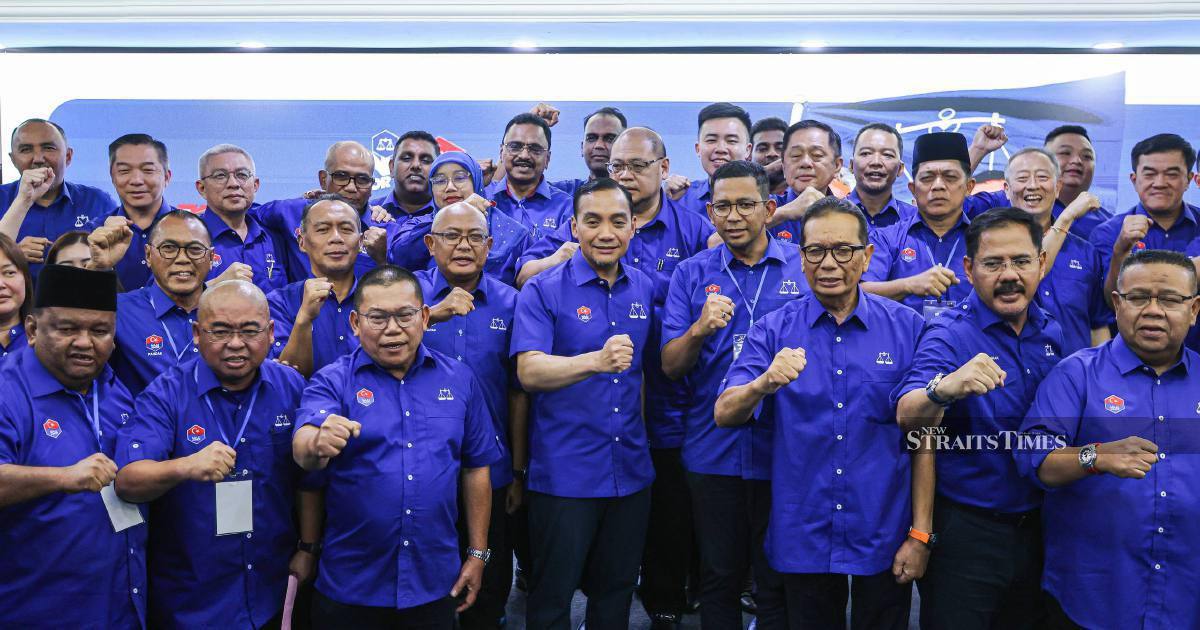
Barisan Nasional Johor has made a unilateral declaration that it will not pursue coalition arrangements with rival political parties following the state election, cementing what leadership describes as an irreversible strategic position. The coalition's resolve to operate as a sole governing authority represents a significant posture in the competitive landscape of Johor politics, where multi-party negotiations have historically shaped government formation.
Onn Hafiz, speaking on behalf of BN's Johor leadership, communicated that the coalition views independent governance as non-negotiable. This hardened stance departs from the pragmatic coalition-building that has characterised recent Malaysian electoral outcomes, particularly since the 2018 general election when traditional alliances fractured. The explicit language underscores BN's confidence in its electoral machinery and its assessment that victory through existing membership is achievable without external political partnerships.
The timing of this declaration carries strategic weight. By eliminating coalition possibilities beforehand, Barisan Nasional attempts to consolidate its internal party discipline and prevent negotiations that might dilute its policy agenda. For component parties within BN—particularly UMNO and MCA—a solo-governance framework means greater influence over ministerial portfolios and policy implementation without competing claims from external partners. This approach also simplifies pre-election messaging, allowing the coalition to present voters with a unified governing vision rather than negotiate coalition mathematics after polling day.
For Malaysian observers, this positioning reflects broader recalibration within Barisan Nasional following its 2022 comeback in the federal election. The coalition has systematically reasserted its traditional dominance across several state legislatures, regaining confidence after its 2018 defeat when internal contradictions and external pressures fractured its electoral coalition. Johor, as a BN stronghold with historical associations to UMNO's power base, represents territory where the coalition believes it can operate without external support.
The statement's finality deserves scrutiny, however. Malaysian electoral outcomes frequently produce unexpected configurations, and categorical pre-election declarations have been contradicted when post-election mathematics demanded flexibility. The 2008 and 2018 general elections demonstrated how voter sentiment can produce surprising parliaments that force politicians to recalibrate from initial positions. While BN's Johor leadership expresses confidence in its electoral prospects, election administration remains fundamentally unpredictable, and circumstances may yet compel the very negotiations currently being dismissed.
From a regional perspective, Johor's political trajectory influences broader Southeast Asian dynamics. As Malaysia's southern gateway to Singapore and a substantial economic contributor, Johor's governance arrangements carry implications beyond state boundaries. Investor confidence, administrative continuity, and cross-border cooperation frameworks all depend partly on the stability and coherence of the state administration. A BN solo government would ostensibly provide governance certainty, whereas coalition complications might introduce policy friction or executive inefficiency.
The rejection of coalition partners simultaneously signals confidence and potential vulnerability. Confidence materialises in BN's belief that it commands sufficient electoral support within Johor to govern without external partners. Vulnerability emerges from the coalition's apparent anxiety about power-sharing arrangements that might constrain its authority or require compromise on core issues. By foreclosing coalition options, Barisan Nasional commits itself to delivering electoral victory within its existing membership—a scenario that imposes performance pressure on the coalition's machinery.
Other political parties receive an implicit message from this declaration: Barisan Nasional is not available for post-election negotiations. This eliminates the possibility of smaller parties leveraging legislative leverage to extract ministerial positions or policy concessions. For opposition coalitions or independents, it means confronting a unified BN without prospect of fracturing the government coalition after results are announced. This clarity, while strategically useful for BN, also removes flexibility mechanisms that have occasionally allowed other actors to participate in governance.
The historical context of Johor politics reinforces BN's confidence. The state has functioned as a BN-dominated territory for decades, with the coalition's component parties—particularly UMNO—enjoying deep organisational roots. Recent state elections have consistently returned BN majorities, and demographic patterns suggest continued support among key voter constituencies. Younger voters, urbanisation trends, and economic grievances pose challenges to this traditional dominance, yet BN's organisational advantages and resource deployment remain formidable within Johor specifically.
Educating voters about this position becomes a campaign imperative for Barisan Nasional. The coalition must translate its rejection of coalition partners into a positive narrative about stable governance, clear mandates, and uncomplicated decision-making. Opposition narratives that frame solo governance as undemocratic or exclusionary could resonate among voters preferring multi-party representation. BN's campaign messaging must therefore emphasise how unified governance serves Johor's economic interests and administrative efficiency rather than simply reflecting coalition preference.
The statement also reflects international trends whereby political actors increasingly attempt to reshape electoral narratives before voting commences. Rather than waiting for results and then negotiating, Barisan Nasional has chosen preemptive positioning. This approach signals confidence but also concedes that coalition uncertainty could become a campaign liability, requiring advance clarification to secure voter support. Sophisticated Malaysian electorates now factor coalition prospects into voting decisions, making BN's position statement a pragmatic campaign element.
Ultimately, whether Barisan Nasional governs Johor alone or negotiates coalition arrangements depends on electoral outcomes neither the coalition nor opposition can perfectly predict. The categorical nature of this declaration, however, has narrowed BN's negotiating space and committed the coalition to a specific path. For Malaysian democracy, this reflects the ongoing tension between electoral unpredictability and political actors' desire for governance certainty—a dynamic that will shape Johor's electoral competition and potentially influence national political configurations.