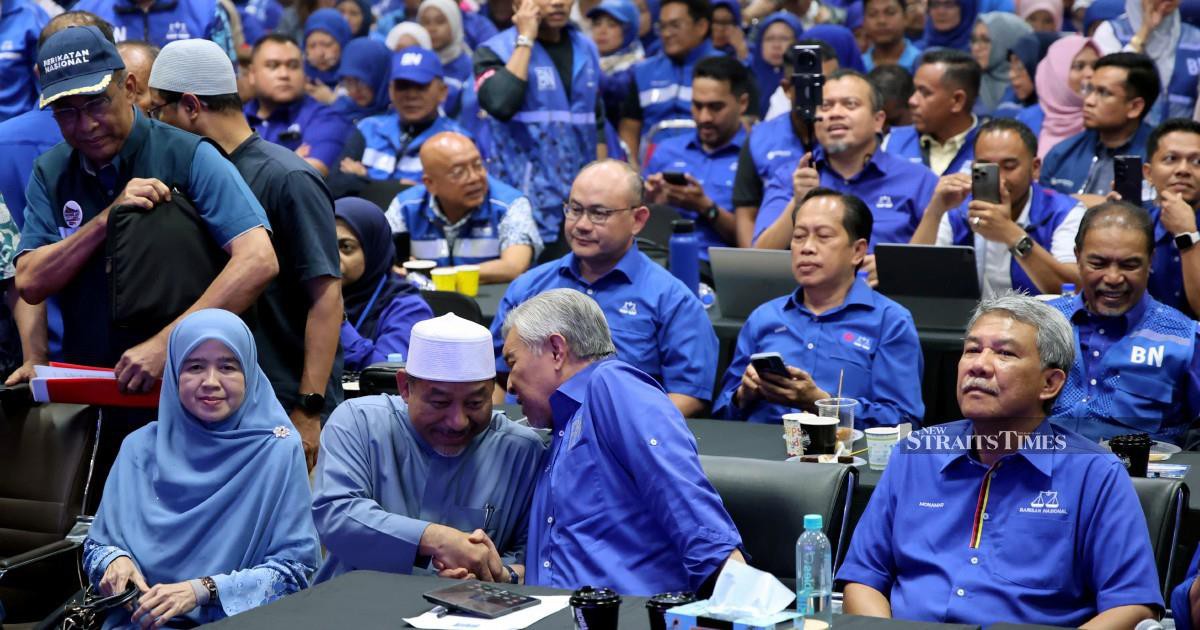
Voting in the Negri Sembilan state assembly election concluded at 6pm as ballot papers were collected from all polling stations across the state. Election officials immediately began the labour-intensive process of counting ballots cast in the contest for 36 state assembly seats, with results expected to emerge progressively over the evening and early morning hours as counting teams worked through the substantial volume of votes.
The electoral exercise in Negri Sembilan takes on particular significance given the current political configuration at the national level, where the federal government operates under an unusual but functioning partnership between the two major coalitions. The outcome of state-level contests directly influences the stability and composition of such arrangements, and political observers have been closely monitoring voting patterns and turnout figures as potential indicators of public sentiment toward the incumbent administration.
Deputy Prime Minister Zahid Hamidi provided reassurance to both coalition partners and the broader business and investor community by publicly confirming that the cooperative arrangement between Barisan Nasional and Perikatan Nasional would persist regardless of whether either coalition claimed an outright majority in Negri Sembilan. This statement effectively communicated that the two blocs had already committed to a continued political framework at both state and federal levels, reducing uncertainty about potential post-election realignments that might otherwise destabilise the administration.
Zahid's remarks carried additional weight because they extended beyond Negri Sembilan itself, explicitly referencing Melaka as another state where the BN-PN cooperation would endure. This geographic specificity suggested that the two coalitions had mapped out their coordinated approach across multiple state contests rather than treating each election as an isolated event. The statement therefore served as a political anchor during what might otherwise have been a volatile period of vote-counting and provisional results.
The cooperation between Barisan Nasional and Perikatan Nasional represents a significant realignment in Malaysian politics, given that these two coalitions emerged from distinct historical bases and maintained competing claims to represent different segments of the electorate. The decision to work together at the federal level reflected the complex mathematics of parliamentary representation following the 2022 general election, which produced no clear majority for either bloc. Rather than pursue expensive and destabilising coalition-building exercises involving defections and negotiated seat-sharing arrangements, the two coalitions had opted for a pragmatic division of governance responsibilities.
For Malaysian investors and the broader economy, the commitment to continued cooperation provided crucial stability. Political certainty typically translates into more confident business planning, foreign direct investment decisions, and consistent policy implementation. The explicit confirmation from Zahid that the arrangement would survive the electoral test—regardless of outcome—helped prevent the kind of post-election jockeying that has historically characterised Malaysian politics and created periods of policy paralysis and ministerial uncertainty.
The Negri Sembilan election itself carried intrinsic importance beyond its utility as a barometer of coalition solidarity. The state government controls substantive portfolios including agriculture, small business development, and local economic initiatives that directly affect livelihoods across the state's industrial and agricultural regions. For Negri Sembilan residents, the contest presented an opportunity to assess incumbent performance in addressing local concerns and to express preferences regarding state-level governance independent of national political calculations.
The decision to anchor the Negri Sembilan and Melaka outcomes within a predetermined coalition framework also reflected learning from earlier Malaysian experiences with unstable state governments. When governments lack clear parliamentary majorities or operate under fragile coalitions, they become vulnerable to defections, legislative obstruction, and the inability to pass budgets or implement coherent policy programmes. By committing in advance to work together, Barisan Nasional and Perikatan Nasional sought to avoid these pitfalls and ensure that whichever party held more seats in a given state, the other would serve as a reliable governing partner.
The timing of Zahid's statement—during the counting process itself—suggested an intentional effort to frame the election results within a predetermined narrative of continuity and stability. Rather than waiting for provisional results to emerge and then negotiating post-election arrangements, the Deputy Prime Minister had effectively pre-empted speculation about possible government formations or changes in ministerial representation. This approach demonstrated a sophisticated understanding of how election results are interpreted by media, investors, and international observers, all of whom scrutinise early declarations from political leaders for signals about potential instability.
The Negri Sembilan election results, once fully tallied, would reveal whether the actual distribution of seats aligned with either coalition's expectations and whether either bloc had secured a comfortable majority. However, Zahid's public commitment had already established that the formal outcome mattered far less than maintaining the broader political partnership. This represented a notable shift in Malaysian electoral dynamics, where seat counts and numerical superiority have historically determined not only which party leads a government but also which coalition can claim a mandate for national leadership.

