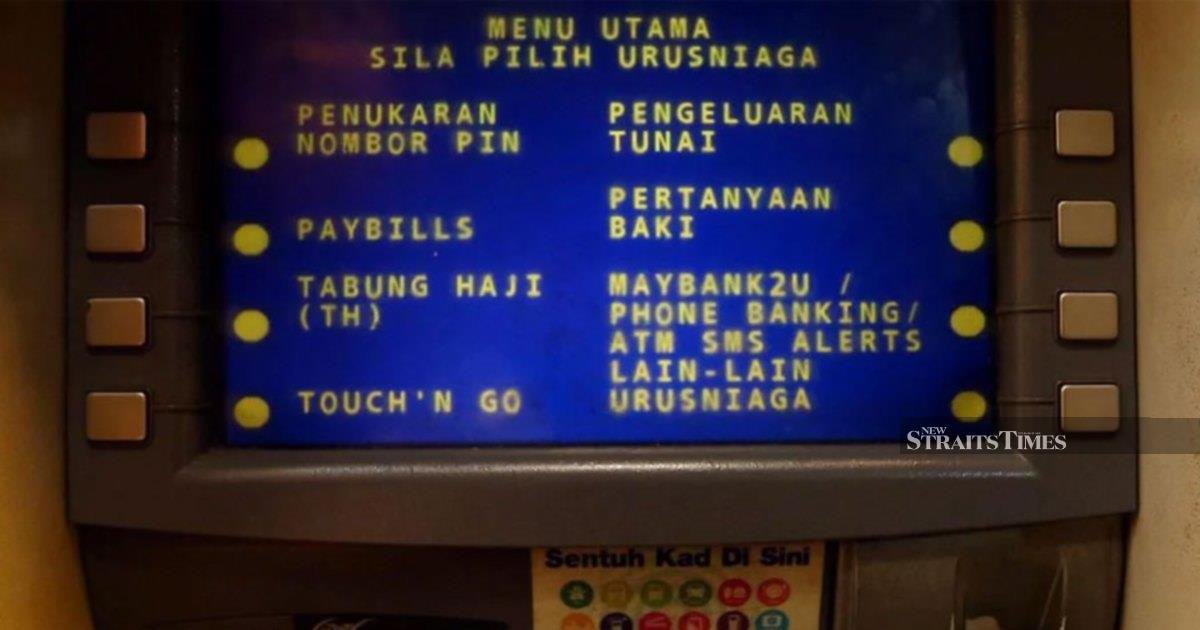
Bank Negara Malaysia is stepping up enforcement against financial institutions that continue charging customers the RM1 interbank withdrawal fee when using their own bank's automated teller machines, according to Communications Minister Datuk Fahmi Fadzil. The central bank's move represents a significant effort to police compliance with fee regulations that should protect customers from unexpected charges during routine transactions.
The issue appears to target instances where customers suffer double charges or incorrect levies when accessing their own funds through their bank's network. Under existing interbank agreements, customers should face no additional charges when withdrawing from machines operated by their own financial institution, yet reported cases suggest some banks are still imposing the fee in error or by system malfunction. This regulatory pushback suggests Bank Negara has identified a pattern of non-compliance that warrants public intervention.
By encouraging customers to report violations directly, Bank Negara is essentially crowdsourcing compliance monitoring across the banking sector. This approach transforms consumers from passive victims of fee disputes into active participants in the regulatory framework, creating a distributed reporting network that can identify problematic branches or systems more efficiently than traditional inspections. The strategy also sends a clear message to the industry that such breaches will not be tolerated.
The RM1 fee structure itself forms part of a broader framework governing interbank charges in Malaysia, designed to balance access to banking services across different networks while maintaining fair pricing. When customers use an ATM outside their bank's network, the fee theoretically compensates the host bank for providing the service. However, charging the fee when a customer uses their own bank's machine represents either a system error, misclassification of the transaction, or deliberate overcharging—none of which are acceptable under banking regulations.
For Malaysian consumers, particularly those in rural areas with limited ATM access, the distinction between charges is meaningful. Someone who travels to a different town and must use a competitor's ATM should expect the RM1 fee as a cost of convenience. But withdrawing from their own bank's machine should incur no such penalty, regardless of location. The fact that Bank Negara needs to issue reminders suggests some institutions have not maintained adequate system oversight or customer service protocols.
The financial impact, while modest per transaction, accumulates across millions of users. Regular banking customers who withdraw cash multiple times weekly could lose several ringgit monthly to erroneous charges. For lower-income Malaysians already managing tight budgets, these small losses represent a meaningful proportion of discretionary spending. Across the banking sector, systematic overcharging of this nature amounts to significant wealth transfer from customers to institutions.
Bank Negara's decision to publicize this issue through a cabinet minister underscores the regulator's determination to address consumer grievances. Rather than quietly investigating banks, the central bank is raising public awareness and encouraging reporting, creating accountability pressure on the industry. This transparency approach contrasts with purely internal enforcement and signals that consumer protection remains a regulatory priority.
The mechanism for reporting itself carries weight. When Bank Negara receives multiple complaints about the same branch, bank, or issue, it builds a compliance case file that can trigger formal investigations, penalties, or mandatory system corrections. A customer reporting an isolated incident might initially seem inconsequential, but when aggregated with dozens of similar reports, the pattern becomes undeniable and actionable. This multiplier effect explains why central banks invest in complaint channels.
Institutional non-compliance with fee regulations raises broader questions about banking system governance and internal controls. If a major bank's systems are incorrectly applying withdrawal fees at its own ATMs, what other transaction errors might be occurring undetected? Are customers being overcharged on foreign exchange conversions, wire transfer fees, or account maintenance charges? The visibility of the ATM fee issue sometimes points to deeper control weaknesses that regulators should address.
For Malaysian businesses and freelancers who make frequent cash withdrawals for operational expenses, these charges compound monthly costs. A shop owner making multiple bank visits weekly across different locations quickly faces significant fee exposure. Clarifying the RM1 fee framework and ensuring compliance benefits not just individual savers but entire segments of the economy that depend on cash transactions.
The enforcement approach also reflects evolving regulatory philosophy in Southeast Asia toward consumer protection. Malaysia's banking regulator is increasingly willing to engage the public directly rather than rely solely on behind-the-scenes supervision. This democratization of compliance—where ordinary customers become regulatory eyes and ears—represents a pragmatic adaptation to the challenge of monitoring thousands of branches and millions of transactions.
Going forward, customers should document any suspicious ATM charges they encounter, noting the machine location, bank, transaction date, and account statements. Bank Negara's willingness to investigate these reports means the reporting process is not merely symbolic but potentially consequential. As compliance improves across the sector, the RM1 fee issue should fade, but the enforcement principle—that regulators take consumer complaints seriously—deserves to endure across all banking transactions.

