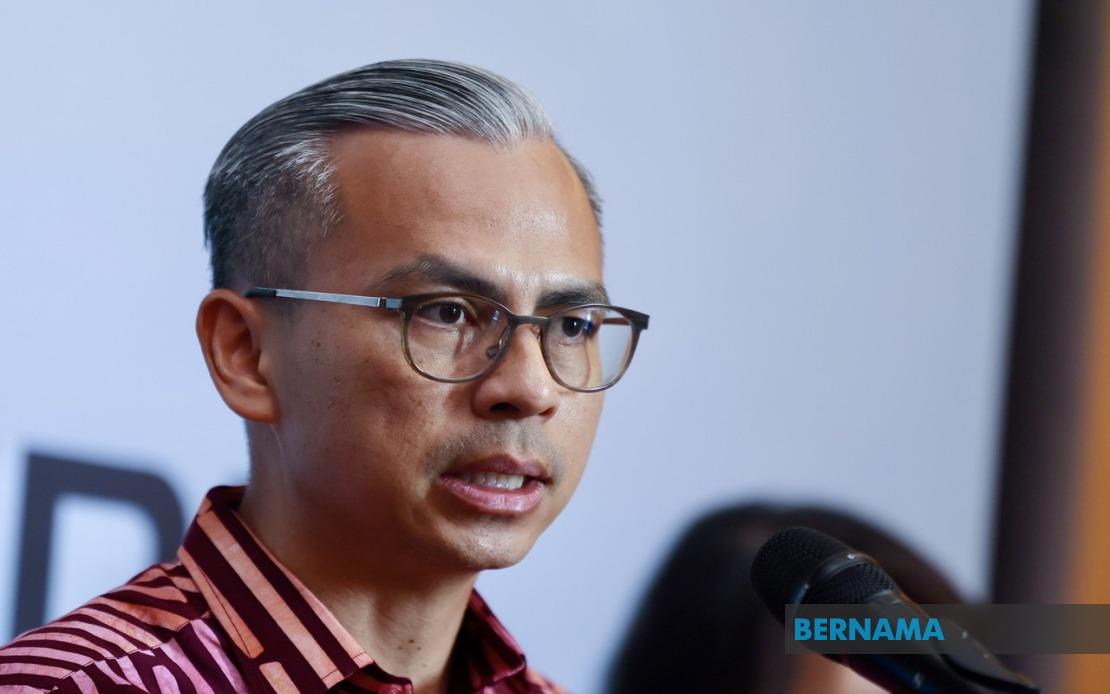
Bank customers who continue facing the RM1 interbank automated teller machine (ATM) withdrawal charge should immediately lodge formal complaints with Bank Negara Malaysia (BNM), according to Communications Minister Datuk Fahmi Fadzil, who warned that regulatory action will follow against non-compliant institutions.
Fahmi delivered this directive at the Communications Ministry's regular press briefing, emphasizing that the fee waiver initiative, which commenced on July 1, represents a significant consumer protection measure under the MADANI Government's financial inclusion agenda. He stressed that BNM possesses the regulatory authority to pursue enforcement action against any bank that breaches the waiver conditions, signalling that compliance is not merely advisory but mandatory.
The minister clarified an important distinction that has generated confusion among consumers seeking to understand the policy's scope. The RM1 fee waiver applies exclusively to automated teller machines that are both owned and operated by banks that participate in Malaysia's shared ATM network infrastructure. This arrangement permits customers to withdraw cash from any participating bank's machine without incurring the previously standard charge, fundamentally reshaping the interbank ATM usage landscape that consumers have navigated for years.
Currently, the waiver encompasses approximately 84 percent of all bank-owned ATMs throughout the country, representing nearly 16,000 machines. This substantial coverage reflects the participation of major financial institutions in the shared network, demonstrating broad sector support for the consumer-friendly initiative despite the revenue implications for participating banks.
However, the remaining 16 percent of ATM infrastructure nationwide operates under a different commercial model entirely. These machines are owned and managed by non-bank private companies operating under distinct commercial arrangements with financial institutions. These third-party operators continue to levy the RM1 withdrawal fee, as they fall outside the scope of the regulatory waiver and maintain independent fee-setting authority based on their service agreements.
Fahmi underscored that consumer confusion regarding the policy's application scope necessitated clarification at the highest communication level. Public inquiries circulating through social media platforms revealed significant uncertainty about which machines fell within the waiver's ambit and which remained subject to the charge. To mitigate ongoing confusion, Fahmi advised customers to identify bank-owned ATMs by examining the logos displayed prominently on machine exteriors, enabling them to distinguish between participating bank-owned ATMs and third-party operated equipment.
The Association of Banks in Malaysia (ABM) and the Malaysian Islamic Banking and Financial Institutions Association (AIBIM) are preparing to issue a comprehensive joint statement providing detailed implementation guidance. This coordinated communication from industry bodies aims to ensure consistent messaging and provide customers with authoritative information regarding the waiver's mechanics and the practical steps for identifying compliant machines.
Beyond the ATM fee initiative, Fahmi highlighted Malaysia's strengthening position as a regional financial technology destination. An international financial technology company has established a Global Development Centre at Tun Razak Exchange (TRX), representing its inaugural such facility in Malaysia. This investment symbolizes confidence in Malaysia's capacity to nurture digital innovation and talent, particularly within the emerging Agentic Artificial Intelligence sector.
Fahmi attributed this investment decision to the political stability and economic policy coherence that characterize the MADANI Government's tenure. He emphasized that consistent government policy and institutional stability serve as decisive factors for multinational corporations evaluating emerging market locations for significant capital deployment. The establishment of this centre demonstrates that Malaysia has successfully positioned itself as a compelling alternative to other regional financial technology hubs competing for similar investments.
The convergence of these policy developments—consumer protection measures in banking infrastructure combined with attraction of cutting-edge financial technology investment—reflects a broader strategic vision. The government aims simultaneously to improve accessibility and affordability of essential financial services for ordinary Malaysians while signalling to global innovators that the country offers a sophisticated operating environment for advanced financial enterprises.
For Malaysian consumers navigating these changes, the immediate priority involves verifying machine ownership before conducting withdrawals and reporting any violations to BNM through official channels. The regulatory framework now incentivizes compliance more directly, with BNM possessing explicit enforcement authority to pursue non-conforming institutions. This represents a tangible shift in consumer recourse mechanisms, moving beyond passive acceptance of ATM fees toward active regulatory protection of consumer interests in the essential financial services sector.

