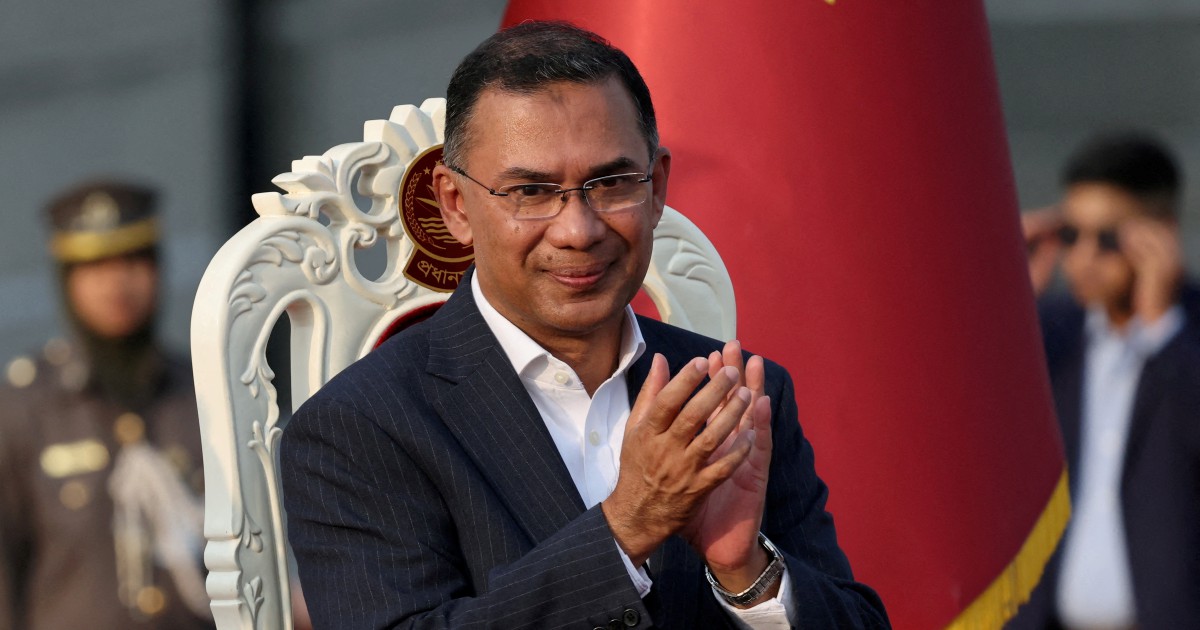
Bangladesh Prime Minister Tarique Rahman touched down at Sepang today, marking the beginning of a significant state visit that underscores the evolving relationship between Dhaka and Kuala Lumpur. The high-level diplomatic engagement represents a deliberate effort by both governments to reinvigorate their strategic partnership at a time when regional stability and economic interdependence have become increasingly central to Southeast Asian foreign policy.
The visit carries considerable weight for Bangladesh, as it comes during a period of domestic political transition and international repositioning. For Malaysia, receiving the head of government from one of South Asia's most populous nations demonstrates the country's role as a neutral hub for regional diplomacy and its capacity to maintain robust relationships across the Indian subcontinent and Southeast Asia.
Bilateral cooperation between Malaysia and Bangladesh spans multiple domains, from trade and investment to cultural and educational exchanges. Malaysian companies have established a presence in Bangladesh's manufacturing and telecommunications sectors, while Bangladeshi workers form a significant diaspora community in Malaysia, particularly in construction and service industries. These people-to-people connections create natural foundations for deepening state-level partnerships beyond ceremonial engagement.
The timing of Rahman's arrival suggests both nations are keen to explore expanded collaboration in emerging areas. Energy security, given Bangladesh's natural gas reserves and Malaysia's downstream petroleum capabilities, presents one avenue for potential cooperation. Additionally, both countries share maritime interests in the Indian Ocean and Bay of Bengal, making security dialogue increasingly relevant as regional powers expand their naval presence.
For Bangladesh, a nation navigating complex geopolitical dynamics between China, India, and Western powers, strengthening ties with Malaysia offers strategic flexibility. Malaysia's own balancing act between major powers, combined with its experience as a stable Southeast Asian economy, makes it an attractive partner for Dhaka's government seeking diverse diplomatic relationships and investment sources beyond traditional partners.
The visit also reflects mutual interests in addressing challenges affecting the region broadly. Climate change and environmental degradation impact both nations significantly, with Bangladesh particularly vulnerable to sea-level rise given its low-lying geography. Similarly, maritime security concerns, transnational terrorism, and irregular migration patterns affect both countries, creating scope for enhanced intelligence sharing and law enforcement cooperation.
Economic dimensions of the bilateral relationship merit expansion. Current trade volumes between Malaysia and Bangladesh remain modest relative to their respective GDP sizes and population figures. Targeted investment in manufacturing, particularly in Bangladesh's growing textile and apparel sectors, where Malaysia possesses technology and capital, could benefit both economies. Malaysian financial services and telecommunications expertise could also accelerate Bangladesh's digital economy ambitions.
Cultural and educational exchanges represent another dimension worthy of development. Malaysian universities already attract Bangladeshi students, but expanded scholarship programmes and institutional partnerships could strengthen intellectual links. Similarly, tourism between the nations remains underdeveloped despite both countries' rich cultural heritage and complementary attractions.
The diplomatic protocol surrounding this visit indicates how seriously both governments view the relationship. Official state visits, as opposed to working visits or informal engagement, signal commitment to upgrading bilateral ties at the highest levels. The choice of Sepang as the arrival point, Malaysia's primary international gateway, underscores the formal nature of the engagement and the importance Malaysia attaches to the occasion.
Regionally, the visit carries implications for South Asian-Southeast Asian connectivity initiatives. Both nations are members of organisations promoting Asian integration, including the Bay of Bengal Initiative and broader BIMSTEC frameworks. Strengthened Malaysia-Bangladesh relations contribute to these broader regional architectures, potentially facilitating smoother cooperation across South and Southeast Asia.
For Malaysian observers, Rahman's visit represents an opportunity to understand contemporary Bangladesh's direction under his leadership and the nation's strategic priorities. Bangladesh, with its 170 million population and growing economy, represents significant potential for Malaysian business, educational institutions, and diplomatic influence. The relationship, while not as high-profile as Malaysia's engagements with ASEAN neighbours or major powers, holds underexplored potential.
The visit programme will likely include bilateral talks on trade and investment promotion, discussions on regional security matters, cultural exchanges, and possibly the signing of cooperative agreements on specific sectoral collaboration. Such concrete outcomes would translate the diplomatic goodwill into tangible benefits for both nations' citizens and businesses.
As Bangladesh continues its economic development journey and Malaysia reinforces its role as a bridge between South and Southeast Asia, this official visit represents a logical and timely step in expanding what remains a relationship with substantial room for growth and deepening engagement.


%22%2F%3E%3C%2Fpattern%3E%3C%2Fdefs%3E%3Crect%20width%3D%22100%25%22%20height%3D%22100%25%22%20fill%3D%22url(%23ph2zjqhg)%22%2F%3E%3Crect%20width%3D%22100%25%22%20height%3D%22100%25%22%20fill%3D%22url(%23ph2zjqhp)%22%2F%3E%3Ctext%20x%3D%2250%25%22%20y%3D%2250%25%22%20text-anchor%3D%22middle%22%20dominant-baseline%3D%22central%22%20fill%3D%22rgba(255%2C255%2C255%2C0.95)%22%20font-family%3D%22Georgia%2C%20'Times%20New%20Roman'%2C%20serif%22%20font-weight%3D%22700%22%20font-size%3D%22320%22%20letter-spacing%3D%22-0.02em%22%3EMUDA%3C%2Ftext%3E%3C%2Fsvg%3E)