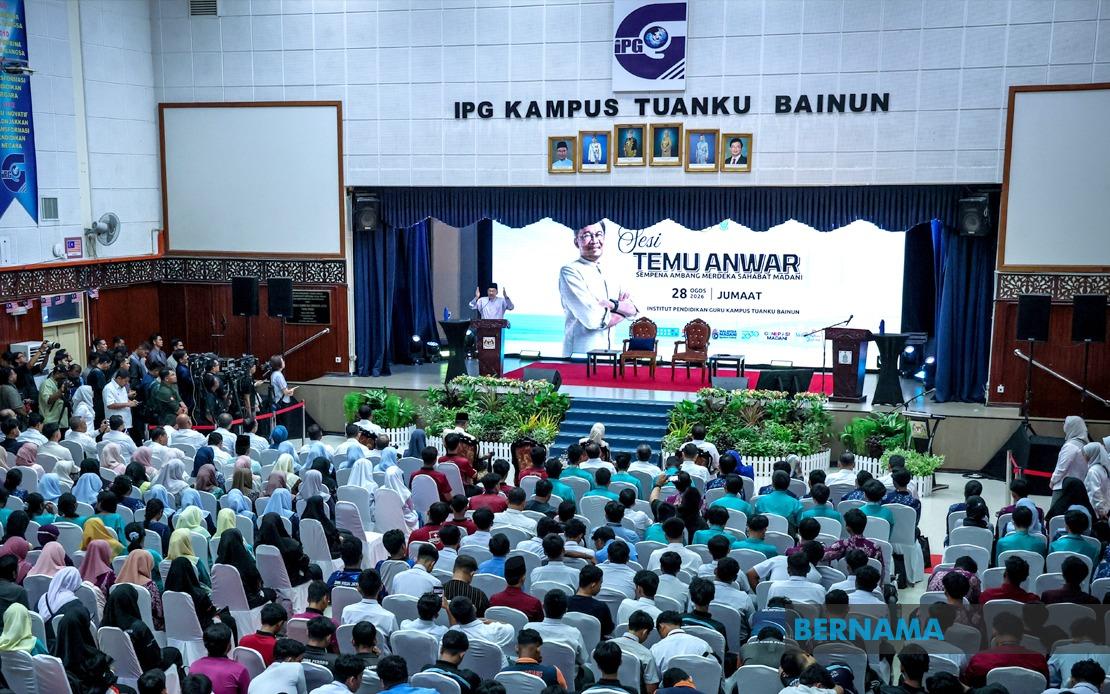
Prime Minister Datuk Seri Anwar Ibrahim has thrown his weight behind the complete abolition of the Universities and University Colleges Act 1971 (AUKU), framing the controversial move as a necessary step to unlock the intellectual potential of Malaysia's youth. Speaking during a Temu Anwar session in Bukit Mertajam on August 28, Anwar articulated a vision of university campuses as spaces where young minds are encouraged to challenge ideas, voice dissenting opinions, and engage in robust debate—a stark departure from the regulatory framework that has governed student conduct for over five decades.
The Prime Minister's argument hinges on a fundamental principle of democratic participation and civic maturity. By drawing a direct link between voting eligibility at 18 and the right to express political opinions, Anwar challenged the underlying rationale for the restrictions that AUKU has imposed on student activism and political discourse. He questioned why, if young Malaysians possess the franchise to shape national elections, they should simultaneously be barred from speaking freely within university precincts. This reasoning reflects a broader debate about the tension between academic freedom and state control that has preoccupied university administrators, student leaders, and civil rights advocates across Southeast Asia.
The AUKU framework, established in 1971, emerged from a post-independence era when Malaysian policymakers prioritised institutional stability and national harmony over individual expression. The act prohibited students from participating in partisan politics, organising demonstrations without approval, and engaging in what authorities deemed subversive discourse. For generations, these restrictions significantly constrained the ability of university communities to function as incubators for democratic engagement and intellectual exploration. By signalling the government's intention to dismantle this legislation entirely, Anwar is positioning his administration as willing to trust young people with greater agency in shaping their own educational and political futures.
Anwar's emphasis on fostering creativity and critical thinking speaks to a recognition that Malaysia's competitive position in an increasingly knowledge-driven global economy depends on producing graduates capable of original thought and innovation. Universities that suppress dissent or discourage questioning inevitably struggle to attract top talent and generate breakthrough research. International experience suggests that institutions permitting robust internal debate tend to produce more engaged alumni networks, stronger research output, and greater social impact. For Malaysian higher education to distinguish itself regionally and globally, removing the chilling effect of AUKU restrictions may prove essential to institutional excellence.
Education Minister Datuk Seri Fadhlina Sidek's presence at the session underscored the government's unified position on the matter, indicating that the education portfolio is aligned with the Prime Minister's broader vision for university autonomy. This coordination is significant given that implementation of AUKU's repeal will fall largely to the Education Ministry and institutions themselves, requiring careful calibration of replacement frameworks that maintain order while respecting free expression. The ministry's involvement suggests that the government recognises the need for detailed consultation with university leadership and student bodies to ensure a smooth transition away from the existing regulatory regime.
The student questioner who prompted Anwar's remarks appears to have been interested in political engagement, reflecting a genuine appetite among young Malaysians for greater involvement in the democratic process. This appetite has simmered beneath the surface of Malaysian politics for years, constrained by legal frameworks that were themselves products of a different era. Removing those constraints may unleash forms of political participation and civic consciousness that have long been suppressed. Universities could become genuine forums for cross-party debate, policy discussion, and intellectual engagement with contemporary challenges facing the nation.
However, the abolition of AUKU also raises practical questions about alternative governance mechanisms within campuses. Without the act's restrictive provisions, universities will need to establish new codes of conduct that balance freedom with institutional order. This presents an opportunity to develop regulations grounded in principles of academic integrity, respect for diversity, and peaceful discourse rather than blanket prohibitions on activism. The challenge will be ensuring that such frameworks protect vulnerable students and prevent the emergence of intimidation or harassment while still permitting genuine ideological contestation.
The timing of AUKU's repeal carries political significance as well. It signals to younger voters and civil society that Anwar's government intends to differentiate itself from its predecessors through greater openness to dissent and democratic expression. For a Prime Minister navigating complex coalition politics and seeking to consolidate support among educated urban voters, endorsing student freedom becomes both a principled stance and a strategic calculation. It aligns his personal narrative as a former university student activist with a governing philosophy that privileges dialogue over discipline.
The regional context adds another dimension to this policy shift. Other Southeast Asian democracies, from Thailand to the Philippines, have grappled with similar questions about balancing student activism with institutional stability. Malaysia's movement toward liberalisation could serve as a model for peer nations wrestling with comparable tensions, or conversely, provide cautionary lessons if implementation encounters difficulties. The success of AUKU's repeal will likely influence how other governments in the region approach their own frameworks governing student expression and political participation.
Looking forward, the substantive question is whether universities themselves—leadership, faculty, and student bodies—are prepared to steward this expanded freedom responsibly. The repeal of AUKU removes legal barriers, but institutional culture change requires sustained commitment from multiple stakeholders. Universities must invest in fostering deliberative spaces where disagreement does not devolve into violence or coercion. Student leaders need mentorship in channelling activism toward constructive ends. Faculty must engage seriously with student intellectual challenges rather than dismissing them as impertinence. Anwar's vision of critical thinking can only be realised if institutions embrace their responsibility as educators of engaged citizens.

