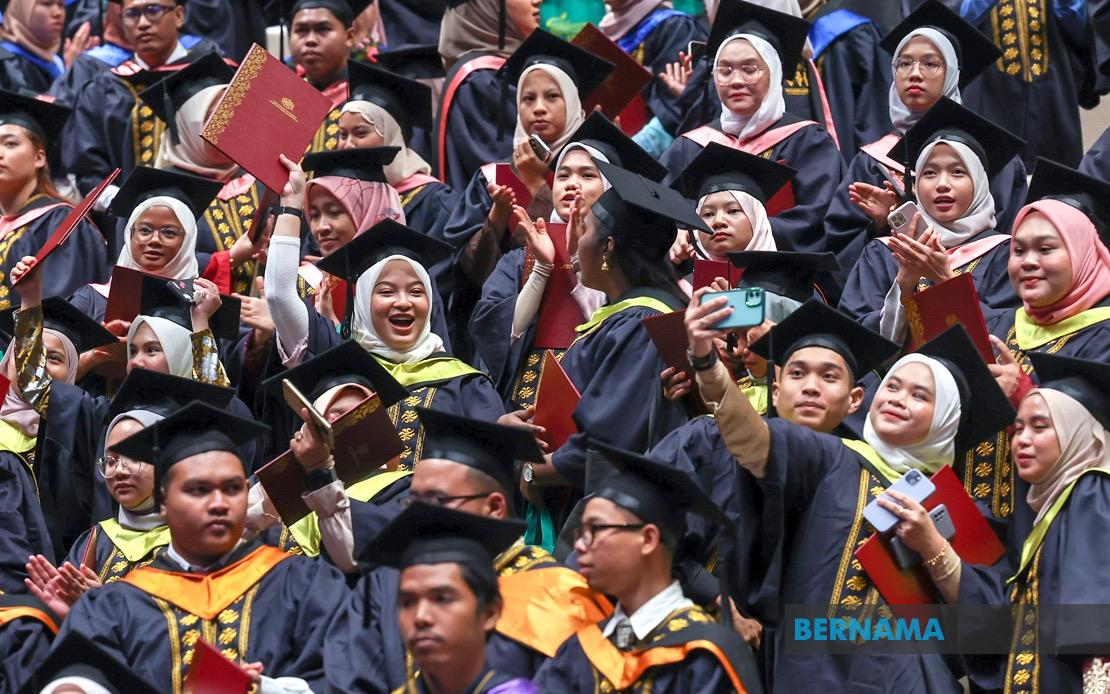
Prime Minister Datuk Seri Anwar Ibrahim announced on Thursday that the government intends to repeal the Universities and University Colleges Act 1971 (AUKU), a historic move designed to expand democratic participation and freedom of expression within Malaysia's campus communities. The Cabinet will consider the proposal next week, representing a significant shift in how higher education institutions operate and how students engage in campus politics and public discourse. However, several leading academics have cautioned that this symbolic gesture toward liberalisation must be underpinned by thoughtful legal engineering to prevent institutional disruption.
The AUKU is far more than a simple restriction on student activism; it serves as the constitutional bedrock governing how universities are established, managed, and administered across the country. Dr Anuar Ahmad, Deputy Director of the Malaysian Inclusive Development and Advancement Institute at Universiti Kebangsaan Malaysia, emphasised that a high-level committee should be convened immediately to design replacement legislation. Without such a framework, he warned, the abolition could inadvertently create regulatory vacuums that jeopardise the smooth functioning of institutions responsible for educating Malaysia's future leaders. The new legal architecture must therefore examine every substantive provision of the current act—not only those concerning student conduct, but also the foundational powers permitting universities to operate as coherent organisations.
Prime Minister Anwar framed the abolition as an opportunity to strengthen academic freedom alongside student agency. He argued that AUKU has discouraged many scholars from participating in public debate, even when their contributions rest on empirical research and established facts. A progressive society, he suggested, should embrace intellectual pluralism and welcome reasoned disagreement provided it is grounded in evidence rather than ideology or conjecture. This vision reflects a modernising impulse: universities should be intellectual marketplaces where ideas circulate freely, rather than controlled environments where dissent is administratively suppressed. By creating space for academics to engage the broader public with research-informed perspectives, Malaysia's higher education sector could enhance its contribution to national problem-solving and policy development.
Yet the path from regulation to liberty is fraught with practical complications. Dr Noor Nirwandy Mat Noordin, a security analyst and warfare strategy expert at Universiti Teknologi Mara, welcomed the expansion of expressive freedom as potentially enriching the intellectual formation of younger Malaysians. However, he cautioned against allowing that openness to undermine the foundational principles enshrined in the Federal Constitution and the Rukun Negara. His concern touches a sensitive nerve in Malaysian politics: rapid deregulation could inadvertently create space for ideological movements—whether separatist, sectarian, or otherwise destabilising—to recruit and mobilise among student populations. The tension between freedom and security is not merely theoretical; it reflects genuine anxieties about social cohesion in a multi-ethnic, multi-religious federation where education has historically been viewed as a nation-building instrument.
Dr Noor Nirwandy argued that any new framework must anchor expanded student freedoms within a strong national curriculum and value system. Without such moorings, he suggested, the abolition of AUKU could inadvertently fragment rather than strengthen national identity among the next generation of leaders. This perspective captures a crucial anxiety: that liberalisation without corresponding institutional guardrails might produce campuses fractured along religious, ethnic, or ideological lines rather than unified by shared commitment to constitutional democracy and national development. The challenge, then, is designing legislation that permits genuine dissent and debate while preserving the educational mission of cultivating patriotic, mature, and civically responsible citizens.
Universiti Malaya Vice-Chancellor Datuk Seri Professor Dr Noor Azuan Abu Osman stressed that reform must be holistic rather than piecemeal. Rather than simply excising restrictions on student expression, policymakers should undertake a comprehensive review of how universities function within Malaysia's broader educational ecosystem. This systems-level approach would examine the interplay between academic autonomy, institutional governance, student leadership development, and national priorities. UM stands ready to contribute expertise to the Ministry of Higher Education and other stakeholders engaged in drafting the new legal architecture. The Vice-Chancellor emphasised that the ultimate measure of success is not merely expanded freedom, but production of graduates who are intellectually mature, ethically grounded, and capable of advancing both their institutions and the nation.
Former Universiti Malaya Student Representative Council President Syaiful Asyraff Kamarudin welcomed the trajectory toward autonomous university governance and enhanced student empowerment. He observed that successive amendments to AUKU have reflected a gradual philosophical shift—from heavy-handed state control toward institutional self-governance and student agency. The MADANI Government's apparent commitment to this transition suggests that the replacement framework will institutionalise greater autonomy for universities and more substantial roles for student bodies in campus decision-making, including student representation in governance structures. This represents a maturation of Malaysia's higher education sector, permitting universities to compete globally as centres of genuine intellectual inquiry rather than as extensions of state administrative control.
Student voices themselves demonstrate enthusiasm tempered by realism. Nurul Husna Amanda Syukran, a third-year financial economics student at Universiti Sains Malaysia, acknowledged that AUKU abolition could foster more vibrant campus cultures characterised by open debate and diverse viewpoints. However, she stressed that such freedom must be accompanied by clear policies ensuring that student rights are exercised responsibly—with genuine commitment to learning, civil discourse, and institutional stewardship rather than mere licence for disruptive activism. Similarly, Muhammad Irsyad Iman Muhammad Irwan, a geology student at USM, highlighted the potential for expanded freedom to cultivate critical thinking and engaged citizenship. Students, he suggested, should leverage greater organisational latitude to address societal challenges and contribute meaningfully to national development rather than simply exercising freedom for its own sake.
The emerging consensus among educators, analysts, and student leaders points toward a sophisticated understanding of what AUKU abolition should entail. Rather than a simple deregulatory moment, it should catalyse comprehensive legal redesign that expands democratic space while preserving institutional integrity and national cohesion. The new framework must specify how universities will be chartered, managed, and held accountable; how academic freedom will be protected while irresponsible speech is discouraged; and how student leadership will be integrated into governance structures. Malaysia's higher education sector stands at an inflection point: the coming months will demonstrate whether policymakers can craft legislation sophisticated enough to balance liberty with stability, autonomy with accountability, and student agency with national purpose. The stakes extend beyond campuses, touching the formation of a generation of leaders who will navigate Malaysia's complex future.

