A resurgence of tension in the Middle East has sent shockwaves through Asian financial markets, triggering a synchronized downturn in regional currencies and equities as geopolitical risk reasserts itself as a factor in investor calculations. The flare-up in Gulf tensions drove crude oil prices up by 4% on Monday, reigniting concerns about inflationary pressures that had begun to ease in recent months. The broader consequence was a sharp appreciation of the U.S. dollar, which edged higher against a range of major currencies as the market repriced the prospect of sustained higher interest rates from central banks attempting to combat renewed price pressures.
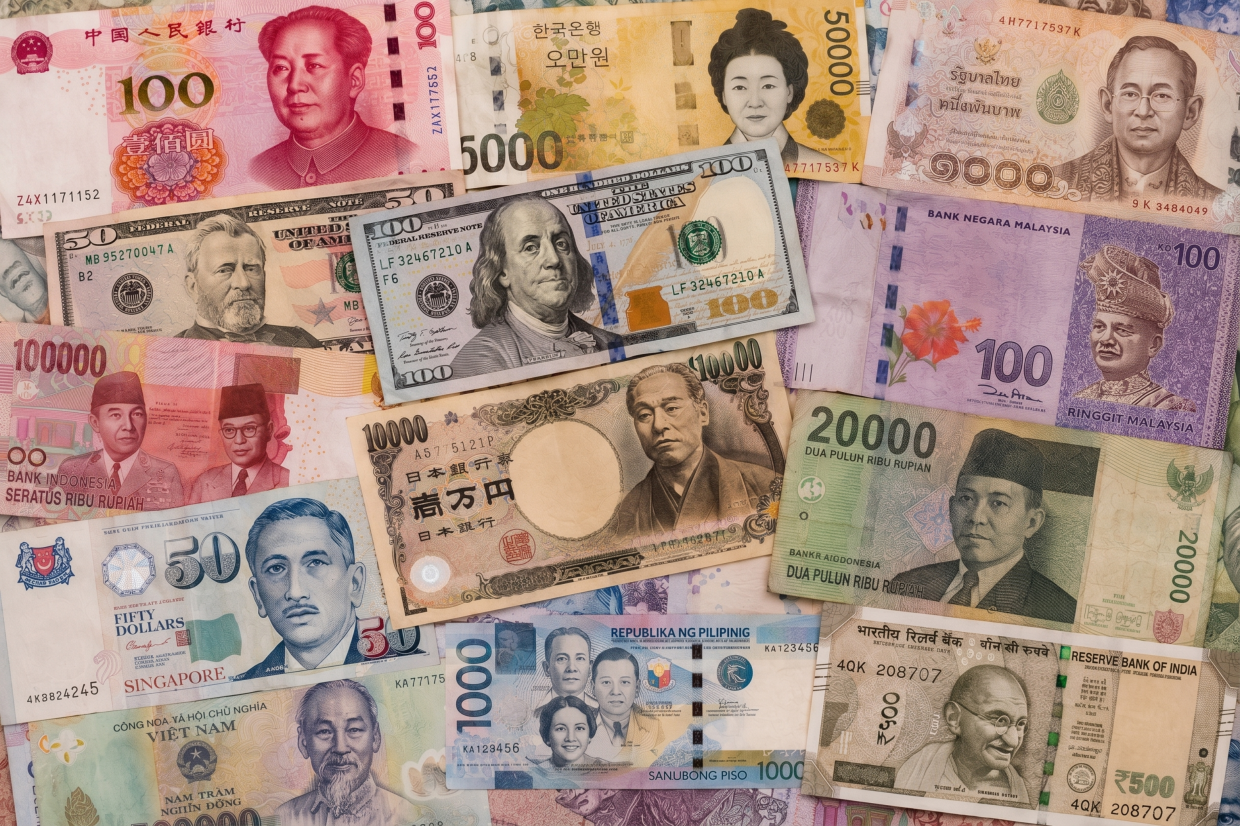
The weakness in emerging Asian currencies reflected the region's sensitivity to both oil-price movements and shifts in global monetary policy. Indonesia's rupiah deteriorated to 18,140 per dollar, marking its lowest level in more than four weeks, while South Korea's won descended to 1,507.9 against the greenback. Malaysia's ringgit likewise came under pressure, sliding to 4.0780 per dollar as traders reassessed the cost of carrying emerging-market assets in an environment of heightened geopolitical uncertainty and potential rate-hiking cycles across developed economies. For a region heavily dependent on energy imports and vulnerable to sudden shifts in global risk appetite, such currency depreciation carries meaningful implications for import costs and the competitiveness of export-oriented manufacturing.
The equity market rout in South Korea proved particularly severe, with the KOSPI benchmark collapsing 7.96% to touch a 10-week nadir and triggering trading curbs designed to prevent panic-driven selling. The decline was concentrated in the technology sector, which has driven much of Asia's market gains this year. SK Hynix, a dominant player in artificial intelligence memory chips, plummeted 13% as investors cashed in profits following the company's successful listing debut in the United States on Friday. The sharp reversal in chip stocks underscores the precarious sentiment surrounding semiconductor valuations, which have soared on expectations of seemingly insatiable demand from AI infrastructure buildout by major technology firms.
Underlying the volatility in chipmaking equities are mounting concerns about whether the earnings trajectory supporting current valuations can be sustained. The demand for high-bandwidth memory chips that power large language models and AI systems has indeed been extraordinary, yet questions linger about whether this growth remains durable as major cloud providers refocus spending priorities and exercise greater discipline in capital allocation. Additionally, the proliferation of single-stock exchange-traded funds with high leverage has amplified swings in individual stocks, as forced liquidations and margin calls cascade through markets during sharp sell-offs. These structural features of modern equity markets mean that sharp corrections, once initiated, can accelerate with troubling speed.
Despite the Monday decline, South Korea's benchmark index retains a robust performance for the year, having gained 63% despite the 25% pullback from its June 22 record closing level. This reflects the market's earlier enthusiasm about technology leadership and artificial intelligence exposure, a narrative that remains broadly intact even as near-term sentiment has soured. The question facing investors now is whether recent gains represented justified revaluation of fundamentals or excessive exuberance that demands correction through multiple compression.
The Malaysian market presented a more complex picture, with equities advancing to a three-week high even as the ringgit weakened. Yet this apparent strength masks underlying political fragility. Prime Minister Anwar Ibrahim's coalition suffered a significant setback in Saturday's Johor state election, losing ground to a key alliance partner and prompting speculation about the stability of the federal government. Such uncertainty could undermine investor confidence in policy continuity, particularly regarding the economic reform agenda that has underpinned Malaysia's appeal to foreign capital. Goldman Sachs analysts cautioned that erosion of the political stability premium could expose the ringgit to further depreciation, though they noted that Bank Negara Malaysia's June measures to encourage foreign exchange inflows should provide some cushion against excessive currency volatility.
The broader regional performance reflected mixed signals about growth and stability across Southeast Asia. Philippine equities edged upward while Indonesian stocks gained a modest 0.5%, suggesting that contagion from the South Korean selloff remained contained outside technology-heavy markets. Taiwan's benchmark index, heavily weighted toward semiconductor manufacturers, declined in line with regional tech weakness. Singapore's market retreated 0.7%, interrupting a streak of seven consecutive record closes and indicating that even the most developed regional financial center could not escape the geopolitical headwinds.
The week ahead promises multiple catalysts that could either stabilize markets or extend the current period of volatility. Singapore is scheduled to release preliminary second-quarter economic growth data, providing a snapshot of activity in the region's financial hub. The United States will publish its latest inflation figures, a crucial data point for signaling the trajectory of Federal Reserve policy. South Korea's Bank of Korea will announce its interest rate decision amid questions about whether monetary authorities should respond to financial stability risks posed by market turbulence. Malaysia will also publish inflation and advance economic output figures that will shape perceptions about the health of the regional economy.
The convergence of geopolitical risk, inflation anxiety, and profit-taking in richly valued technology stocks has created an environment of genuine uncertainty for regional investors. While Asian economies retain fundamental strengths—including trade linkages, demographic advantages, and technological capabilities—the region remains vulnerable to external shocks through both direct channels such as oil prices and indirect mechanisms such as shifts in global capital allocation. Central banks and policymakers across Asia will need to balance the competing imperatives of supporting growth while containing inflation and maintaining financial stability as Middle East tensions persist and market conditions remain unsettled.

