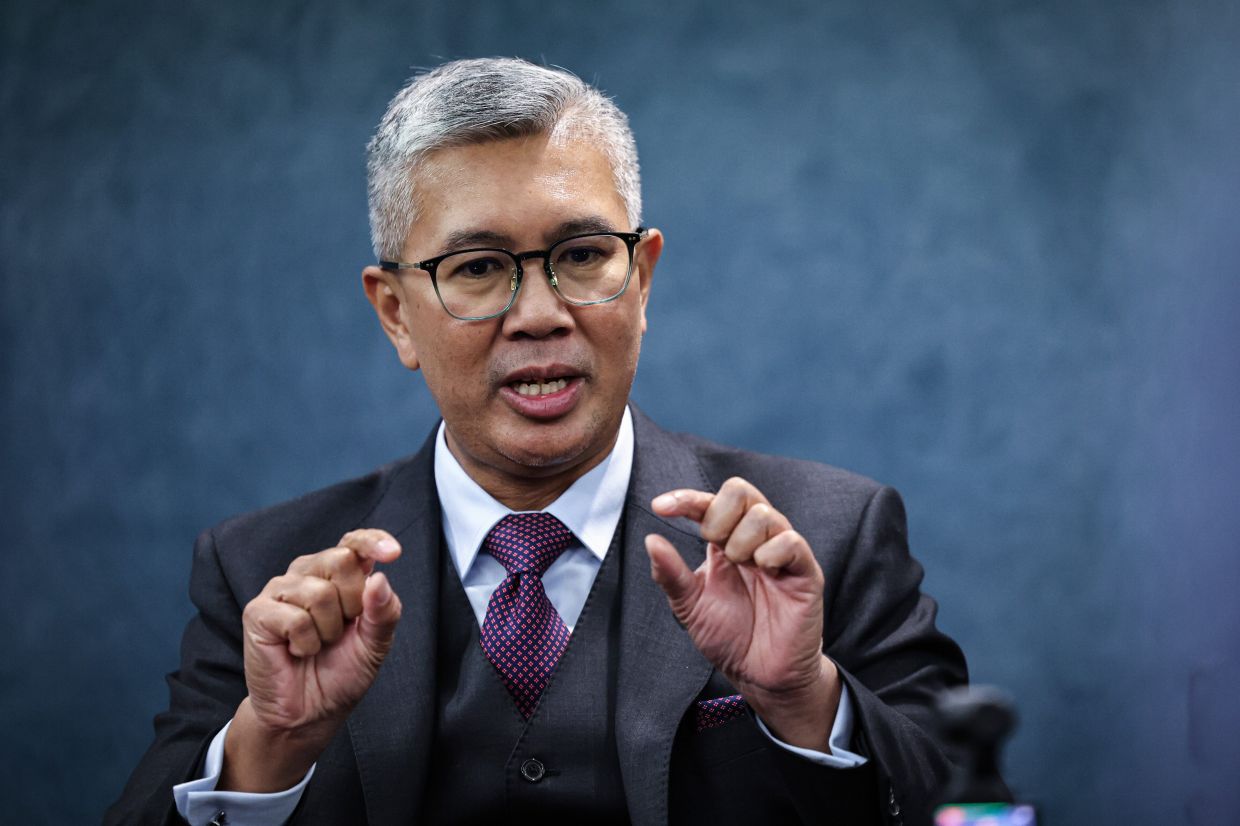
Malaysia's Investment Development Authority chairman Tengku Datuk Seri Zafrul Abdul Aziz has sounded an urgent call for ASEAN to forge deeper regional cooperation mechanisms, warning that the bloc faces a critical capital coordination challenge that threatens to derail its clean energy ambitions. Speaking at the 7th International Sustainable Energy Summit in Kuala Lumpur, Tengku Zafrul articulated a fundamental paradox facing Southeast Asia: the region's governments have demonstrated genuine commitment to decarbonisation targets, yet systemic obstacles prevent investment capital from flowing efficiently to viable energy projects. This gap between stated intent and financial reality underscores a structural problem distinct from political willingness or technological capacity.
The financial dimension of ASEAN's energy transition challenge is staggering. The region requires approximately US$200 billion annually through 2030 to successfully transition to cleaner energy systems—a figure that reflects both the scale of infrastructure upgrades needed and the economic burden of shifting away from fossil fuel dependence. This annual commitment, if sustained across the decade, represents a total commitment of roughly US$2 trillion, an amount that no individual Southeast Asian economy can finance independently. The sheer magnitude explains why fragmentary national approaches have proven insufficient and why regional coordination has shifted from aspirational rhetoric to urgent necessity.
Tengku Zafrul's diagnosis of the problem moves beyond simple capital scarcity to identify coordination failures within ASEAN's institutional architecture. Project timelines for renewable energy developments extend far longer than investors tolerate, as regulatory uncertainty and inconsistent approval processes across borders create compounding delays. Each ASEAN member maintains distinct regulatory frameworks governing energy investment, creating obstacles for developers seeking to build infrastructure that crosses sovereign boundaries. Cross-border financing mechanisms remain underdeveloped, leaving investors reluctant to commit resources to projects spanning multiple jurisdictions with different legal and financial oversight systems. Risk-sharing infrastructure that would allow multiple parties to distribute the financial exposure of large energy projects remains inadequate throughout the region, forcing individual investors to absorb disproportionate downside risk.
The proposed ASEAN Power Grid represents perhaps the most transformative solution Tengku Zafrul outlined. Scheduled for complete integration by 2045, the interconnected grid would leverage ASEAN's geographic and climatic diversity as a strength rather than allowing it to fragment the region's energy strategy. Laos possesses substantial hydropower capacity that remains largely underdeveloped; Indonesia controls vast geothermal resources extending across its volcanic archipelago; Vietnam's coastline and wind patterns position it as a natural wind energy hub; and Malaysia's equatorial location provides consistent solar radiation for photovoltaic generation. An integrated grid would allow surplus power from one country's renewable peak to supply neighbouring nations during their demand hours, dramatically improving overall system efficiency and reducing the need for expensive energy storage infrastructure that currently constrains renewable adoption throughout Southeast Asia.
Complementing the grid infrastructure, Tengku Zafrul proposed an ASEAN Green Investment Facility that would operate as a pooled capital mechanism, aggregating sovereign wealth funds, pension fund allocations, and private investment capital to jointly finance strategic energy projects across the region. This approach addresses a critical reality: the sheer transaction costs of evaluating, structuring, and monitoring individual cross-border energy investments discourage capital deployment, particularly from institutional investors accustomed to larger-scale opportunities. A dedicated regional facility would reduce due diligence burdens, standardise contract terms, and distribute risk across multiple contributors, fundamentally altering the risk-return calculus for energy investments throughout ASEAN. By pooling capital, no single national treasury bears the full financing burden for major infrastructure projects, distributing both financial exposure and decision-making authority across the region.
Tengku Zafrul's third pillar of regional resilience addresses energy security vulnerabilities exposed by recent global disruptions. Shared emergency protocols would establish standardised procedures for energy supply disruptions, allowing the region to respond cohesively rather than through uncoordinated national actions that historically amplify crises. Joint fuel reserves distributed across ASEAN would create buffer capacity against supply shocks, ensuring that temporary disruptions in one part of the region do not cascade into widespread shortages. Coordinated crisis communication mechanisms would prevent information vacuums that fuel speculation and panic-driven market behaviour. Regional supply-chain monitoring would provide early warning of emerging bottlenecks before they crystallise into crises. These measures reflect lessons from recent energy shocks that demonstrated how unilateral national responses, though individually rational, produced collective outcomes that harmed the entire region.
Malaysia's own contribution to this regional agenda demonstrates the commitment required for successful implementation. The New Industrial Master Plan 2030 positions Malaysia to leverage manufacturing capabilities for renewable energy technologies and components, creating economic value from the transition rather than merely absorbing its costs. The National Energy Transition Roadmap establishes Malaysia's domestic pathway toward cleaner energy systems, while the Green Investment Strategy channels capital toward projects aligned with broader Southeast Asian objectives. These initiatives reflect Malaysia's recognition that national energy security cannot be isolated from regional dynamics; energy shocks in neighbouring countries inevitably transmit economic consequences across the region's integrated supply chains and energy corridors.
Tengku Zafrul's emphasis on leadership through regional coordination rather than unilateral action reflects sophisticated understanding of ASEAN's strategic position. A fractured region pursuing divergent energy strategies would remain vulnerable to external shocks, dependent on volatile global markets, and unable to leverage its collective strengths. A connected, coordinated ASEAN capable of pooling capital, sharing infrastructure, and responding cohesively to disruptions becomes substantially more resilient. The timeline for implementation carries profound urgency; each year of delay extends the window during which ASEAN remains vulnerable to energy supply disruptions and increases the ultimate cost of the transition by locking in fossil fuel infrastructure investments that will eventually require decommissioning.
The implications for Malaysia and Southeast Asia extend beyond energy supply chains. Successfully executing this regional coordination agenda would establish ASEAN as a model for cross-border cooperation on critical infrastructure, potentially creating templates applicable to other regional challenges including water security, digital infrastructure, and climate adaptation. The region's ability to mobilise US$200 billion annually through coordinated mechanisms would demonstrate that Southeast Asian economies can collectively address challenges that exceed individual capacities. Conversely, failure to achieve this coordination would perpetuate fragmentation, allowing external actors to influence regional energy choices and pricing, undermining ASEAN's broader strategic autonomy. The energy transition represents both a critical test of ASEAN's institutional maturity and an unprecedented opportunity to reshape the region's economic and strategic architecture for the coming decades.

