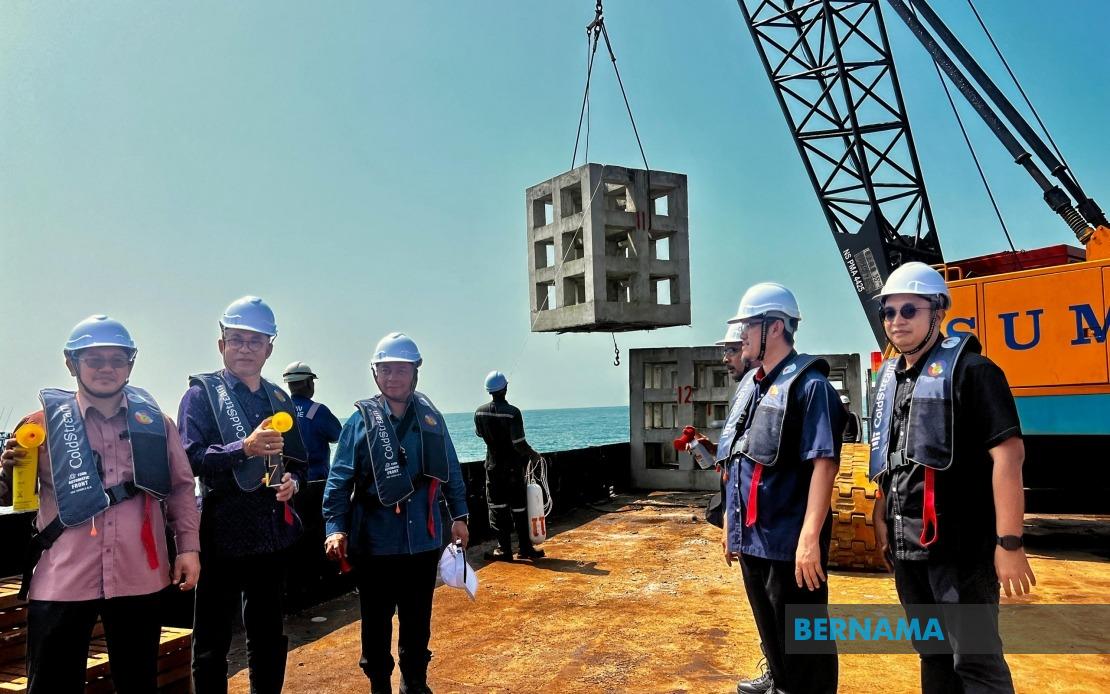
The Kelantan Fisheries Department has initiated a strategic deployment of artificial reef structures in state waters, combining marine conservation with coastal resource protection in a move that addresses persistent challenges facing small-scale fishermen. The programme, which saw 30 new reefs placed approximately 4.6 nautical miles off the Tok Bali Jetty, represents the first major initiative funded specifically by Sultan Muhammad V for fisheries conservation, signalling heightened royal patronage for the sector at a time when artisanal fishing communities face mounting pressures from industrial operations.
The dual-function design of these reef structures offers a sophisticated solution to a longstanding problem in Malaysian fisheries management. While the primary purpose of artificial reefs—creating breeding and nursery grounds for commercially important fish species—is well understood, their role in physically deterring incursion by large-scale fishing vessels introduces a valuable defensive mechanism for inshore fishermen. The entanglement risk posed by reef structures to commercial fishing gear effectively creates a natural boundary that discourages industrial trawlers from operating in zones traditionally reserved for coastal communities, thereby protecting artisanal fishing grounds without requiring expensive enforcement patrols.
Kelantan Fisheries Department director Ismail Ibrahim emphasized that the structures function as both ecological and economic assets. The reefs attract spawning fish, which subsequently benefit local fishermen through increased landings while simultaneously supporting the state's broader food security objectives. This integrated approach acknowledges that marine resource management cannot focus solely on conservation; it must simultaneously address socioeconomic disparities between industrial and artisanal sectors. For Malaysian policymakers grappling with how to balance commercial fishing interests against community livelihoods, Kelantan's model offers a replicable framework that sidesteps confrontational enforcement in favour of ecological engineering.
The scale of Kelantan's existing reef infrastructure underscores the department's long-term commitment to this strategy. Since 2007, approximately 400 artificial reefs have been installed across four locations in state waters, with an additional 72 units scheduled for staged deployment throughout the current year. This gradual expansion reflects both budgetary constraints and the reality that reef ecosystems require time to mature. Ismail noted that observable impacts on fish breeding typically emerge only after a minimum six-month period, contingent upon local environmental conditions and natural ecosystem development. The extended timeline demands patience from fishermen seeking immediate relief and necessitates sustained political will to maintain the programme through multiple budget cycles.
Regular maintenance operations form an often-overlooked but critical component of the artificial reef ecosystem. The Kelantan Fisheries Department conducts periodic monitoring and cleaning initiatives to remove ropes, discarded fishing gear, and other debris accumulated on the structures. This hands-on stewardship ensures that the reefs retain their ecological functionality and continue serving their intended conservation purposes. The maintenance requirement also represents an ongoing operational cost that must be factored into long-term programme viability, particularly as the number of reefs expands. In a Southeast Asian context where resource constraints frequently limit follow-up monitoring of environmental projects, Kelantan's commitment to systematic upkeep distinguishes it as a more professionally managed initiative.
The participation of Sultan Muhammad V in funding the latest phase carries political significance beyond mere financial contribution. Royal patronage of fisheries conservation projects elevates the sector's profile within state governance hierarchies and potentially influences federal resource allocation decisions. In Malaysia's constitutional framework, where state rulers retain considerable symbolic authority, such royal endorsement can strengthen arguments for increased budgetary support and regulatory autonomy in managing marine resources. For Kelantan specifically, a state heavily dependent on fishing-based livelihoods and vulnerable to industrial pressure from neighbouring jurisdictions, this royal backing provides important institutional leverage.
The environmental science underpinning artificial reef deployment has become increasingly sophisticated, yet implementation in Malaysian waters still encounters knowledge gaps and contextual challenges. Reef structures must be selected and positioned based on local hydrodynamic conditions, substrate composition, and target species ecology to maximize effectiveness. The 4.6 nautical mile placement off Tok Bali reflects deliberate positioning within Malaysia's inland fisheries zone, where small-scale operations hold legal precedence. This zoning approach, when combined with reef infrastructure, creates layered protection for artisanal fishermen that operates through both regulatory and environmental mechanisms simultaneously.
The broader implications for Malaysian maritime governance extend beyond single-state initiatives. As industrial fishing pressure intensifies across Southeast Asia and fish stocks face mounting exploitation, coastal states increasingly recognize artificial reefs as cost-effective tools for reconciling conservation with livelihood protection. Kelantan's programme offers evidence that carefully designed ecological interventions can serve multiple policy objectives—species reproduction, small-scale fisher protection, and food security enhancement—without requiring contentious restrictions on industrial operations. This pragmatic approach may hold particular appeal for policymakers across the region seeking solutions that address conservation imperatives while minimizing political friction with commercial fishing interests.
The programme's expansion trajectory suggests growing confidence in its effectiveness and sustainability. Plans to increase artificial reef deployments across Kelantan waters indicate that initial results have warranted continued investment despite the extended timeline required for ecosystem maturation. The department's willingness to scale operations rests partly on technical success and partly on demonstration that the infrastructure successfully serves its dual purpose of marine habitat restoration and artisanal fisher protection. For other Malaysian states with comparable fishing communities and industrial pressure, the Kelantan model provides a tested framework worthy of adaptation and replication, though implementation would require matching local environmental conditions with appropriate reef design specifications.

