Europe's premier technology showcase in Paris has become the launchpad for innovations that could reshape how we heal injuries, move through cities, and protect ourselves from digital deception. Among the startups unveiling their latest breakthroughs across the festival's sprawling display floors, three companies stand out for addressing critical problems that touch millions of lives daily across Asia and beyond.
Blueprint Biomed, a Berlin-based biotech firm, is tackling one of medicine's persistent challenges: the failure rate of bone grafts. Surgeons worldwide perform millions of procedures annually that rely on grafts harvested from patients' own bodies to support healing in damaged bones. Yet these autologous grafts carry inherent risks. They can fail entirely, necessitating additional surgery and prolonging recovery. Others trigger complications that compromise long-term outcomes. Chief executive Aaron Herrera explained to AFP that his company's artificial replacement eliminates these drawbacks. The innovation centres on a 3D-printed scaffold made from polycaprolactone, a biodegradable polyester that serves as the structural foundation. This base supports a collagen layer that mimics the biological properties of natural bone tissue. What makes this approach particularly elegant is its biodegradability: both materials are absorbed by the body on different timescales, with collagen disappearing within three months and the polyester framework within two years, leaving behind new bone tissue.
The flexibility of this design allows surgeons to customize graft shapes for individual patients, addressing anatomical variations that standardized solutions cannot accommodate. Blueprint has secured funding commitments and is pursuing approximately US$2.5 million to advance toward human trials, with the ambitious target of implanting its products into patients by 2028. For developing nations in Southeast Asia where orthopedic trauma from accidents and falls remains a significant health burden, such innovations could eventually reduce surgical complications and improve recovery times for vulnerable populations who currently lack access to optimal grafting options.
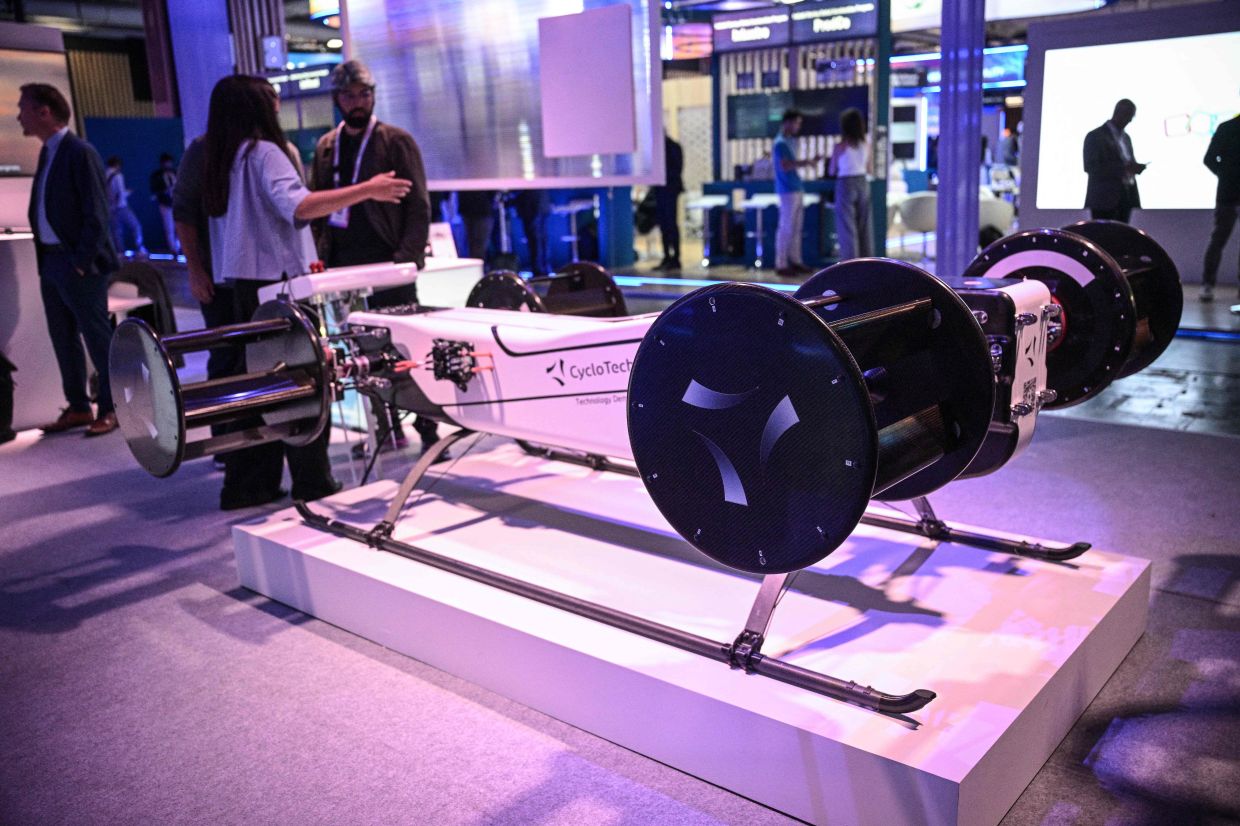
Meanwhile, in the aerospace sector, the agility of modern drones has revolutionized everything from infrastructure inspection to military operations, as the conflict in Ukraine has vividly demonstrated. Yet Austrian startup CycloTech believes conventional quadcopter designs remain constrained by their mechanical limitations. The company has engineered motors with an entirely novel geometry: instead of traditional rotors, they feature an open cylindrical design with blade-shaped sides arranged around the perimeter. Marketing chief Andrea Marchsteiner demonstrated how this approach grants aircraft capabilities that conventional designs struggle to match. These motors enable hover stability comparable to helicopters, forward flight performance matching fixed-wing aircraft, mid-air braking, and even backward movement—all within a single vehicle architecture. The operational implications are substantial. Delivery operations in congested urban environments benefit from this precision and flexibility. Beyond logistics, the technology opens pathways for urban air mobility systems that could transport passengers through complex three-dimensional corridors above city streets. Military applications also remain significant, though the company emphasizes civilian-focused development.
With 65 employees and €40 million already secured in funding, CycloTech is pursuing additional capital and corporate partnerships to integrate its motors into existing aircraft platforms. For a region like Southeast Asia, where sprawling megacities face gridlocked traffic and where island geography creates logistics challenges, such technology could eventually provide practical solutions if development timelines align with regulatory frameworks. The company's growth trajectory suggests serious commercial viability, yet remains dependent on finding partners willing to adopt proprietary motor technology.
The rise of artificial intelligence has introduced a darker possibility: deepfake audio that can convincingly impersonate anyone's voice. French firm Whispeak was founded years before generative AI made this threat acute, initially focusing on voice biometrics for banking security. Florent Van Calster, the company's chief executive, notes that modern deepfake generation requires less than ten seconds of someone's voice and often costs nothing. This vulnerability affects financial institutions, government services, and ordinary people targeted by fraud schemes. After three years of dedicated development, Whispeak claims to have created the world's most accurate audio deepfake detector, a boast backed by first-place finishes in multiple international detection competitions.
The technology achieves error rates below one percent on available training datasets, a remarkable accuracy figure that reflects deep learning models specifically optimized for this problem. Whispeak is already collaborating with Bouygues, France's major telecom operator, to screen incoming calls for deepfake audio and alert users when fraudulent voices are detected. Yet Van Calster candidly acknowledges the fundamental limitation of any security arms race: as detection improves, so too will the tools that create fake audio. The relationship between defender and attacker remains perpetually dynamic, each innovation spurring countermeasures. For Malaysian consumers increasingly targeted by voice-based fraud, such detection systems could eventually become standard infrastructure, though their adoption depends on whether telecommunications companies and financial institutions prioritize implementation.
In sports science, performance monitoring has traditionally relied on blood tests and heart rate monitors, technologies that require either invasive collection or provide incomplete physiological information. Hong Kong startup PointFit offers a radically different approach using adhesive patches equipped with tiny sensors that read biomarkers directly from skin sweat. Chief executive Kenny Oktavius conceived the technology while still a student in 2019 and has since refined it into a system that measures glucose, cortisol, and other performance indicators without drawing blood or restricting movement. The system employs artificial intelligence to create personalized baseline expectations, accounting for demographic factors and environmental conditions like temperature. Oktavius illustrated the concept's utility through professional marathon runners, who despite wearing expensive monitoring equipment occasionally collapse unexpectedly. Heart rate measurements, he emphasized, provide insufficient insight into the complete physiological picture. The biomarker approach offers the granularity that hospital diagnostics rely upon, delivered continuously and non-invasively.
PointFit has already established partnerships with Red Bull's Athlete Performance Centre and Puma's Nitro Labs innovation unit, validating its technology among elite sports organizations. The company's immediate growth strategy targets mass-market consumer adoption through relationships with major retailers like Decathlon and established brands such as EssilorLuxottica. For Southeast Asian athletes and fitness enthusiasts increasingly interested in performance optimization, such wearable technologies represent the next evolution beyond simple activity trackers. As these sensors become more affordable and integrated into mainstream sportswear, they could democratize access to the physiological insights that previously remained exclusive to elite programs.
%22%2F%3E%3C%2Fpattern%3E%3C%2Fdefs%3E%3Crect%20width%3D%22100%25%22%20height%3D%22100%25%22%20fill%3D%22url(%23ph504jeg)%22%2F%3E%3Crect%20width%3D%22100%25%22%20height%3D%22100%25%22%20fill%3D%22url(%23ph504jep)%22%2F%3E%3Ctext%20x%3D%2250%25%22%20y%3D%2250%25%22%20text-anchor%3D%22middle%22%20dominant-baseline%3D%22central%22%20fill%3D%22rgba(255%2C255%2C255%2C0.95)%22%20font-family%3D%22Georgia%2C%20'Times%20New%20Roman'%2C%20serif%22%20font-weight%3D%22700%22%20font-size%3D%22320%22%20letter-spacing%3D%22-0.02em%22%3EMOH%3C%2Ftext%3E%3C%2Fsvg%3E)
%22%2F%3E%3C%2Fpattern%3E%3C%2Fdefs%3E%3Crect%20width%3D%22100%25%22%20height%3D%22100%25%22%20fill%3D%22url(%23phl2t5g)%22%2F%3E%3Crect%20width%3D%22100%25%22%20height%3D%22100%25%22%20fill%3D%22url(%23phl2t5p)%22%2F%3E%3Ctext%20x%3D%2250%25%22%20y%3D%2250%25%22%20text-anchor%3D%22middle%22%20dominant-baseline%3D%22central%22%20fill%3D%22rgba(255%2C255%2C255%2C0.95)%22%20font-family%3D%22Georgia%2C%20'Times%20New%20Roman'%2C%20serif%22%20font-weight%3D%22700%22%20font-size%3D%22272%22%20letter-spacing%3D%22-0.02em%22%3ETrump%3C%2Ftext%3E%3C%2Fsvg%3E)