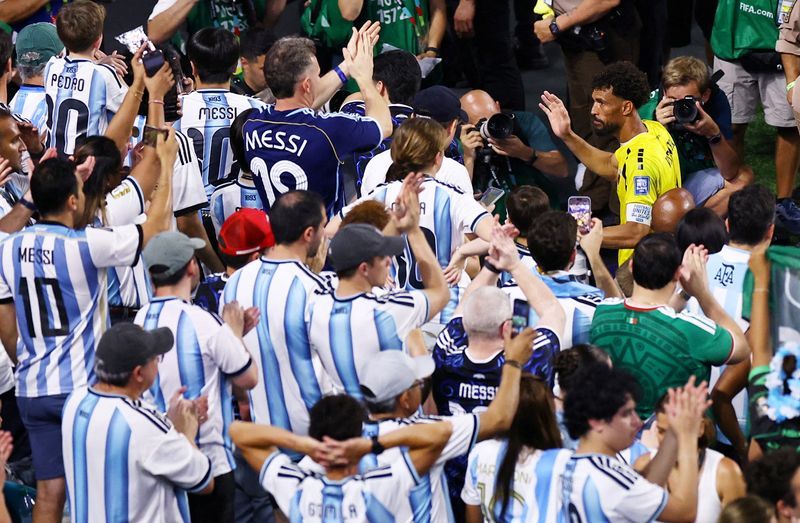
Argentina's passage into the World Cup knockout stages came at a higher price than anticipated when the reigning champions required extra time to overcome Cape Verde 3-2 in Kansas City on July 4. What many had expected to be a routine victory for the South American powerhouses instead became a tense affair that laid bare defensive vulnerabilities the team will need to address before facing Egypt in Atlanta on Tuesday. The result, secured through Cristian Romero's header that was deflected past goalkeeper by Cape Verde's Diney Borges, masks a performance that left observers questioning whether Argentina's group-stage dominance merely reflected weak opposition rather than genuine form.
Cape Verde's resourcefulness in mounting two separate comebacks demonstrated that tournament debutants can threaten even the most accomplished sides when given space and opportunity. Coach Lionel Scaloni had publicly flagged the danger posed by the island nation after their respectable draws against Spain and Uruguay in the group phase, yet few observers expected such sustained pressure from a team making their inaugural World Cup appearance. The West African side's willingness to attack and their ability to exploit gaps in Argentina's midfield pressing suggests that the champions had been insulated by relatively gentle early opposition rather than having solved their structural problems.
Argentina's group-stage record, comprising commanding victories over Algeria (3-0), Austria (2-0), and Jordan (3-1), had created an impression of overwhelming superiority. However, those victories now appear less illustrative of elite form when viewed against the competitive quality of opponents faced. The absence of genuine European challengers during both the group stage and pre-tournament preparations had meant Argentina's defensive line had never been subjected to the kind of sustained, intelligent pressure that distinguishes World Cup competition at its highest level. Since the 2022 tournament, Iceland in June represented their sole encounter against a European side, underscoring how limited their recent test matches had been.
The physical and tactical toll of the Cape Verde match was evident in the exhaustion displayed by Argentina's key playmakers. Lionel Messi, who became only the fifth player to reach 20 World Cup goals when he netted in the first half, acknowledged the suffocating nature of Cape Verde's approach. The 39-year-old captain pointed specifically to Argentina's inability to press effectively in the attacking third, noting that the gap between defensive and midfield lines had become too pronounced to control the match's rhythm. This admission from one of football's greatest champions carries particular weight, suggesting fundamental issues with team shape and positioning rather than individual performance lapses.
Marcelo Gallardo, who experienced World Cup football as a player in 1998 and 2002 before managing River Plate, interpreted the Cape Verde scare as potentially beneficial for Argentina's prospects. Speaking on ESPN Argentina, Gallardo suggested that facing genuine adversity and being forced to dig deep could trigger the necessary tactical and mental adjustments ahead of knockout football. His comments reflect a common pattern in tournament football where near-disasters sometimes galvanise rather than demoralise squads, provided the coaching staff can properly diagnose and correct the underlying issues.
Scaloni's post-match assessment emphasised his team's character and capacity for adjustment rather than dwelling on technical shortcomings. The manager focused on Argentina's ability to respond during moments of adversity and restore control of proceedings when it mattered most. His rhetoric underscored a familiar managerial position: that tournament football rarely unfolds according to neat scripts, and teams that demonstrate resilience and tactical flexibility ultimately prevail. Yet the very need to invoke such survival narratives suggests that Argentina's preparations have not been as thorough as the group-stage results initially implied.
Two defenders embodied Argentina's determination to advance despite their difficulties. Lisandro Martinez, recovering from a serious anterior cruciate ligament injury sustained in early 2025, scored Argentina's second goal and provided a tangible symbol of the squad's character. His teammate Cristian Romero, similarly beset by knee problems earlier in the tournament, contributed the crucial final goal. Both players' return to meaningful action after injury layoffs appeared to energise their contributions, suggesting that Argentina's depth and versatility in defensive ranks may yet prove decisive in tighter contests. Martinez's emotional reflection on his journey back to fitness underscored how major tournaments often intertwine personal redemption narratives with collective team narratives.
The defensive frailties exposed during the Cape Verde encounter carry particular significance given Egypt's attacking potential in the round-of-sixteen fixture. While the North African side should not be underestimated, Argentina's primary concern will be stabilising their shape and regaining the coherence that seemed absent in the group stage. The upcoming clash provides an opportunity for Scaloni to implement tactical adjustments that address the pressing vulnerabilities that Cape Verde ruthlessly exposed. Failure to do so could invite further problems against increasingly formidable opponents in the later stages.
For Southeast Asian observers following the tournament, Argentina's narrow escape offers instructive lessons about the gap between perceived dominance and actual control in high-stakes football. The outcome demonstrates that World Cups remain genuinely unpredictable events where experience and historical pedigree provide no guarantee against teams willing to work collectively and exploit tactical opportunities. As Argentina reconvenes for training in Miami on Saturday, the priority will be transforming the Cape Verde scare into constructive motivation for the Egypt encounter and beyond.

