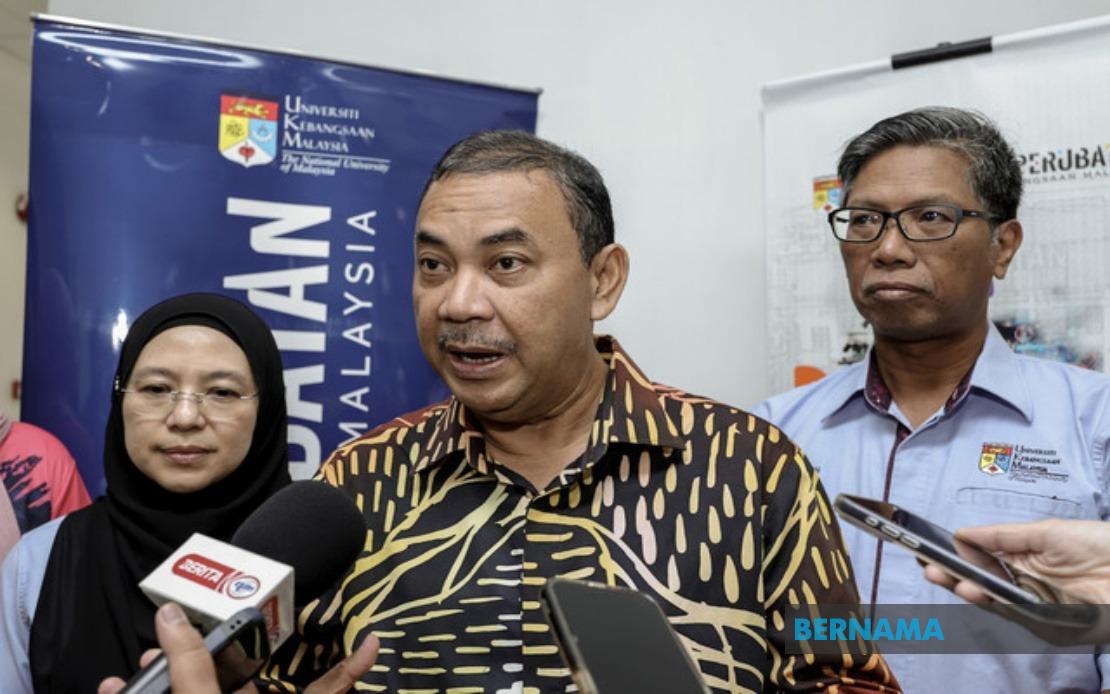
The MADANI Government's track record under Prime Minister Datuk Seri Anwar Ibrahim is increasingly being acknowledged across multiple sectors for its contributions to Malaysia's economic development, currency stability, and investment climate. Speaking at an educational event in Kuala Lumpur, the Prime Minister's political secretary Datuk Azman Abidin emphasised that the administration's accomplishments have earned credibility with diverse stakeholders, suggesting the foundation for public support extends beyond partisan circles.
Azman highlighted that the government's measurable successes in three key economic indicators — foreign and domestic investment inflows, overall economic performance, and Malaysian ringgit stability — have become difficult for critics to dismiss. By framing these achievements as externally validated rather than merely government claims, he sought to position the administration's record as objectively verifiable rather than self-promotional. The implicit message was that voters would have concrete evidence to consider when assessing government performance ahead of electoral decisions.
The political secretary's comments reflect a broader strategic narrative emerging from the Prime Minister's office: that substantive governance outcomes justify continued electoral support for a second term under Anwar's leadership. This argument attempts to shift political discourse from personality-based or coalition-focused debates toward measurable economic indicators that theoretically benefit all Malaysians regardless of voting preference. For regional observers, the emphasis on currency strengthening and investment appeal signals the government's prioritisation of macroeconomic stability as a cornerstone of its legitimacy claim.
Azman indicated that the government intends to amplify awareness of its initiatives through several channels before the year's major patriotic occasions and the tabling of Budget 2027. These announcements would serve dual purposes: celebrating national identity during National Day and Malaysia Day while simultaneously highlighting government achievements during periods of heightened public attention. The timing suggests a carefully calibrated approach to media management and public perception-building ahead of eventual general elections.
Beyond economic messaging, Azman's remarks at the STEM Exploration 2.0 programme reveal how the government frames longer-term nation-building efforts. The programme, hosted by Universiti Kebangsaan Malaysia's Department of Tissue Engineering and Regenerative Medicine, brought together 200 Form Three students from Kuala Lumpur, Selangor, and Negeri Sembilan for exposure to science and medical career pathways. This initiative reflects a deliberate focus on talent identification and early-stage investment in human capital development, particularly in science, technology, engineering, and mathematics fields where Malaysia seeks competitive advantage.
The political secretary expressed conviction that Malaysians would evaluate government performance on its merits when making electoral decisions, suggesting confidence in public rationality and information accessibility. This confidence arguably reflects faith in the government's communication strategy and the assumption that economic gains would register sufficiently in public consciousness to influence voting behaviour. For Malaysian voters weighing different coalition options, such statements underscore how incumbent governments attempt to frame elections as referendums on concrete performance rather than purely ideological or leadership-based choices.
Azman advocated for systemic elevation of STEM education from optional subject status to essential curriculum component, positioning scientific literacy as prerequisite for Malaysia's technological competitiveness. This framing connects education policy directly to national economic resilience and global positioning, suggesting that contemporary governance encompasses not merely immediate service delivery but generational investment in workforce capabilities. The argument carries particular weight in Southeast Asia, where nations increasingly compete for high-value manufacturing, digital innovation, and knowledge-economy dominance.
The STEM Exploration programme itself included practical scientific exposure through microbiology experiments, human biological systems instruction, and demonstrations of 3D printing applications in medicine. By offering Form Three students this hands-on engagement, the initiative aims to convert abstract subject interest into concrete career aspiration during formative educational years. Azman's proposal to expand the programme nationwide indicates recognition that talent development requires sustained, systematically-designed interventions rather than episodic initiatives.
The political secretary's exhortation to student participants — encouraging them to view the programme as both stepping stone and inspiration for ambitious dreaming — reflects broader governmental messaging about meritocratic opportunity and individual achievement. By positioning scientific and political leadership as products of sustained effort beginning with foundational knowledge-seeking, Azman attempted to inspire long-term commitment to field development while implicitly validating the government's educational investment priorities. Such messaging resonates with Malaysian middle-class aspirations for children's advancement through technical expertise.
For Malaysian and Southeast Asian observers, Azman's commentary illustrates how incumbent administrations navigate the relationship between economic governance and electoral legitimacy. The emphasis on externally-validated achievements, systematic talent development, and rational voter assessment suggests a government confident in its economic stewardship but conscious that such confidence requires continuous public communication and tangible programme visibility. Whether such messaging ultimately influences electoral outcomes remains subject to broader political, social, and economic conditions operating beyond any single official's rhetorical strategy.

