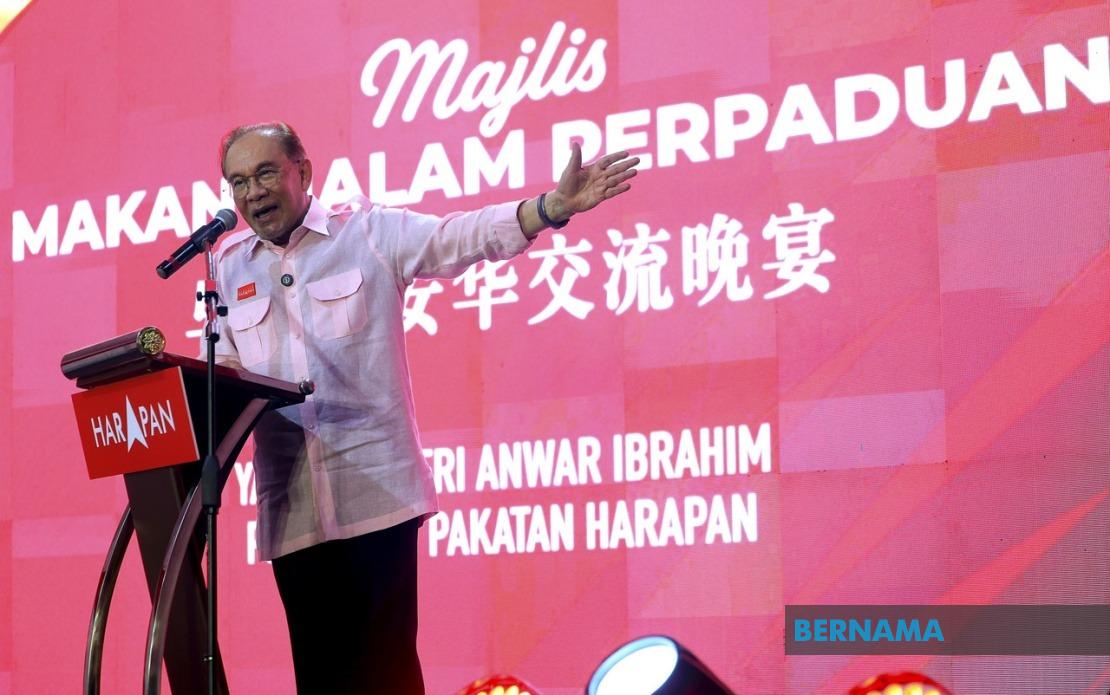
Pakatan Harapan chairman Datuk Seri Anwar Ibrahim has cast a critical eye on what he characterizes as unseemly jockeying among opposition parties to secure the menteri besar's position in the upcoming Negeri Sembilan state election. Speaking at a party dinner in Seremban on July 22, the Prime Minister and PKR president sought to draw a contrast between PH's unified approach and what he portrayed as the fractious ambitions of rival coalitions, suggesting that voters would be better served by entrusting governance to leaders focused on substantive administration rather than internal power struggles.
Anwar's remarks touch on a perennial concern in Malaysian electoral politics: the perception that factional rivalries and personal ambitions can undermine effective state leadership. By highlighting the visible competition among opposition figures for the top executive role, he attempted to reframe the election narrative away from PH's own performance record and toward the purported disunity of its opponents. The strategy reflects a broader campaigning approach wherein portraying the opposition as chaotic or self-interested becomes a central message to persuade undecided voters.
The Prime Minister emphasized that electoral mandates should rest on a fundamental principle: ensuring that those voted into office possess both the competence and integrity necessary to administer state affairs effectively and protect the interests of all residents. This framing positions governance capability and inclusive stewardship as the paramount considerations, rather than narrow factional or personal gains. For Malaysian voters assessing competing visions, such appeals to competence and public interest resonate across demographic lines, particularly among those fatigued by perceptions of political self-dealing.
At the same gathering in Taman Sri Penaga, Sikamat, Anwar directly endorsed the retention of Negeri Sembilan Menteri Besar Datuk Seri Aminuddin Harun, who is simultaneously contesting the Linggi state seat under the PH banner. The Prime Minister highlighted Aminuddin's administrative track record, specifically pointing to his stewardship as characterized by integrity, freedom from corruption, and the absence of abuses of executive power. Such explicit endorsements from the national leadership are crucial in state elections, as they lend the weight of federal authority and the Prime Minister's personal credibility to local candidates.
Also present at the event were PH candidates for Sikamat and Ampangan, Nor Azman Mohamad and Datuk Muhammad Nazri Kassim respectively, underscoring PH's organizational effort to field and promote a full slate of contenders across the state. The gathering served both as a fundraising mechanism and as a platform to reinforce party messaging among local party faithful and community leaders who could amplify the campaign's key talking points through their networks.
Beyond the immediate tactical concerns of the election, Anwar took aim at what he characterized as divisive racial narratives being deployed by certain quarters in the campaign. He suggested that some political actors were deliberately stoking racial sentiment to mobilize electoral support, a practice he implicitly criticized as inconsistent with the Unity Government's stated commitment to fair and inclusive governance. This critique is significant because it acknowledges that racial polarization remains a potent electoral tool in Malaysian politics, even under a coalition explicitly founded on multiethnic cooperation.
The Unity Government, as Anwar framed it, positions itself as committed to equitable allocation of resources and benefits across all segments of society regardless of ethnicity. He pointed to concrete policy examples, including socio-economic allocations, housing initiatives, and salary adjustments for civil servants, as tangible evidence of this inclusive approach. These specifics matter because they allow voters to evaluate not just rhetorical claims of fairness but ostensible material outcomes. For Malaysian readers, the mention of housing and civil service salary improvements connects to widely felt concerns about cost of living and job security.
The election mechanics reveal the scale of PH's organizational commitment to Negeri Sembilan. The coalition is fielding candidates in all 36 state seats, with component parties dividing the slate: PKR contesting 16 seats, DAP 11, and Amanah nine. This comprehensive candidacy approach contrasts with selective participation strategies and signals confidence in the coalition's ability to compete across diverse constituencies. The internal seat allocation among coalition partners also hints at the negotiated balance of power within PH itself, with PKR's larger share reflecting its status as the dominant partner.
Polling day is set for August 1, with early voting occurring on July 28. This compressed campaign window concentrates voter attention and benefits parties with superior ground organization and media presence. For Negeri Sembilan voters, the election represents a choice between retaining PH's current state administration or shifting to opposition alternatives. The turnout and voter behavior in this state election will carry implications beyond Negeri Sembilan itself, signaling the health of PH's coalition dynamics and the receptiveness of Malaysian voters to competing narratives about governance quality, inclusivity, and political integrity.
Anwar's positioning of this election as fundamentally about competent administration and inclusive governance versus factional self-interest reflects a deliberate rhetorical strategy aimed at consolidating middle-class and professional voters concerned primarily with state service delivery. By framing the opposition as preoccupied with internal competition for high office, he attempts to occupy the moral high ground of principled, people-focused politics. Whether this narrative gains traction will depend significantly on Negeri Sembilan voters' lived experience of state governance under PH and their assessment of realistic alternatives.

