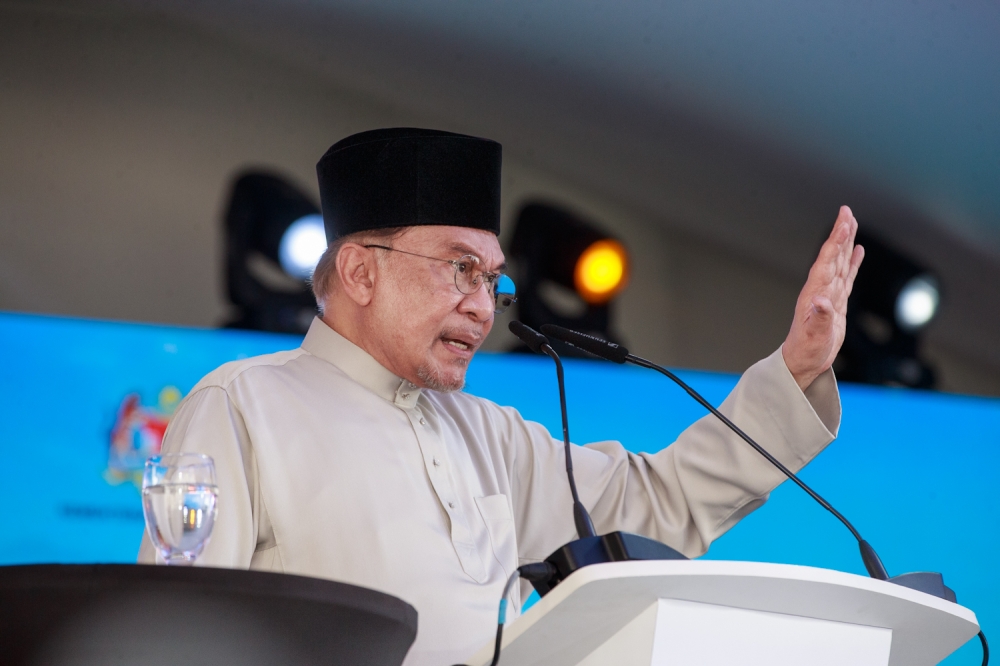
Prime Minister Datuk Seri Anwar Ibrahim has directed the Chief Secretary to the Government to undertake a wide-ranging assessment of the country's civil service promotion system, citing deep frustration with the extended waiting periods that officers encounter when seeking advancement. The directive emerged from growing concern that career progression within Malaysia's government apparatus has become prohibitively slow, with some personnel spending nearly a decade in their current positions before receiving promotion consideration.
The stalled advancement of capable civil servants represents a significant institutional challenge with ramifications extending beyond individual career trajectories. When promotion pathways become congested and protracted, the overall efficiency and morale of the civil service deteriorate, potentially affecting service delivery across all government departments and agencies. Malaysia's civil service forms the backbone of policy implementation and public administration, making the health of this workforce directly consequential for the nation's governance capacity and citizens' day-to-day interactions with government institutions.
Anwar's intervention highlights an administrative dysfunction that has likely accumulated over several years, with structural barriers preventing normal career progression. The eight-year threshold mentioned reflects not merely individual frustration but a systemic breakdown in how the bureaucracy manages talent development and retention. Such extended waits can discourage high-performing officers from remaining in public service, creating a brain drain that pushes talented individuals toward the private sector where advancement typically proceeds more swiftly. This dynamic potentially weakens government capacity precisely when sophisticated policy implementation is most needed.
The review ordered by the Prime Minister will need to examine multiple dimensions of the current promotion architecture. These include the criteria used for assessing readiness for advancement, the structures and committees responsible for evaluating candidates, the transparency of decision-making processes, and the timeline expectations embedded within the system. Each of these elements likely contributes to the bottleneck, and comprehensive assessment must address root causes rather than merely treating symptoms.
Context matters significantly here: Malaysia's civil service has undergone various reform initiatives over recent decades, yet persistent challenges remain in modernising bureaucratic practices. The promotion system reflects institutional culture and procedural frameworks established over many decades, meaning that reform cannot be implemented hastily without careful consideration of unintended consequences. However, the current situation—where officers must wait up to eight years for advancement—suggests that caution must be balanced against the urgent need for change.
From a regional perspective, this issue carries weight beyond Malaysia's borders. Southeast Asian governments increasingly compete for skilled professionals, and civil services that cannot offer timely advancement risk losing personnel to neighbouring economies where career progression may be more predictable. Singapore's meritocratic civil service, for instance, has long served as a regional benchmark for rapid advancement and performance-based rewards. Malaysia's ability to attract and retain top talent partly depends on whether government service remains an appealing career pathway.
The Prime Minister's personal involvement in directing this review signals political commitment to reform, though implementation will ultimately determine whether this initiative produces meaningful change. Previous promises of civil service modernisation have sometimes yielded incremental rather than transformative results, and scepticism among career officials may temper initial optimism. Nevertheless, Anwar's emphasis provides political cover for reformers within the public administration apparatus who have advocated for systemic change.
The broader implications for governance extend to public sector productivity and innovation. When officers become locked in extended waiting periods, they may understandably lose motivation to pursue professional development or propose operational improvements. The energy and initiative that characterise early-career enthusiasm can gradually dissipate when advancement seems indefinitely postponed. This psychology directly impacts the quality and innovativeness of policy development and programme implementation across government.
Addressing promotion delays also requires consideration of recruitment levels and succession planning. If the promotion pipeline is clogged, the underlying cause may include inadequate recruitment of junior-level officers to maintain healthy demographic distribution across rank levels. A review must therefore examine whether the promotion problem stems primarily from process inefficiency or from structural imbalances in the distribution of personnel across organisational levels. Solving one without addressing the other would leave the fundamental dysfunction unresolved.
The government sector's competitiveness as an employer depends partly on career prospects that attract capable graduates and retain experienced professionals. Young Malaysians choosing between public sector careers and private employment naturally gravitate toward organisations offering clearer advancement paths and reasonable timeframes for progression. This occupational sorting, if adverse to the civil service, gradually concentrates the most ambitious and talented individuals in private enterprise, leaving government with a less dynamic workforce.
Implementing the review's recommendations will require sustained political will beyond the initial directive. Civil service reform often encounters resistance from entrenched interests and institutional inertia, and achieving meaningful change demands that momentum be maintained through the implementation phase. The review itself provides a temporary political focus, but translating recommendations into operational reality demands explicit follow-up mechanisms and accountability structures.
Looking forward, the success of this initiative will be measured not by the comprehensiveness of the review but by tangible improvements in promotion timelines and career progression visibility for civil servants. Officers should ideally know relatively early in their careers what advancement pathways appear realistic and what performance benchmarks they must meet. Clear expectations and predictable timeframes would restore confidence in the system and reinvigorate commitment among personnel currently experiencing prolonged delays.

