%22%2F%3E%3C%2Fpattern%3E%3C%2Fdefs%3E%3Crect%20width%3D%22100%25%22%20height%3D%22100%25%22%20fill%3D%22url(%23phtmnxg)%22%2F%3E%3Crect%20width%3D%22100%25%22%20height%3D%22100%25%22%20fill%3D%22url(%23phtmnxp)%22%2F%3E%3Ctext%20x%3D%2250%25%22%20y%3D%2250%25%22%20text-anchor%3D%22middle%22%20dominant-baseline%3D%22central%22%20fill%3D%22rgba(255%2C255%2C255%2C0.95)%22%20font-family%3D%22Georgia%2C%20'Times%20New%20Roman'%2C%20serif%22%20font-weight%3D%22700%22%20font-size%3D%22272%22%20letter-spacing%3D%22-0.02em%22%3EAnwar%3C%2Ftext%3E%3C%2Fsvg%3E)
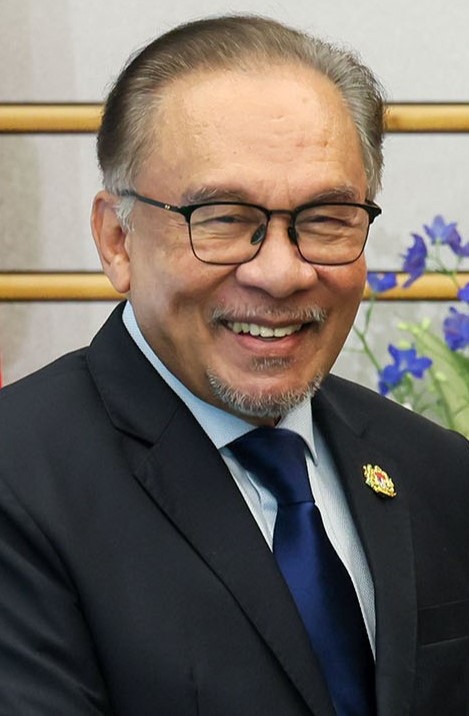
Prime Minister Anwar Ibrahim presided over Pakatan Harapan's high-profile candidate announcement for the 16th Johor State Election (PRN Ke-16), staging a major show of political force at Padang Bukit Gambir Extreme Park on the evening of June 22. The event, framed as a 'Night of Hope,' represented the coalition's formal entry into campaigning mode for what promises to be a closely watched state-level contest. The timing and venue choice underscored PH's determination to mobilize supporters across Johor, the strategic peninsula state that has long been a bellwether for Malaysian electoral trends and where the ruling coalition faces significant challenges from entrenched rival factions.
The evening served as a platform for Anwar to articulate a governing philosophy centered on merit-based leadership and accountability to constituents. He framed political engagement as fundamentally instrumental—a means to tangible improvements in citizens' lives rather than an exercise in power accumulation. His remarks stressed that governance must prioritize tangible returns: fostering entrepreneurial environments for small and medium enterprises, creating pathways for young Malaysians to develop skills and secure meaningful employment, and systematically improving living standards for ordinary households across the state.
This messaging reflects broader efforts by Pakatan Harapan to rebrand itself after the political turbulence of recent years. The coalition has repositioned around the Malaysia Madani framework, a comprehensive national vision emphasizing equitable development, social inclusion, and institutional reform. By anchoring the Johor campaign explicitly within this conceptual framework, PH seeks to link state-level contestation to a wider narrative of systemic transformation and values-driven administration.
The candidate slate announced during the event comprised PH's full complement of nominees across all contested state seats in Johor. The composition of this lineup carries significant implications for regional power dynamics, as candidate selection serves as a proxy for which constituencies PH judges winnable and which grassroots figures the coalition endorses as representative voices. The announcement mechanism itself—a coordinated public revelation rather than incremental disclosures—demonstrated sophisticated campaign choreography designed to generate sustained media momentum.
Unity emerged as a recurrent theme throughout the gathering, reflecting internal coalition management concerns. Pakatan Harapan is fundamentally a multiparty arrangement encompassing distinct organizational cultures, demographic bases, and regional strongholds. Emphasizing cohesion signals to both members and the broader electorate that leadership divisions have been resolved and that candidates share commitment to collective victory. This messaging becomes particularly important in Johor, where electoral mathematics may require careful vote-splitting calculations and where historical divisions between coalition partners occasionally surface publicly.
Integrity as a campaign pillar carries particular resonance given Malaysia's complex recent political history involving high-profile corruption allegations, shifting party loyalties, and public skepticism toward political institutions. By explicitly foregrounding ethical governance and trustworthiness, Anwar positioned PH as the integrity-oriented alternative to competitors potentially tarred by associations with past malfeasance. This framing appeals particularly to urban, educated, and younger voters increasingly responsive to anti-corruption messaging and institutional accountability.
Compassion as a stated value distinguishes PH's rhetorical approach from purely technocratic governance narratives. The term signals responsiveness to vulnerable populations—lower-income households, persons with disabilities, elderly citizens, and marginalized communities—and suggests that state administration should balance economic efficiency with social welfare considerations. For Johor, a state characterized by significant income inequality, port-dependent economic structures, and substantial migrant worker populations, this emphasis addresses genuine grievances about distributive fairness.
The progress dimension completes the value tetrad, anchoring the campaign in forward momentum rather than nostalgia. Anwar's messaging framed the election as a choice between stagnation and advancement, between administrations comfortable with inherited arrangements and leadership committed to modernization, skills development, and economic diversification. This appeals to aspirational voters and business constituencies seeking regulatory competence and innovation-friendly governance.
Johor's electoral significance cannot be overstated for national political calculations. As Malaysia's largest state by population and a crucial economic zone encompassing major port facilities, manufacturing hubs, and agricultural production, outcomes in Johor reverberate across the federation. A strong PH performance would consolidate the ruling coalition's legitimacy and provide momentum for eventual federal-level contests. Conversely, losses would embolden opposition factions and potentially trigger recalibrations of coalition dynamics or Anwar's leadership position.
The timing of the announcement six months before the widely anticipated election date allowed PH to establish campaign infrastructure and build name recognition for candidates while maintaining competitive flexibility. Early announcements sometimes create vulnerabilities as candidates become subject to extended scrutiny, yet they also enable months of grassroots engagement and issue-development that can translate to election-day mobilization.
For Southeast Asian observers, the Johor election offers a case study in how established coalitions manage internal diversity while projecting unified messaging. The balance PH attempts between celebrating individual candidate campaigns and maintaining coalition-wide coherence reflects broader regional patterns where multi-party arrangements dominate governance but face persistent tension between autonomous parties and coordinated electoral competition.
The 'Night of Hope' framing itself merits attention as a narrative construction. Hope connotes possibility, forward-looking orientation, and agency—implying that voter choices matter and that alternative futures remain achievable. This rhetorical strategy counters pessimistic framings of politics as predetermined or corrupted, seeking instead to mobilize supporters through positive rather than purely oppositional messaging.