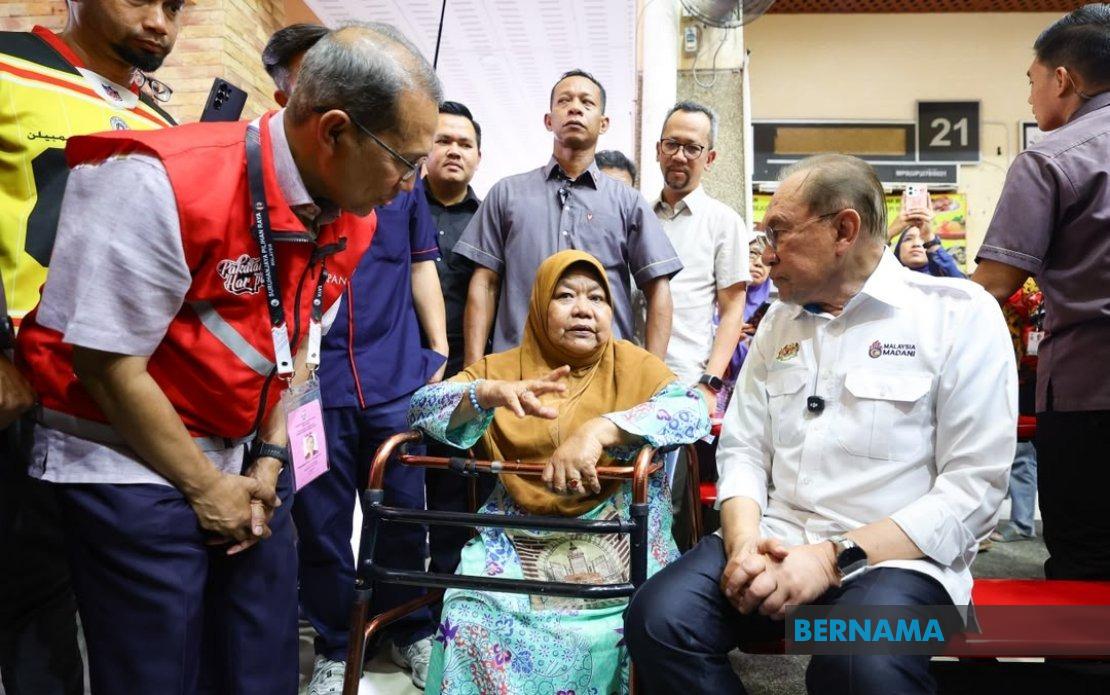
Prime Minister Datuk Seri Anwar Ibrahim has held up the Pakatan Harapan administration in Negeri Sembilan as a model of people-centred governance, pointing to infrastructure projects that simultaneously address community needs and generate sustainable funding streams. Speaking at an event in Seremban on July 22, Anwar highlighted reciprocal river management initiatives across the state as evidence that the PH-led government prioritises transparent resource management and ensures development benefits ordinary Malaysians rather than enriching elites.
The centrepiece of Anwar's remarks was the river widening and deepening project in the Ampangan area, a scheme that tackles the persistent flooding that has plagued the locality while creating an innovative funding mechanism. Rather than treating the extracted materials as waste, the Negeri Sembilan government has structured the project to sell sand and other byproducts, channelling revenue back into river maintenance and infrastructure upgrades. This approach, Anwar suggested, represents a departure from conventional development models that treat public works as one-way expenditures divorced from community welfare.
The Prime Minister's framing of these projects carries particular weight given Malaysia's long struggle with corruption and resource misappropriation. By emphasising the transparency and direct benefit to residents, Anwar is positioning the Negeri Sembilan government against a backdrop of historical grievances about infrastructure spending that disappears into private coffers or politically connected firms. The Ampangan initiative, in this context, becomes a practical demonstration of the accountability promises that brought Pakatan Harapan to federal power in 2018, though the coalition's track record since then has been mixed and contested.
Anwar expanded his argument beyond flood management to encompass a broader philosophy of development governance. He invoked his own experience negotiating a hotel project in Port Dickson, describing how that initiative incorporated provisions for the local fishing community including educational support and housing improvements. This example suggests a consultative, stakeholder-inclusive model of development where projects accommodate multiple community interests rather than proceeding according to developer preferences alone. For Malaysian voters accustomed to top-down planning that marginalises local concerns, such rhetoric carries resonance even if implementation gaps often emerge.
The timing of these remarks is significant, coming as Anwar campaigns across Negeri Sembilan ahead of the 16th state election scheduled for August 1, with early voting on July 28. Anwar is barnstorming the state to mobilise support for Pakatan Harapan candidates, and his emphasis on tangible local benefits serves electoral purposes while also testing messaging that may carry weight in other state contests. By grounding his pitch in specific, visible projects rather than abstract policy commitments, the Prime Minister attempts to convert governance claims into voter confidence at a moment when public sentiment toward the ruling coalition remains volatile.
The integrity-based governance framework Anwar articulated reflects both the ideological positioning of Pakatan Harapan and acknowledgement of the electorate's deepening scepticism toward institutional corruption. He urged Negeri Sembilan voters to make wise choices by continuing PH's mandate, arguing that good governance depends on selecting trustworthy individuals across all communities. This appeal to character-based politics implicitly contrasts with the factional interests and allegedly self-serving conduct associated with previous administrations, though critics argue that Pakatan Harapan itself has struggled to maintain ethical standards once in office.
Packatan Harapan is contesting all 36 seats in the Negeri Sembilan assembly, fielding 16 candidates from PKR, 11 from DAP, and nine from Amanah. This full-scale commitment reflects the coalition's determination to retain control of the state and secure a platform for demonstrating governance competence ahead of the next federal election. The distribution of candidacies attempts to balance representation across the three major parties in the coalition, though internal tensions and divergent policy preferences occasionally surface during campaign periods.
The river management initiative that Anwar spotlighted illustrates how infrastructure spending can be structured to create revenue cycles and avoid purely extractive approaches to development. Rather than simply allocating budget allocations to dredging and widening, the Negeri Sembilan model identifies commercially viable byproducts and establishes procurement pathways that feed revenues back into ongoing maintenance. This circular economy thinking appeals to both pragmatic administrators and environmentally conscious voters, suggesting that development and sustainability need not be mutually exclusive.
For Southeast Asian readers following Malaysian politics, Anwar's messaging points to broader regional conversations about governance models, corruption control, and development equity. Malaysia's influence within ASEAN and broader Asian affairs partly depends on its domestic political stability and institutional credibility. Narratives emphasising transparent, community-benefiting governance thus carry significance beyond electoral contests, shaping perceptions of Malaysian governance capacity and the viability of coalitional politics in diverse societies.
Anwar's campaign narrative reflects an ongoing struggle within Malaysian politics between reform aspirations and entrenched power structures. Pakatan Harapan rose to prominence by positioning itself against perceived systemic corruption and misgovernance, yet delivering on those promises while managing competing party interests and maintaining political viability has proven vastly more complex. The Ampangan river project and similar initiatives represent the practical ground where reform rhetoric meets implementation reality, and their perceived success or failure among voters will significantly influence electoral outcomes and broader confidence in institutional renewal.
The polarisation surrounding the Negeri Sembilan contest also reflects deeper questions about Malaysia's political future. Competition between Pakatan Harapan and its opponents increasingly centres on whose governance model delivers tangible benefits to ordinary Malaysians, whether resources reach communities transparently, and whether development serves public interests or private accumulation. By emphasising specific local projects alongside integrity-based governance principles, Anwar attempts to anchor PH's electoral case in observable outcomes rather than abstract ideological commitments, recognising that voter scepticism toward political claims has deepened considerably.

