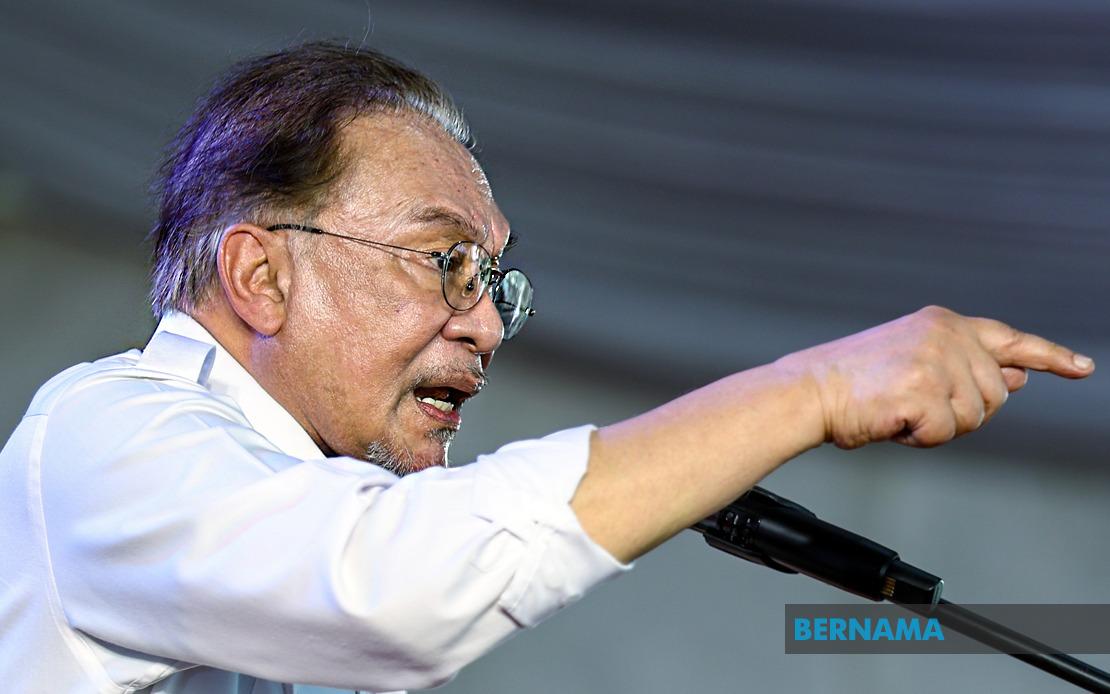
Pakatan Harapan ramped up its campaign machinery in Johor with a sweeping day-long push by coalition chairman Datuk Seri Anwar Ibrahim, who traversed eight constituencies in the state's northern region to energise party machinery and solidify backing for its candidates. The coordinated effort underscores the coalition's determination to translate initial momentum into polling day success, particularly in areas where grassroots engagement can determine tight electoral outcomes. Anwar's packed itinerary across Layang-Layang, Senggarang, Semerah, Bukit Naning, Pemanis, Gambir, Serom, and Palong Timur demonstrates the granular approach PH is adopting to consolidate support during what has become an increasingly competitive contest.
The campaign day began at 8.55 am with a casual breakfast gathering at Warung Pak Din in Kampung Sahri, designed to connect Anwar directly with ordinary residents rather than relying solely on formal party structures. This shift towards informal community settings reflects broader electoral strategy trends across Southeast Asia, where leaders seek authentic voter encounters that generate social media traction and word-of-mouth momentum. By initiating contact through relaxed breakfast meetings rather than formal rallies, PH aims to project accessibility and underscore its narrative of being attuned to constituents' daily concerns.
Following the breakfast session, Anwar moved to a meet-and-greet in Senggarang before participating in a community feast at Vila Kemboja in Semerah at 11 am. These events, locally known as Kenduri Rakyat, carry cultural significance in Malaysian politics, allowing leaders to engage voters within familiar social settings where discussions naturally occur. The timing and frequency of such gatherings in Johor's northern constituencies suggest PH believes these areas represent either swing territory or regions where base mobilisation remains incomplete despite earlier campaigning.
By midday, Anwar reached Muar to launch Bukit Naning volunteers and hold additional constituency engagement sessions. This volunteer activation component proves particularly important during campaign second phases, when initial enthusiasm must translate into structured door-to-door operations and voter identification systems. The explicit focus on volunteer mobilisation indicates PH recognises that campaign success hinges not only on leadership visibility but also on the depth of local party infrastructure capable of sustained voter contact throughout remaining polling days.
The afternoon schedule shifted focus to Felda communities, with Anwar attending the Jelajah Harapan Felda programme at Dataran Putra Palong Timur 2. Felda constituencies represent strategically critical voter blocs, historically oscillating between coalitions based on bread-and-butter economic considerations. Felda settlers' priorities around commodity prices, land rights, and rural development funding make their constituencies particularly responsive to targeted messaging around economic policy, making direct leader engagement in these areas a priority allocation of campaign resources.
Evening activities maintained momentum through meet-and-greet sessions in Pemanis and Gambir, with the day concluding at 9 pm at a Serom marketplace compound. The extended schedule from 8.55 am through 9 pm demonstrates the physical and logistical demands contemporary campaign leaders undertake, particularly in hotly contested regional elections. For Malaysian voters observing such intensity, the relentless campaign schedule functions as implicit messaging about leadership commitment and work ethic, even as it drains candidate stamina during extended campaign periods.
This eight-seat tour represents an escalation from Anwar's efforts the previous day, when he conducted seven programme stops across similar territory. The consecutive high-intensity campaign days signal that PH views northern Johor as sufficiently competitive to warrant repeated leadership attention, contrasting with constituencies where incumbent advantages or demographic shifts might warrant different resource allocation strategies. The pattern of revisiting constituencies within successive days also allows party machinery to capitalise on leadership momentum, scheduling volunteer activities and voter follow-up immediately after Anwar's departures.
Pakatan Harapan's overall campaign structure involves fielding candidates across all 56 state seats, with PKR contesting 20 seats, Amanah 19, and DAP 17. This distribution reflects careful negotiation among coalition partners, balancing seat allocation with perceptions of electability and regional organisational strength. The breakdown leaves 17 seats uncontested by PH candidates, suggesting either uncontested seats or territories where PH has chosen not to field representatives, possibly respecting other opposition arrangements or recognising unfavourable electoral mathematics.
The broader electoral context involves 172 candidates competing across all constituencies, with polling scheduled for July 11 and early voting on July 7. This candidate density indicates a fragmented opposition landscape, which theoretically benefits the better-organised PH coalition if it successfully consolidates anti-incumbent votes. However, vote splitting among multiple opposition candidates remains a persistent risk, particularly in constituencies where PH candidates lack dominant incumbency advantages or overwhelming demographic backing.
For Malaysian observers, the Johor state election carries implications extending beyond the state itself. Johor represents economically significant territory adjacent to Singapore and containing major industrial zones, making its political direction relevant to national policy continuity and investor confidence. The election also serves as a testing ground for PH's organisational capacity following the May 2023 Selangor state elections, providing data about whether the coalition can sustain voter engagement across multiple consecutive state contests without experiencing fatigue or organisational degradation.
Anwar's personal campaign intensity reflects his role as coalition chairman and PKR president, making his visible presence a tool for legitimising coalition legitimacy and reinforcing messaging consistency across disparate PH partners with distinct policy priorities and constituent bases. His ground presence particularly matters in Johor, where his party's strength traditionally derives more from urban and mixed rural-urban constituencies rather than the deeply rural territories where competitors maintain traditional support networks.
The campaign's focus on northern Johor constituencies suggests PH strategists believe this region represents the coalition's critical battleground, where organised voter contact and leadership visibility can shift marginal outcomes. This concentration of effort differs from earlier strategy observations suggesting PH would compete evenly across the state, instead implying a more targeted approach acknowledging resource constraints and demographic realities. How effectively Anwar's intensive ground presence translates into actual vote gains becomes apparent only after July 11, but the effort clearly signals PH intends to contest Johor competitively rather than conceding territory.

