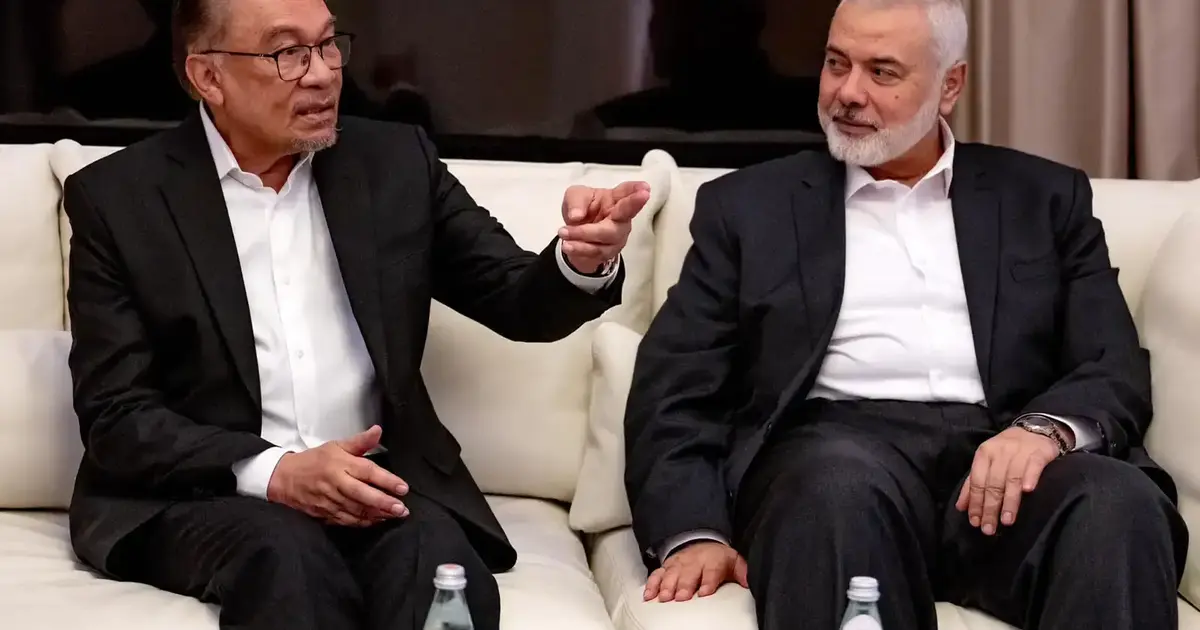
Prime Minister Anwar Ibrahim has categorically rejected allegations suggesting that members of Hamas received military or organisational training within Malaysian territory, characterising such claims as entirely without merit. In a forceful response to the accusations, Anwar stressed that the assertions lack any substantive basis and questioned their credibility, positioning Malaysia as a nation committed to responsible governance and international norms.
The timing of these allegations comes amid heightened global scrutiny of Malaysia's diplomatic relationships and its role in Middle Eastern affairs. The country has long maintained a nuanced position on Israeli-Palestinian issues, balancing its support for Palestinian rights with the need to manage relationships with Western powers and maintain regional stability. The claims about Hamas training activities represent precisely the kind of assertion that could complicate Malaysia's diplomatic standing and create tensions with key international partners.
In an effort to address potential concerns from the United States, Anwar disclosed that he had already informed US President Donald Trump about his historical interactions with Hamas leadership. This proactive disclosure strategy reflects an attempt to control the narrative and demonstrate transparency to American officials who might otherwise view such contacts through a lens of suspicion. By taking the initiative to brief Trump, Anwar appears to be signalling Malaysia's commitment to honest engagement with Washington while simultaneously protecting the country's reputation.
Anwar's past involvement with Palestinian political movements and his documented meetings with Hamas representatives have been matters of public record for years, stemming from his earlier career as a human rights activist and opposition politician. These historical contacts predate his tenure as prime minister and reflect Malaysia's broader tradition of supporting Palestinian causes. However, the emergence of fresh allegations regarding training activities suggests that critics are attempting to weaponise his historical relationships to undermine his current government's credibility on counterterrorism and security matters.
The distinction between diplomatic contact and operational support is crucial here. Meeting with political or military leaders to understand their positions, advocate for peaceful solutions, or express solidarity differs fundamentally from facilitating training operations or providing material assistance. Anwar's position implies that while he has engaged with various international actors including Palestinian representatives, such engagement does not equate to Malaysia serving as a training ground for militant organisations. This separation between dialogue and material support reflects the complex reality of Malaysian foreign policy, which must navigate between principle and pragmatism.
For Malaysia, the stakes of these allegations extend beyond mere reputation. The country hosts significant diaspora communities and serves as a transit hub for international travel, making it vulnerable to security concerns and international scrutiny. Any credible evidence of training facilities for groups designated as terrorist organisations by Western nations would trigger serious diplomatic repercussions and potentially impact Malaysia's standing within international counterterrorism frameworks. Conversely, baseless accusations can also be damaging if they remain unanswered or unchallenged.
The decision to brief Trump personally represents a calculated diplomatic move. Relations between Malaysia and the United States have evolved significantly, and maintaining robust ties with Washington remains strategically important despite occasional tensions over human rights and governance issues. By engaging directly with Trump on these sensitive matters, Anwar seeks to ensure that the American administration receives Malaysia's perspective firsthand rather than through intermediaries or potentially hostile sources. This direct engagement also demonstrates Malaysia's seriousness about addressing security concerns raised by international partners.
It is worth noting that Malaysia has faced previous allegations and conspiracies regarding its purported role in various extremist activities, some of which have proven substantive while others remained speculative. The government has established counterterrorism mechanisms and works with international partners on security matters, though questions about the effectiveness and scope of these efforts occasionally surface in policy debates. Against this backdrop, Anwar's categorical denial and transparent engagement with the United States appear designed to distinguish legitimate concerns from unfounded conspiracy theories.
The broader context includes Malaysia's significant Muslim population and its status as a democratic nation with Islamic principles enshrined in its constitutional framework. This positioning creates both opportunities and challenges in international relations. While Malaysia can credibly claim commitment to religious dialogue and coexistence, it also faces heightened scrutiny from nations concerned about potential sympathies toward Islamist movements. Anwar's government must navigate these perceptions carefully to maintain international confidence while respecting Malaysia's domestic values and commitments to its diverse citizenry.
Looking forward, these allegations and Malaysia's response will likely influence perceptions of the country's security stance among Western allies. The credibility of such claims depends heavily on the evidence presented and the sources making them. Without documented proof of training activities, the allegations risk being dismissed as geopolitical posturing or attempts to pressure the Malaysian government on unrelated matters. Anwar's approach of immediate, forceful denial coupled with transparent engagement with Washington appears designed to neutralise such claims before they gain traction in international media or policy circles.
The incident also highlights the vulnerability of political leaders with extensive international engagement histories to accusations that conflate dialogue with operational support. As Anwar continues to develop Malaysia's foreign policy and deepen ties with various nations, managing narratives around past contacts will remain an ongoing challenge. His decision to proactively address these allegations through official channels rather than allowing them to fester suggests a government intent on maintaining control over its international image and preventing diplomatic misunderstandings from escalating into serious bilateral disputes.

